

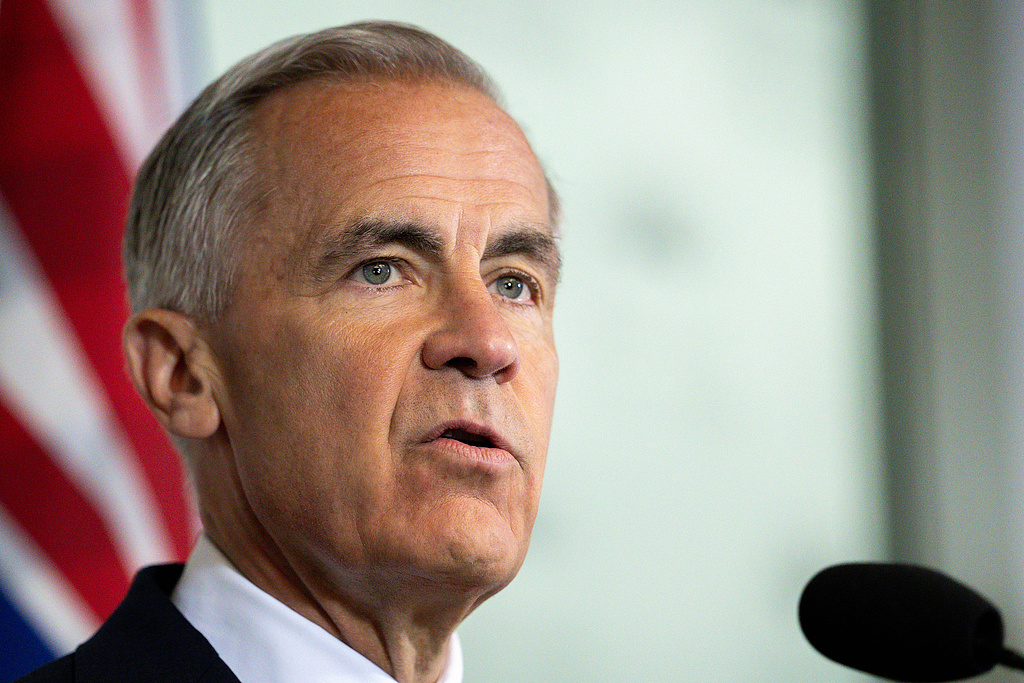
Canadian Prime Minister Mark Carney announced on July 6 that Canada has selected Germany’s ThyssenKrupp Marine Systems (TKMS) as the preferred supplier for the “Canadian Patrol Submarine Project” — the largest defense procurement in the history of the Royal Canadian Navy. Contract negotiations between the two parties are set to begin.
According to reports, Canada plans to purchase up to 12 new submarines to replace its aging Victoria-class fleet. The total contract value could reach 100 billion Canadian dollars (approximately 478.68 billion RMB). This marks Canada’s first purchase of brand-new submarines since the 1960s — the country’s current fleet of four subs are all second-hand vessels, and typically only one is operational at any given time.
Canadian military officials believe the navy needs 12 submarines to meet defense requirements in the Arctic, Pacific, and Atlantic regions. With proper maintenance and training cycles, about three submarines could be kept on constant deployment, significantly boosting Canada’s deterrence capabilities in Arctic and coastal waters.
According to a statement from the Prime Minister’s Office, the German submarines under consideration would be capable of Arctic patrols, underwater surveillance, and special forces deployment. The Canadian government will now enter detailed contract negotiations with TKMS, with a final agreement expected by the end of 2027 at the latest. The first four submarines are slated for delivery by 2034.
Carney acknowledged that both TKMS and competitor Hanwha Ocean of South Korea submitted highly competitive proposals, each offering significant benefits for Canadian businesses and workers. He described the final selection as “extremely difficult and fiercely competitive.”
Industry insiders suggest TKMS’s victory largely stems from Germany’s political advantages as a NATO member. With the United States gradually reducing its commitment to NATO and Canada seeking to decrease its reliance on Washington, choosing a German defense contractor is seen as a strategic move to strengthen ties with European defense industries.
German news agency DPA quoted government sources saying that if the project proceeds smoothly, this submarine deal would bind Canada and Germany together for decades, serving as an “excellent starting point” for strategic cooperation between the two nations.
South Korea had mobilized both military and corporate resources for the bid, even sending its 3,000-ton indigenous submarine “Dosan Ahn Chang-ho” on a 14,000-kilometer voyage to Canada for demonstration purposes this May. Following the July 6 announcement, South Korea’s Defense Acquisition Program Administration expressed “deep regret” over Canada’s decision.