

On the evening of July 19th, Eastern Time, former U.S. President Donald Trump stepped off Air Force One at Joint Base Andrews and told reporters he had spoken with Canadian Prime Minister Carney about the Canadian wildfire smoke affecting the U.S. earlier while watching the World Cup final.
According to reports, Trump told Carney that Canada needs to stop poisoning America’s air with its wildfires. He suggested the U.S. might be able to help Canada with the fires, but that Canada should compensate the U.S. for some of the damage—or the U.S. should impose some tariffs. He argued that the cost of this pollution should be factored into the tariffs Canada is already facing.
Later, in a social media post, Trump wrote that this northern neighbor has failed to properly manage its forests… leading to America being hit with dirty, polluted, and unhealthy air it shouldn’t have to endure. He called it a case of willful negligence that’s becoming an annual event, costing the U.S. billions of dollars.
Prime Minister Carney stated that extreme heatwaves and record-breaking drought have made this year “one of the most severe wildfire seasons in Canadian history.” Canada has deployed over 5,000 firefighters and nearly 300 aircraft to the front lines. From coast to coast, nearly 1,000 wildfires are currently burning.
Similar to the European continent, Canada is warming at twice the global average rate. High temperatures are accelerating vegetation evaporation, making forests, peatlands, and other fuel sources extremely dry, which greatly increases the likelihood of fires starting and the speed at which they spread. Spring fires are starting earlier, fall fires are ending later, and the number of days when fires can burn has surged.
Since 2026, Canada has seen a cumulative total of 3,815 wildfires, burning over 2.9 million hectares. As of July 18th, there were still 959 active wildfires across Canada, with 241 of them out of control.
The situation is especially bad in the vast northwestern part of Ontario, near the U.S. border. This remote area relies on air travel for transportation, and over ten communities have been evacuated, with thousands of people forced to leave. At least one community has been completely burned to the ground. In British Columbia, nearly two-thirds of the wildfires are out of control, and evacuation orders have been issued in several areas. These two provinces are critical to Canada’s economy, population, and geography.
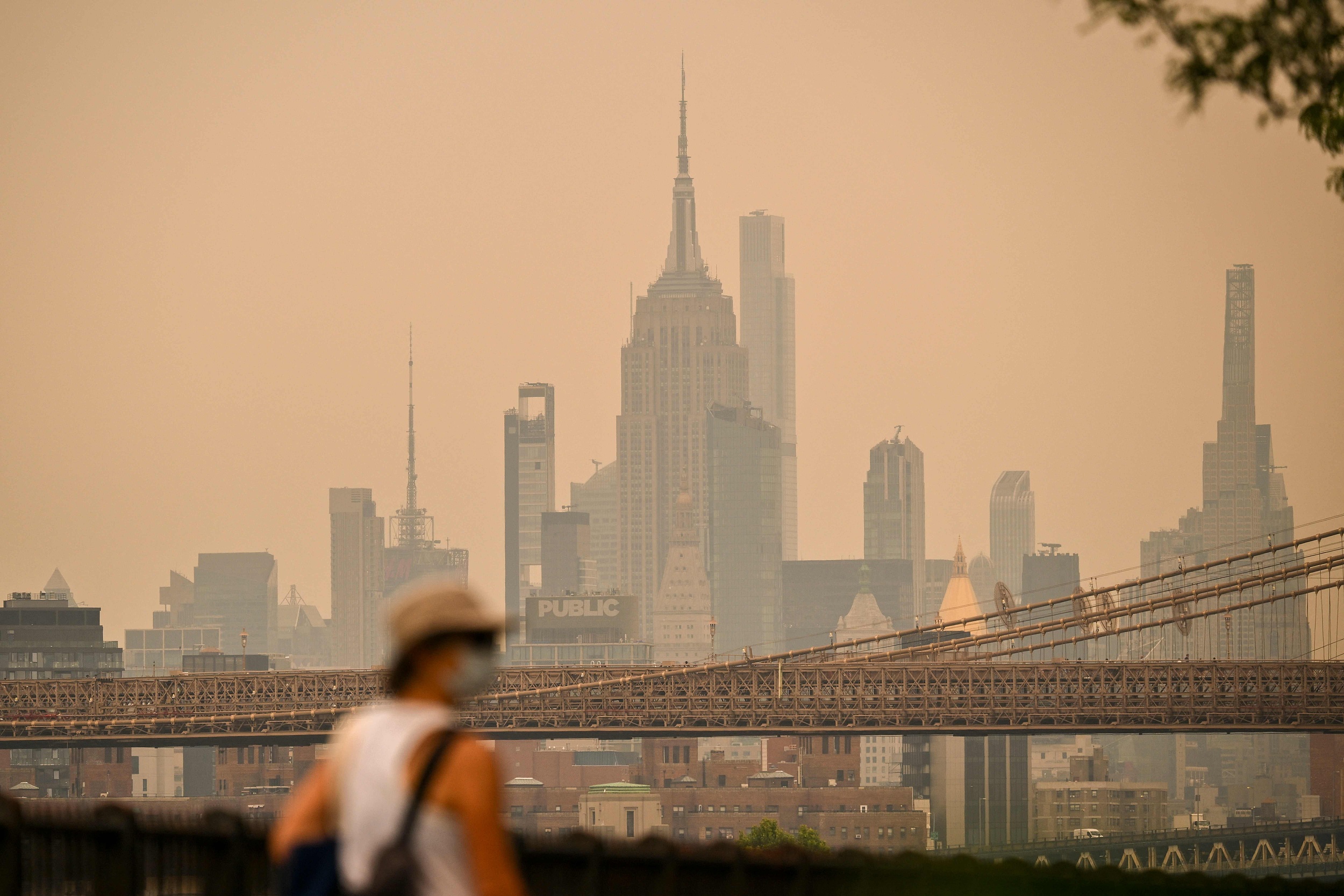
Meanwhile, massive amounts of smoke are drifting south, blanketing major Canadian cities and more than a dozen U.S. states. Air quality in places like Toronto has reached high-risk levels. In New York City, where the World Cup was held, PM2.5 concentrations have far exceeded World Health Organization safety standards.
Local governments have warned residents to stay indoors. Dr. Jase Bernhart, a meteorology professor at Hofstra University, says vulnerable groups like children are more affected by poor air quality. “They’re more active outdoors, their lungs are still developing, and they have to breathe in more air to fuel their bodies,” he explained.
On another front, U.S.-Canada trade relations are in a tricky spot—cooperation frameworks continue, but local frictions persist. Shortly after taking office for a second time in 2025, Trump imposed a 35% across-the-board tariff on Canada, prompting retaliatory measures from Carney.
On July 1st of this year, the USMCA trade agreement completed its six-year joint review, but the White House refused to renew it in its current form, triggering an annual review mechanism.
The U.S. hasn’t yet outlined a plan to start formal negotiations with Canada. Canada, however, continues to publicly support the agreement’s renewal to protect tariff-free access for its exports to the U.S. market. About 75% of Canada’s exports go to the U.S., putting immense pressure on key industries like metal manufacturing, automotive, and machinery.
Over the past two years, Canada’s share of exports to the U.S. has been steadily declining, from 76% in 2024 to 70% by May 2026. Prime Minister Carney is speeding up efforts to expand export markets in China, Europe, and other regions. He plans to double exports to non-U.S. markets over the next decade, positioning the country as an energy powerhouse and building strong, diversified trade partnerships.