France has once again erupted into massive riots, and incredibly, the trigger was Paris Saint-Germain winning the Champions League title back-to-back. On May 31, French President Emmanuel Macron strongly condemned the violent looting and arson that broke out across multiple cities from the previous night into the early morning: “Unfortunately, we’re seeing unacceptable scenes of violence in Paris and other cities.” The unrest has sparked widespread debate and introspection in France. In recent years, nearly every major event—whether rising fuel prices, immigration issues, or even New Year’s celebrations—has led to large-scale riots. Marine Le Pen, leader of the National Rally, fumed: “Only in France would a football victory spark a riot. Only in France would people feel they need to lock themselves indoors on a night of celebration just to avoid violence.”
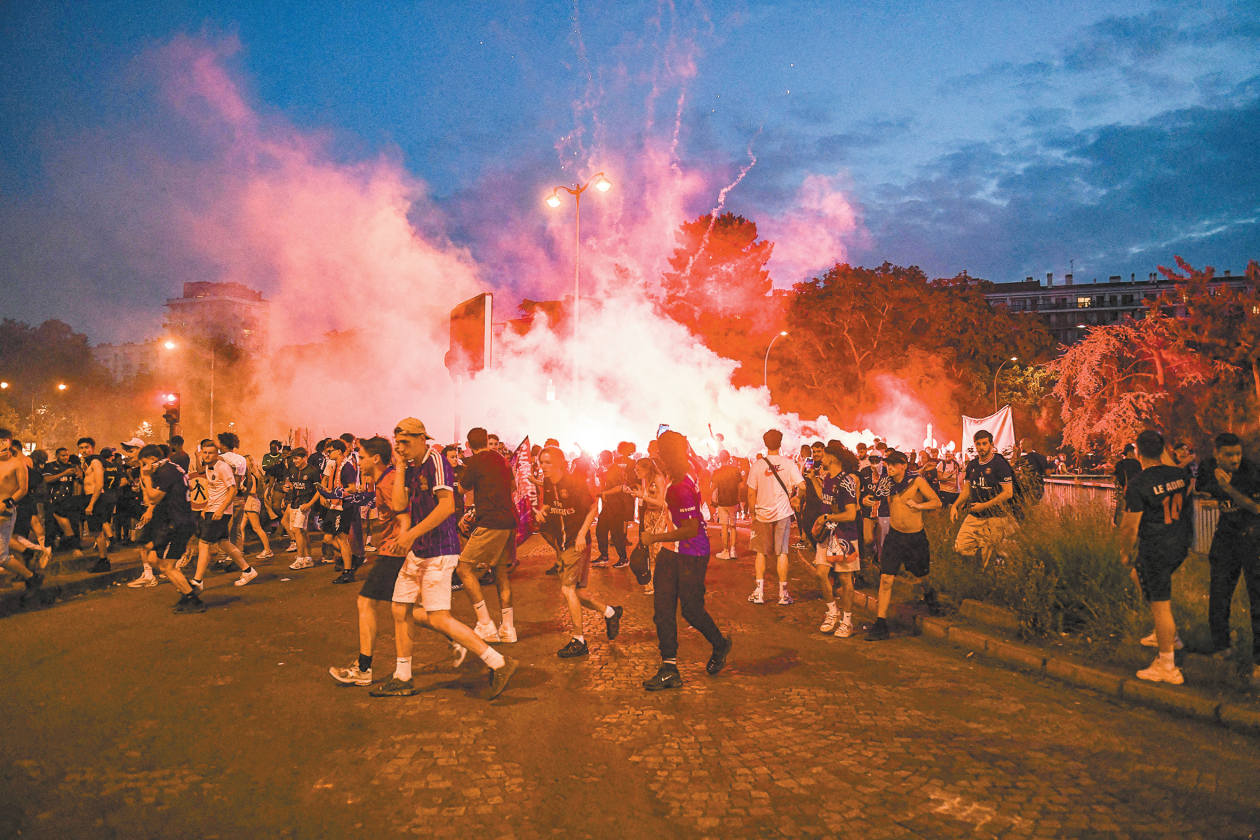
On May 30, massive riots broke out near the Champs-Élysées in Paris.
“France Falls Back into a Night of Barbarism”
On May 30, Paris Saint-Germain made history by winning the Champions League for the second year in a row. But instead of pure nationwide celebration, what followed was arson, looting, and violent clashes that lasted until the early hours of May 31. According to data from the French Interior Ministry on June 1, over 890 people were arrested nationwide on May 30 and 31, and 178 police and gendarmes were injured. Some French media described the scene as looking like “a war zone in some country torn by civil war.”
The riots weren’t just in Paris. The Interior Ministry said dozens of cities across the country saw unrest. According to Le Monde, in Toulouse, groups of people roamed the streets, smashing shop windows and bus shelters, setting trash cans on fire. Some carried iron bars, trashed restaurants, or set containers ablaze.
“France Falls Back into a Night of Barbarism,” wrote Le Figaro on May 31. “Attacks keep coming, police get hurt, stores get looted… a football victory is tainted by violence.” Paris City Hall said in a statement: “The Champs-Élysées and surrounding areas are no longer a place for celebration but a battlefield for urban guerrilla warfare.”
Truth be told, for many French people, this scene is all too familiar. Even before the match started, shop owners in some commercial districts had already boarded up their windows. Some locals joked, “Win or lose, some shops and cars are going to get wrecked anyway.” That kind of resigned expectation reflects a deep-seated anxiety in French society that big celebrations always come with violent destruction. Even though the government mobilized about 22,000 police and gendarmes before the match—8,000 of them in and around Paris—it still wasn’t enough to prevent things from spiraling out of control.
“We’ve Had Enough”
On May 31, while receiving the PSG players at the Élysée Palace, Macron strongly condemned the unrest: “These images are unacceptable. This is not football. This is not sport. This is not what we love. Those who are caught will face the full force of the law.” He said the riots overshadowed a moment that should have made the country proud: “We don’t want to see this happen again. We’ve had enough. It has to stop.”
According to the UK’s Express, French people quickly took to social media to vent their anger. One netizen fumed: “When a victory celebration turns into a riot, it’s no longer something to be proud of—it’s a problem… This is heartbreaking.”
All major political parties condemned the violence. Valérie Pécresse, president of the Île-de-France region, blasted: “These mindless thugs dare to smash everything, tarnishing the image of Paris and France! Punishment must be harsh enough to deter them from doing it again.”
Jordan Bardella, leader of the National Rally and a potential presidential candidate, said France is “losing control of its own territory.” He called for reinstating mandatory minimum sentences and developing facial recognition technology. Pascal Pro, a commentator for Europe 1, noted that a significant portion of the young people involved in looting and arson are from immigrant backgrounds, yet neither the president nor the interior minister dared to mention the word “immigration.” He said: “These children of immigrants, born in France and holding French citizenship, are breaking away from the country that welcomed their grandparents.”
Besides immigration, France’s judicial system is also under scrutiny. According to media reports, only about 5% of those arrested in similar riots last year were actually sentenced. Even when sentences were handed down, most were under a year. In France, sentences of less than a year often get converted to probation or electronic monitoring, so very few end up behind bars. This “catch and release” reality infuriates many people. In a Europe 1 poll, 99% of respondents said the government is “too soft on vandals.”
“France Is Indeed Sick”
In recent years, France has seen massive riots almost every year. Some were sparked by fuel price hikes—like the Yellow Vests movement in 2018-2019. Others by immigration issues—in 2023, the fatal police shooting of Nahel, a teenager of North African descent, triggered riots that spread to over a thousand towns. And every New Year’s Eve or Bastille Day celebration, riots seem to be the norm.
“Riots Highlight the Violence Born from France’s Social Fault Lines,” wrote Spain’s El País on June 1. Given last year’s precedent, the government, police, and public had some warning, yet the unrest still shocked everyone. The whole country is asking: Why does this keep happening? The general feeling is that France is going through a tense period. Besides the frequent riots, prisons are overflowing, assaults are on the rise, and violent destruction is increasing.
Le Figaro ran an editorial saying that similar scenes of violence play out almost every time there’s a big public celebration, like New Year’s or Bastille Day. “How much longer will we numb ourselves to this unacceptable ‘ritual’? When the nation unites in pride, that beautiful moment is torn apart by the disgrace some people bring… France is indeed sick.”