The Alpine Club of Pakistan reported on August 2nd that rescue teams recovered four more victims’ bodies from the avalanche and transported them to Broad Peak Camp 1 at an altitude of 5,600 meters.
With these recoveries, all ten members of the international climbing team that was hit by an avalanche last week have been confirmed dead, including Chinese mountaineer Wang Zhong.
The team was led by the renowned British-Nepali mountaineer Nirmal Purja. The other members included four Nepali Sherpa guides, one Pakistani climber, one climber from Oman, and one female climber from the United States.
Purja, who was 43 years old, was a former member of the British Gurkha forces. His years of intense special operations training honed his ability to survive in extreme environments and fueled his relentless obsession with high-altitude mountaineering that pushes the limits of human endurance.
During his lifetime, he set multiple world records that are etched into climbing history, including: the fastest ascent of all 14 peaks above 8,000 meters without supplemental oxygen, the fastest completion of all 14 peaks with supplemental oxygen, the fastest consecutive summits of Everest, Lhotse, and Makalu, and the first winter ascent of K2, the world’s second-highest mountain.
The expedition company founded by Purja stated, “The world has lost a master mountaineer who inspired millions through his courage, humility, and unshakable belief that human potential is far greater than we can imagine.”
The president of the Alpine Club of Pakistan, Irfan Arshad Khan, described the tragedy as “an immeasurable loss for the global climbing community.”
According to the limited public information available, Wang Zhong was born in 1974 and hailed from Sichuan Province. He was in the midst of his quest to summit all 14 peaks above 8,000 meters — the so-called “Fourteen Peaks” challenge — with only Broad Peak and Shishapangma remaining on his list.
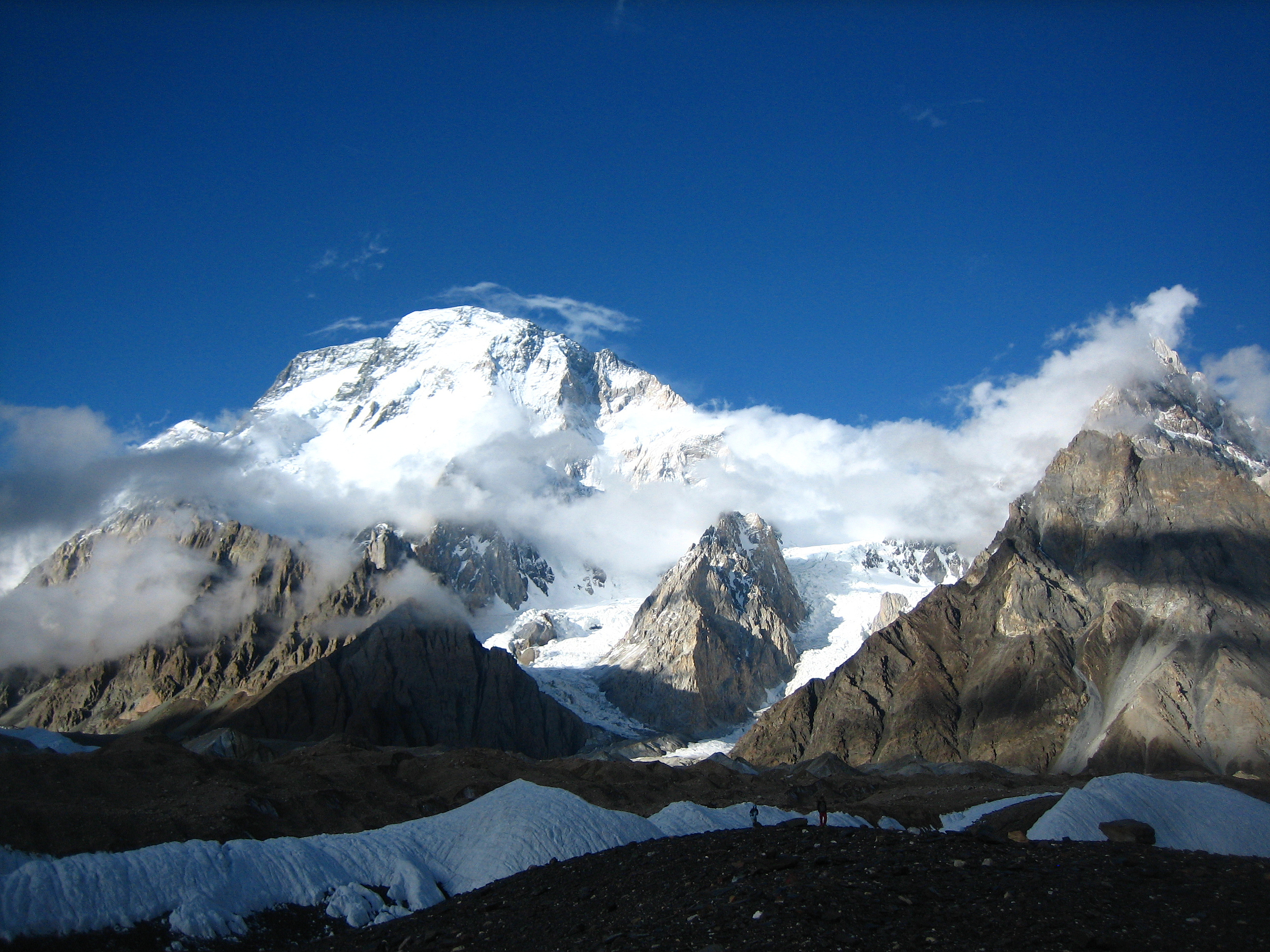
Broad Peak is located in the Pakistan-controlled region of Kashmir near the Chinese border. It is a renowned 8,000-meter peak in the Karakoram Range, with measurements of 8,047 meters and 8,051 meters, making it the world’s 12th-highest mountain. The area where the incident occurred is known as the “death zone,” where oxygen is extremely thin and the complex local weather conditions make rescue operations by helicopter and ground teams extraordinarily difficult.
July and August are typically the prime high-altitude climbing windows in the Northern Hemisphere. During this period, the weather is relatively stable, daylight hours are long, and route conditions are more favorable. However, as global climate change intensifies, the once-stable weather patterns have become disrupted, increasing the likelihood of sudden extreme weather events and significantly shrinking the golden window for safe summit attempts.
In the mountainous regions of northern Pakistan, accidents are relatively common due to avalanches, falling ice and rock, extreme altitudes, and rapidly changing weather. The country’s official permit fee for a single climber on Broad Peak this year was set at $3,000. Full-service packages range from $18,000 to $25,000 per person, typically including round-trip transportation, base camp accommodation and meals, guide support, supplemental oxygen, and basic rescue coverage.
The avalanche struck at approximately 9 a.m. local time on July 30th. According to partial GPS data records, the team was on the summit push section above 6,579 meters, between Camp 2 and Camp 3, when the avalanche swept them down the mountainside roughly 500 to 1,600 meters.
As high-altitude mountaineering becomes more accessible, the number of climbers has surged. According to incomplete statistics, the total number of deaths on the world’s 14 peaks above 8,000 meters has exceeded 700. The loss of the entire ten-person international team marks one of the largest-scale high-altitude mountaineering disasters in recent years.
On July 22, 2018, Rick Allen, a 65-year-old climber from Scotland, survived after being spotted by a drone 36 hours after falling on Broad Peak. Three years later, he died in an avalanche on the southeast face of K2, the world’s second-highest mountain, on the Nepalese side.