

A massive wave of illegal border crossings has erupted in Spain, as tens of thousands of migrants surged from Morocco into the Spanish enclave of Ceuta late last month. Many young people attempted to swim or float across on makeshift rafts. The tragedy has claimed at least 67 lives so far.
At Spain’s urging, the EU convened an emergency video conference of interior ministers on August 4 to address the Ceuta migration crisis and coordinate a bloc-wide response.
Driven by war, famine, disease, and climate change, irregular migration has become a grim reality for countless young people across Sub-Saharan Africa, West Asia, and South Asia.
African migrants typically trek through the deserts of Egypt and Libya before attempting the perilous Mediterranean crossing to southern Europe. They gamble everything on these high-risk routes in hopes of securing a better future—yet far too many never make it, swallowed by the waves.
Because these crossings happen outside legal channels, no official counts exist. Spain’s migrant rights group “Walking Borders” estimates that thousands perish at sea every single year.
Some European nations tolerate these uninvited arrivals, in part, because they desperately need low-skilled labor. Across the EU, over 60% of small and medium-sized enterprises report labor shortages. Spain has openly acknowledged its severe aging problem and its urgent need for migrant workers, vowing not to block their entry. Spain entered an aging society as early as the 1950s, and in 2021 decided to raise the statutory retirement age to 67.
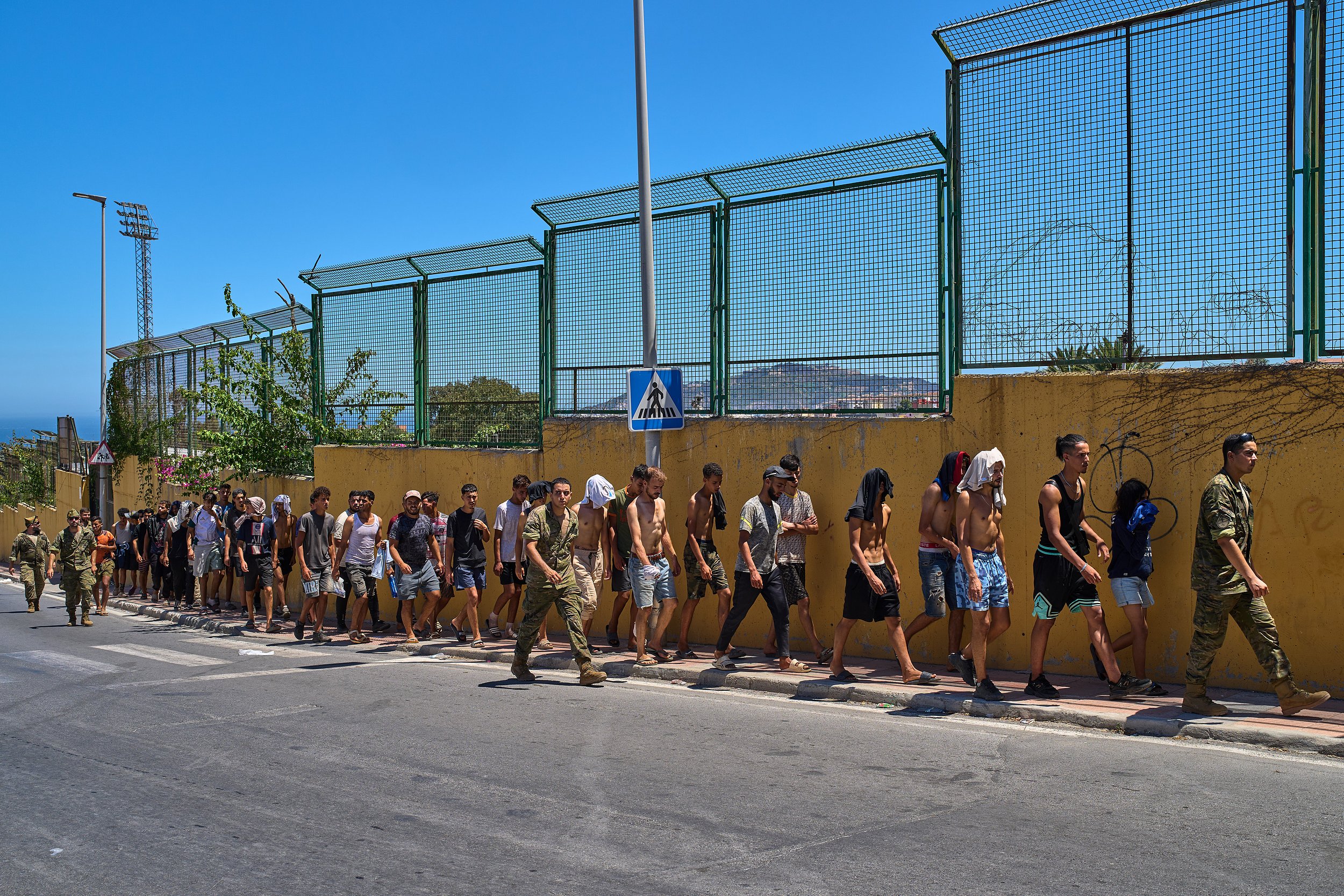
The immediate trigger? A July ruling by Spain’s Supreme Court was widely misinterpreted—thanks to rapid-fire sharing by human trafficking networks on social media—as meaning “anyone who swims into Ceuta can stay in Spain and eventually gain legal status.” That false promise drove many young people to take the deadly plunge.
In response, Spain has ramped up border security, including installing new maritime interception barriers on breakwaters, deepening cooperation with Moroccan border enforcement, speeding up deportation procedures for illegal entrants, and jointly cracking down on trafficking rings.
Morocco has arrested 70 suspects linked to organizing and participating in the violence surrounding the border surge. In Rabat, Casablanca, and elsewhere, train and bus stations have tightened security, with police and safety personnel intensifying checks on groups of teenagers heading north.
The fallout has rippled across Europe. Italy has temporarily reinstated border checks on air and sea passenger routes with Spain—targeting non-EU nationals entering via Spain—for a planned one-month period. France has quintupled border police presence, while the Czech prime minister has gone so far as to call for expelling Spain from the Schengen Area.
Meanwhile, as migration surges, race has become an explosive political fault line across Europe, repeatedly igniting deadly clashes in France, Germany, and beyond.
Public data shows that over 70% of rejected asylum seekers remain in the EU, straining public resources and fueling治安 concerns. After enduring COVID-19 and the shockwaves of the Russia-Ukraine war, Europeans have run out of patience with unchecked migration.
After a two-year transition, the EU’s Migration and Asylum Pact finally took full effect on June 12, 2026. It introduces comprehensive measures covering migration management, asylum procedures, and border control—aimed at harmonizing member states’ asylum processes and establishing a fair burden-sharing mechanism.
The core goal: fix the chronic dysfunction and fragmentation exposed since the 2015 refugee crisis, pushing member states from “everyone for themselves” toward a more coordinated, unified approach.
The European Commission has stated that Ceuta is a vital part of the EU’s external border. Brussels stands ready to support Spain through agencies like Frontex and to strengthen cooperation with partner nations such as Morocco in tackling illegal migration collectively.