According to French News Network on the 16th, the highly anticipated and controversial “social media ban for under-15s” was struck down by France’s Constitutional Council on the 14th, delivering a significant blow to President Macron, who had been championing the policy. However, the government and the ruling party are not backing down. Current Prime Minister Lecornu is preparing a more legally rigorous text, while former Prime Minister Attal is calling for a national referendum on the ban.
The French Parliament had voted on July 21st to pass the “Law on Protecting Minors from Risks Posed by Social Media Use,” which was originally set to take effect from September 1st. It would have prohibited teenagers under 15 from opening social media accounts, required platforms to close existing accounts of minors within four months, and mandated the use of age verification tools approved by France’s privacy regulator.
The law covered popular social networks among young people like TikTok, Snapchat, X, and Instagram, as well as YouTube’s social features, instant messaging tools like WhatsApp and Messenger, and certain online games. However, on August 14th, the Constitutional Council ruled that the first article of the law passed by Parliament was “unconstitutional” and struck it down, citing violations of freedom of speech and communication.
In the Council’s view, protecting minors from risks such as internet addiction, pornography, and fraud associated with social media is indeed a legitimate goal. However, the proposed ban was too broad in scope, failing to differentiate based on platform functions, content, or actual risks. As such, it could potentially cause “inappropriate, unnecessary, and disproportionate harm” to minors’ freedom of speech and communication.
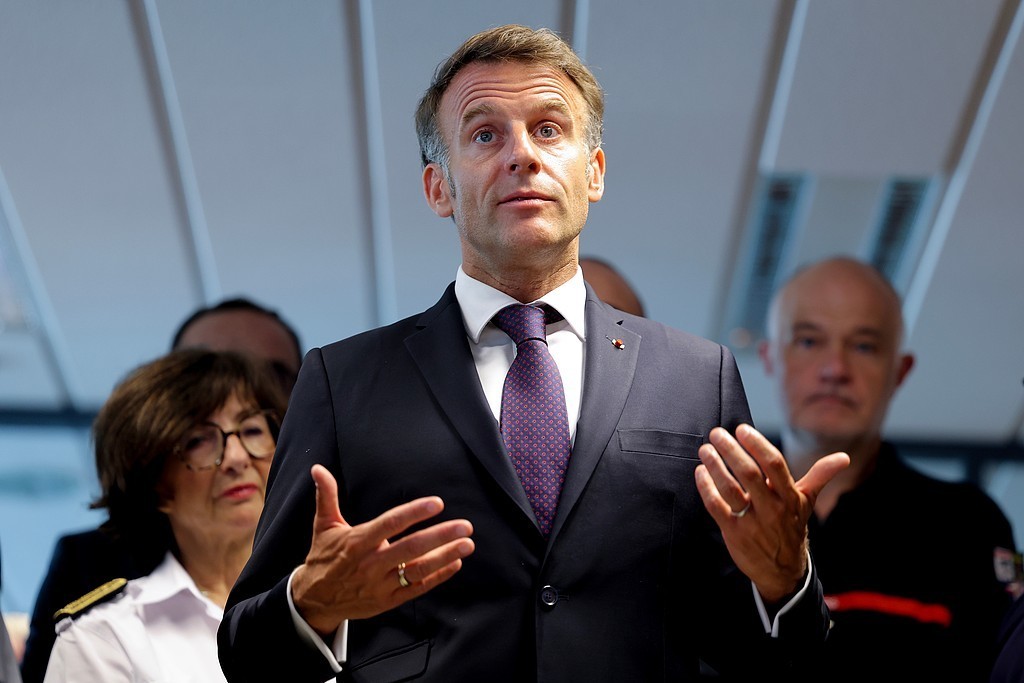
Macron File Photo
This ruling is undoubtedly a major blow for President Macron, who is set to leave office in May next year. He had consistently viewed this ban as one of his most critical commitments before the end of his presidency. Nevertheless, Macron is not giving up. He has instructed Prime Minister Lecornu to redraft the bill, stating, “Taking into account the Constitutional Council’s decision and the European framework, we will prepare a more legally robust draft.” He also reaffirmed that the government’s determination to push the bill forward before spring 2027 “remains resolute.”
However, legal experts suggest time is running out for Macron. After October, Parliament will be busy with extensive budget debates, and from February onwards, the schedule will make way for the presidential election. Constitutional expert John Roland noted, “From a timing perspective, the President will face considerable pressure if he wants to fulfill this promise before leaving office.”
Attal, the Renaissance party’s presidential candidate from Macron’s own party, responded swiftly to the Constitutional Council’s decision. He proposed a different approach, suggesting that the “Law on Protecting Minors from Risks Posed by Social Media Use” could be pushed through via a national referendum. He argued that this type of legal text falls under Article 11 of the Constitution, meaning it is a national social policy: “For 21 years, the French people haven’t been directly asked their opinion. It’s incomprehensible, to me and many others, that they rarely get the chance to have their say again.”
The former Prime Minister, who had been promoting the social media ban at the parliamentary level, now hopes a referendum could accelerate the process. “A race against time has begun. If we start the legislative process from scratch, the ban could take up to two years to take effect.”
The ban has also been a source of ongoing controversy within French politics. Centrist Senator Catherine Morin-Desailly argued, “Banning young people from doing anything is pointless because such bans are destined to be circumvented. The most important thing is to require online platforms to fulfill their restriction obligations.”
The European Commission also suggested in early July that France review the text, warning that the bill risked violating Europe’s Digital Services Act. Constitutional expert Benjamin Morel stated, “We must go further in taking action on platform algorithms, infinite scrolling, anti-addiction mechanisms, and age verification features. However, imposing these obligations on platforms would touch upon the EU’s Digital Services Act, placing them within EU law’s domain. France has to contend with these obstacles.”
According to BFM TV, by the end of 2025, Australia had already become the world’s first country to ban teenagers under 16 from using social media. The UK, Brazil, Indonesia, and New Zealand are also considering similar bans. Survey reports indicate that Australia’s ban hasn’t been very effective. Minors can bypass it by creating accounts in adults’ names or using VPNs. Usage among 12-13 year olds has seen little change, while there has been only a slight decrease among 14-15 year olds.
European Commission President Ursula von der Leyen stated in July that she would set an age threshold for minors’ legal use of social media. She also emphasized the need to consider phased, gradual access based on different age groups, with a starting age tentatively set at 13. The detailed plan is expected to be formally submitted after the summer break.