

The situation between the U.S. and Iran is heating up fast, and it’s shaking the nerves of everyone relying on global trade.
In response to what it calls Iran’s “unprovoked and ongoing” attacks, the U.S. Central Command launched so-called “self-defense strikes” against multiple targets inside Iran at 5:15 PM Eastern Time on the 10th.
All the targets hit were in southern Iran, including air defense systems, radar, and drone command-and-control units.
Earlier that day, President Trump ordered new strikes on Iran’s power plants and bridges. He posted on social media, saying Iran “took way too long to negotiate a deal that would have been very good for them, and now they have to pay the price!”
On the flip side, Iran struck back at U.S. ships near the Strait of Hormuz. The Islamic Revolutionary Guard Corps Navy said two vessels trying to illegally cross the strait were hit.
In the early hours of June 11, the Iranian Armed Forces’ Khatam al-Anbia Central Command issued a statement saying that due to the volatile security situation in the region, the Strait of Hormuz is immediately closed to all types of vessels, including oil tankers and cargo ships. Any ship attempting to pass will be attacked.
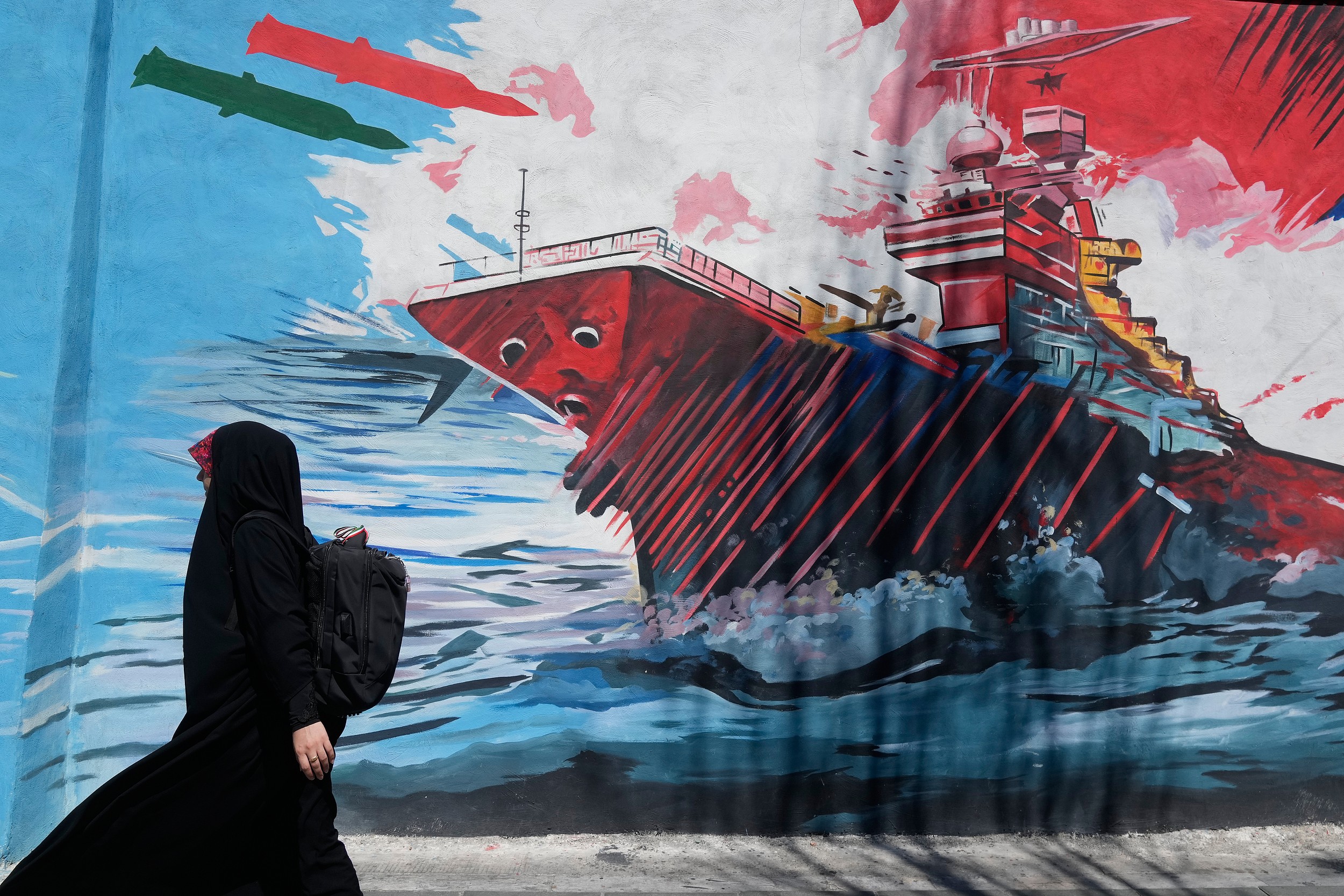
The Islamic Revolutionary Guard Corps Navy further announced that because the U.S. has repeatedly violated the ceasefire, the Strait of Hormuz is now closed until further notice. No ships are allowed to leave their anchorages in the Persian Gulf or the Gulf of Oman, and approaching the strait will be seen as “collaborating with the enemy.”
After this news broke, U.S. stock futures took a dive. As of this writing, Nasdaq 100 futures dropped 1%, with the semiconductor sector falling nearly 4%. Spot gold slipped over 1% to $4,028.52 an ounce, and spot silver fell 3% to $61.76 an ounce. Meanwhile, U.S. crude oil jumped more than 4% during trading.
The immediate spark for this renewed fighting was a U.S. Apache helicopter crashing near the Strait of Hormuz. As payback, U.S. forces started attacking several Iranian air defense systems and radar around the strait at 5 AM on June 10.
That day’s attacks damaged some water supply facilities in the Sirik area of Hormozgan Province, leaving over 20,000 residents without drinking water for a time. At least 10 villages had their water completely cut off. With scorching heat in the region, the water shortage has hit residents hard, and local authorities are using tanker trucks to deliver water.
Weeks ago, there were rumors that a U.S.-Iran peace deal framework included immediately reopening the Strait of Hormuz for shipping, but that deal still hasn’t been finalized.
The Strait of Hormuz sits between Iran and Oman and is the only sea route from the Persian Gulf to the Indian Ocean. Even though its main deep-water channel mostly lies within Omani territorial waters, Iran has full control over it.
Earlier this week, the Iranian government kicked off work on the “Strait of Hormuz Environmental Service Fee Regulation.”
According to shipping security operators, transit fees for bulk carriers can now go up to $120,000 per trip, and for oil tankers, up to $160,000. The exact rate depends on the ship type, cargo, and the owner’s nationality, which is a big drop from the sky-high $1-2 million seen early in the conflict.
U.S. intelligence says Iran hopes to use the fees from ships passing through the Strait of Hormuz to fund post-war reconstruction.
The ongoing tension at the strait is hitting global energy markets and the economy hard by driving up oil prices and shipping insurance premiums.
Market experts aren’t optimistic about the strait reopening anytime soon. HSBC warns that even if a ceasefire is reached, it doesn’t mean the Strait of Hormuz will fully and unconditionally reopen. In a best-case scenario of a partial reopening, shipping might only recover to about 60% by mid-2027.
Just when it seemed like Israel and Iran had stopped fighting, giving the world a glimmer of hope for de-escalation in the Middle East, the region has plunged back into deep uncertainty.
At a recent press conference, Chinese Foreign Ministry spokesperson Lin Jian said the U.S.-Israel-Iran conflict has dragged on for over three months, causing severe shocks to countries in the Middle East and Gulf region. He stressed that military solutions don’t work and that resorting to force only makes things more complicated.
With U.S.-Iran negotiations at a critical juncture, no side should reignite military conflict. The sovereignty, security, and territorial integrity of regional countries must be respected. China calls on all parties to stay calm, stop actions that could escalate tensions, take concrete steps to cool things down, and resolve disputes through political and diplomatic channels to achieve a full and lasting ceasefire as soon as possible.