

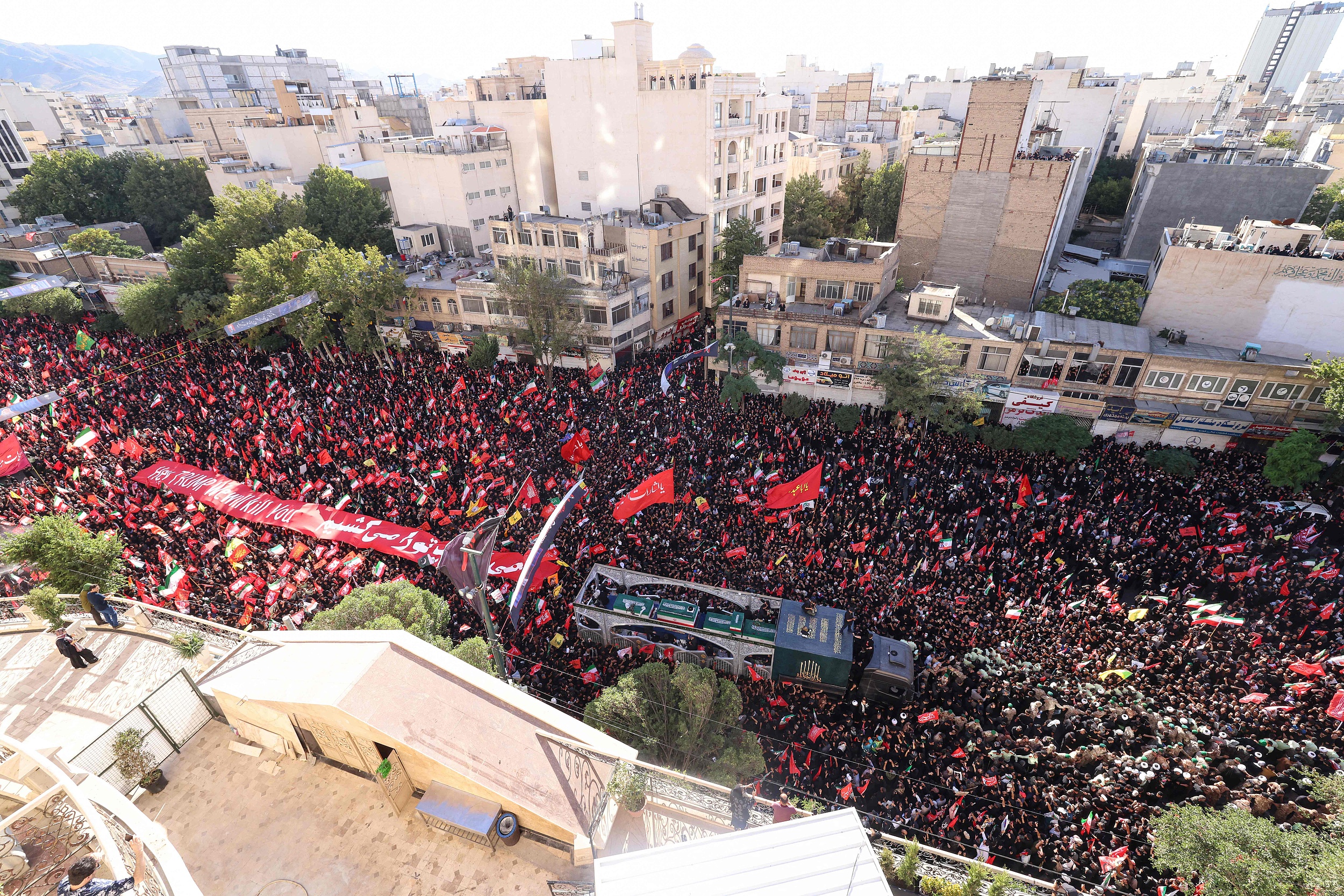
As the state funeral for the late Supreme Leader Khamenei entered its final day, the ceasefire memorandum between Iran and the US effectively became void.
On July 9, Iran’s Islamic Revolutionary Guard Corps issued a statement claiming that during the second phase of their response to US aggression, they used 10 ballistic missiles to destroy US command centers in West Asia and the Al-Azraq Air Base in Jordan. They warned that if the US launches further “aggressive actions,” other American military bases in the region would also face intense Iranian fire.
According to multiple verified reports, Iranian forces employed the “Kheibar Shekan” new-generation ballistic missile to strike several US bases and launched cruise missiles targeting US naval vessels anchored near the coast of Bahrain. This missile, a third-generation medium-range solid-fuel ballistic missile developed entirely by Iran’s Revolutionary Guard aerospace force, has a maximum range of about 1,450 kilometers, covering all of Israel and every core US military base in the Middle East.
Earlier that day, US strikes hit Kerman Province, the southern port of Bandar Abbas, and areas around the Bushehr nuclear power plant, killing 3 people and wounding 15 others.
US military bases in the Middle East are mainly located in Qatar, Bahrain, Kuwait, the UAE, and Saudi Arabia, with key installations including Al Udeid Air Base and the Fifth Fleet headquarters. On July 8, Iran’s Revolutionary Guard launched a large number of missiles and suicide drones, precisely striking 85 US overseas facilities, including the Fifth Fleet headquarters in Bahrain and Ali Al Salem Air Base in Kuwait. During the operation, they also shot down a US MQ-9 Reaper drone that was conducting reconnaissance and interference.
The US Embassy in Jordan was urgently closed on July 9, with instructions for American citizens remaining in the country to seek shelter and follow orders. Shortly before, Iran had launched missiles into Jordanian territory, hitting the Al-Muwaffaq Salti base.
This resurgence of conflict between Iran and the US traces back to attacks on commercial vessels from several third-party countries while passing through the Strait of Hormuz.
Currently, three different shipping lanes exist in the Strait of Hormuz. The first, in the northern part of the strait, is controlled by the Iranian military. The second runs through the middle, the conventional international route before the disruption. The third is in the southern part, near Omani waters, coordinated by Oman, the US, and the International Maritime Organization.
Based on cross-referencing multiple authoritative sources, the memorandum of understanding signed by the US and Iran on June 17 did not explicitly require transiting ships to comply with Iran’s designated routes or reporting requirements, which became a direct flashpoint for subsequent escalation. A deputy director at the Institute of Middle Eastern Studies under the China Institutes of Contemporary International Relations previously noted in an interview that Iran has come to see the Strait of Hormuz as a powerful card in its game with the US. Even after signing a ceasefire memo, it will continue to tighten its grip on the waterway. The issue of strait navigation is set to remain a long-term struggle.
Earlier this week, several commercial ships from countries like Saudi Arabia and Qatar reported drone attacks while passing through the Strait of Hormuz on the Omani side. Two ships were struck and severely damaged. Saudi Arabia and Qatar condemned these Iranian attacks on innocent civilians operating commercial vessels on international waterways, calling them unjustified, extremely dangerous, and a clear violation of the ceasefire agreement.
In response to Iran firing on multiple international vessels, the US Central Command launched a series of strikes against Iran early on July 8, hitting over 80 targets, including air defense systems, coastal surveillance systems, surface-to-air missiles, anti-ship cruise missiles, and drone launch sites. The strikes killed 8 Iranian army aviation and navy personnel, and a missile hit a dock in Hormozgan Province, killing two fishermen and injuring two others.
On July 9, Iran’s Islamic Revolutionary Guard Corps Navy issued a statement declaring that other countries have “no right to interfere” in Strait of Hormuz affairs. They stated that over the past two weeks, Iran has gradually reopened the strait, and its capacity has been restored to about 50% of pre-war levels. Despite US actions severely disrupting the reopening process, the Revolutionary Guard Navy continues to boost vessel transit capacity.
On the same day, the UK Maritime Trade Operations office forwarded a notice from the Joint Maritime Information Center stating that the overall security threat level in Middle Eastern waters remains “severe.” In the Strait of Hormuz, commercial vessel traffic remains below normal levels. Previously issued warnings about suspected and confirmed sea mines remain in effect, and ships must strictly follow published navigation routes.