

In a major announcement on August 12, the Iraqi Prime Minister’s press office dropped a bombshell — September 30 is the absolute, non-negotiable deadline for all American and international coalition troops to pack up and leave. This comes after nearly 23 years of US military presence in the country, which began with the 2003 invasion justified by claims of weapons of mass destruction that toppled Saddam Hussein’s regime. The announcement has sparked intense debate across the Middle East and beyond. With recent US-Iranian confrontations leading to strikes on American bases in the region, and Tehran publicly demanding US withdrawal from neighboring countries as a condition for ceasefire, many are wondering: is this the beginning of America’s exit from the entire Middle East? And once US troops are gone, can Iraq truly secure itself, or will it become a power vacuum ripe for other players to exploit? For over two decades, Iraq has seemed like a microcosm of the region’s chaos — and the whole Middle East is now facing the same fundamental questions.
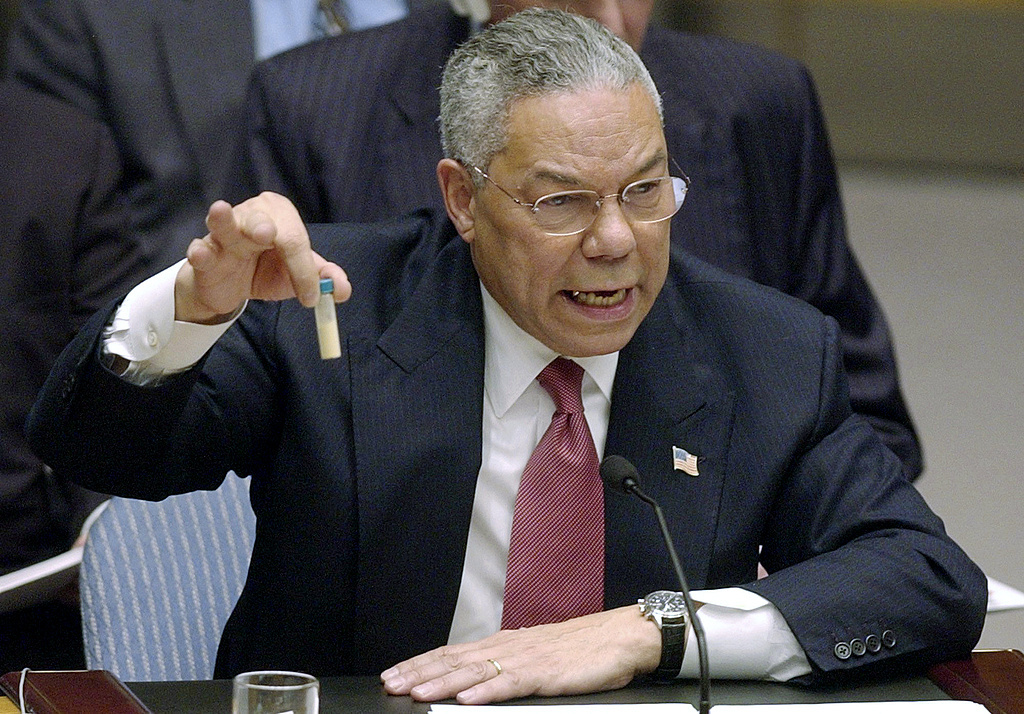
On February 5, 2003, then-US Secretary of State Colin Powell held up a small vial of white powder before the UN Security Council, claiming it was proof Iraq was developing chemical weapons. Just a month later, US and British forces launched the Iraq War on that basis. (Photo credit: Getty Images)
‘A New Chapter in Iraq’s National Development’
According to the Iraqi News Agency on August 12, the Prime Minister’s office issued a statement reaffirming that September 30 of this year marks the final, unchangeable deadline for the US-led international coalition fighting the Islamic State (IS) to conclude its military mission and complete withdrawal from Iraq. The statement detailed that Prime Minister al-Sudani met with US Central Command chief General Kurilla in Baghdad on August 12, reiterating commitment to the agreed timeline. Both sides confirmed the September 30 date as the end of the coalition’s military presence, building on consensus reached during al-Sudani’s visit to Washington in mid-July. “On October 1, Iraq will open a new chapter in its national development journey,” al-Sudani said. “Iraq will completely rid itself of all foreign military presence, exercise full sovereignty over its territory, and continue building its security and military capabilities so that it can safeguard national security and stability through its own strength.”
AP News, citing a US Defense Department official on August 13, confirmed Washington intends to complete the withdrawal before September 30, though the official declined to disclose current troop numbers or redeployment locations. “The United States, Iraq, and coalition partners have achieved tremendous success in countering the extremist group ISIS,” the official said. “Now, Iraqi security forces will take the lead in counterterrorism operations within the country.” Two Iraqi officials told AP that the process of removing US troops and equipment from Erbil in the Kurdistan region began roughly three weeks ago.
23 Years of US-Iraq Tug-of-War Over Troop Presence
The Washington Post noted that if the US follows through on complete withdrawal, it would mark the end of America’s 23-year military footprint in Iraq since the 2003 invasion that toppled Saddam Hussein. For decades, the US troop presence has remained one of the most volatile issues affecting Iraq and the broader Middle East. In 2003, Washington invaded under the pretext of eliminating weapons of mass destruction, dismantled the Ba’athist regime, and then established a massive military presence. Stars and Stripes reported on August 12 that at its peak, the US operated over 500 bases in Iraq with more than 170,000 troops stationed there.
In reality, after major combat operations concluded in 2003, Iraqi governments repeatedly sought to negotiate withdrawal timelines with Washington, but American officials consistently dodged the issue. By 2008, with escalating attacks on US bases by various Iraqi armed factions causing mounting American casualties, the US was forced into a withdrawal agreement — pulling out most troops by 2011 while leaving behind several hundred military advisors. In 2014, as ISIS exploited the chaos to seize vast territories, Washington used the “counterterrorism” rationale to boost troop levels back to 5,200. Even after Iraq declared victory over ISIS in late 2017, US forces stubbornly remained, using sanctions and other coercive measures to pressure Baghdad.
‘Potentially Entering a Post-American Era’
“Is this the start of America’s exit from the Middle East?” asked Pakistan’s 24News HD on August 12. Iran has consistently called for US withdrawal from the region, and Iraq is just the beginning. With American bases suffering significant blows and US influence declining across the Middle East, a full departure may become an inevitable reality.
“The Middle East may be entering a ‘post-American era,'” wrote The Sydney Morning Herald on August 12. As US-Iran tensions persist, American military bases once viewed by Gulf states as protective shields have now become liabilities. Countries like Saudi Arabia are actively seeking security guarantees beyond Washington. Of course, declaring the arrival of a post-American era would be premature. But unless the US manages to reverse this trajectory, the contours of that new era are steadily coming into focus.
According to AP on August 13, September 30 is also the deadline for Iraq’s government to collect weapons from all armed groups within its borders. Al-Sudani made clear that once foreign troops are fully gone, armed factions will have no justification to remain armed. He emphasized that bringing all weapons under state control through legal means is a prerequisite for consolidating sovereignty, ensuring security and stability, and advancing Iraq toward a new phase of development and prosperity.
London-based Al-Arab Weekly reported on August 12 that currently only a small number of Iraqi armed groups have agreed to surrender their weapons, with most refusing to commit. The complex relationships between these factions and regional powers make this an extremely sensitive issue that could spark conflict. For the Iraqi government, this represents a defining test of its authority — one that will ultimately determine whether the nation moves toward war or maintains peace.