

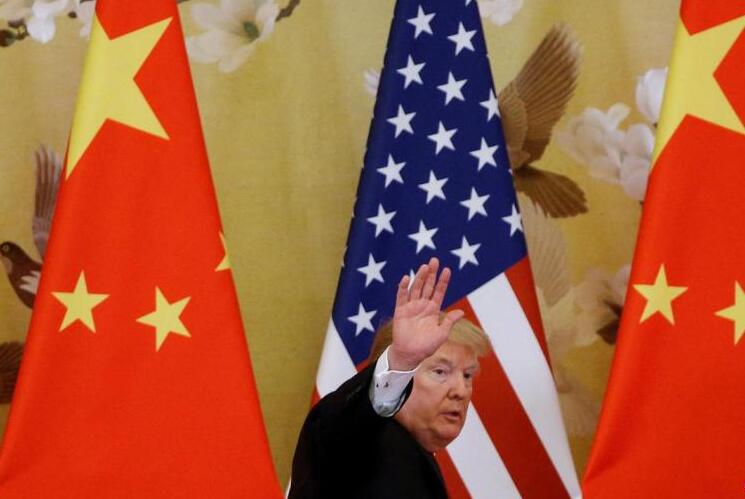
To what extent the promised tariffs will actually be imposed is still an unknown at present. After all, Trump is a master of deal-making, and the idea of imposing tariffs may be more of a bargaining chip to gain greater benefits from trading partners.
US President-elect Trump is about to take office. If you ask what measures he will take after becoming president, it is probably tariff policy. From the campaign period to the present day after his victory, he has repeatedly mentioned that he will impose tariffs on goods from various countries after taking office, which has touched the nerves of leaders of various countries from time to time. In fact, even in the United States, his tariff policy has caused fierce controversy over whether it will harm the US economy. The pros and cons of imposing tariffs have become a topic of concern for all walks of life.
It is undeniable that the uncertainty of future economic and trade policies brought about by Trump’s victory has caused all walks of life, including American companies, to temporarily stop making serious commitments and adopt a wait-and-see attitude, waiting to see how things develop after he enters the White House, especially his constant proposal to impose tariffs of up to 20% on all US imports and high tariffs on Chinese goods. Weeks after winning the election, he announced plans to impose 25% tariffs on Canada and Mexico and an additional 10% tariff on China. He later threatened to impose 100% tariffs on the BRICS countries if they sought an alternative currency to the dollar. BRICS members include Brazil, Russia, India, China and South Africa.
For many economists, imposing tariffs has now become a near-ideological touchstone. They rarely admit that tariffs are sometimes associated with higher economic growth. They generally believe that tariffs in developed economies, especially the United States, only mean one result, which is to raise the price of imported goods to the point of causing inflation. Therefore, tariffs are always harmful to the economy and always hurt the interests of consumers.
Most of the trade tariffs and other protectionist measures promised by Trump and the Republicans have triggered a series of pessimistic economic forecasts from some economic institutions. The Peterson Institute for International Economics estimates that tariffs will increase the living expenses of the average American family by more than US$2,600 (about more than S$3,500) per year. The Wharton School of the University of Pennsylvania has warned that the trade war could cause the US gross domestic product (GDP) to fall by as much as 5% in the next 20 years; the International Monetary Fund also predicts that by 2026, the US GDP will fall by 1.6% due to Trump’s policies.
However, there are also views in the United States that the negative views of economists and economic institutions on tariff policies are not without problems. Political observers pointed out that the extent to which the promised tariffs will actually be imposed is still an unknown at present. After all, Trump is a master of dealmaking, and the talk of imposing tariffs may be more of a bargaining chip aimed at gaining greater benefits from trading partners.
In fact, the incoming Treasury Secretary Bessant said that he regards tariffs as an “extreme policy”, suggesting that as long as trading partners make concessions, it is not ruled out that the tariff commitments promoted by Trump during the campaign will be reduced. In addition, considering that a large number of imports are carried out within US companies, the imposition of tariffs will undoubtedly have a negative impact on the business of these US companies. It is conceivable that once tariff measures are implemented, these US companies will also try to persuade Trump to adjust their trade policies.
Second, even if Trump implements tariffs as he promised, the market reaction may not be unconditionally negative. In predicting the impact of tariff increases, many economists have not paid enough attention to the market mechanisms that may emerge and the mitigation measures that the Trump administration will implement. The strengthening of the dollar caused by tariffs and other protectionist measures may reduce the inflationary impact that economists warn about by reducing the actual prices of imported goods and services denominated in foreign currencies such as the euro and the renminbi. If the Trump administration also adopts a series of economic support policies as promised, such as deregulation of the energy industry and low tax measures, the inflationary pressure caused by tight supply will be relieved.
Improperly designed tariff policies will be counterproductive
In fact, how far-reaching the impact of tariffs will be depends largely on which products are targeted, how quickly they are levied, and the extent to which countries retaliate. Given that modern manufacturing involves complex international supply chains, a poorly designed tariff policy can easily disrupt these supply chains and destroy more factory jobs than it saves; conversely, it may also promote domestic production in the United States and drive consumption growth.
If Trump learns from the experience of tariff policy during his first term, he should be more careful and meticulous in the design of tariff collection after taking office this month. For example, he imposed tariffs on imported intermediate parts on which many American companies rely in 2018, and the steel tariffs at that time fully exposed the shortcomings of this tariff policy. Although American producers such as Nucor and US Steel benefited from it later, the entire manufacturing industry that uses a lot of steel, such as construction equipment and automobiles, suffered as a result, and the latter employs far more workers than steel mills. The result of the tariffs that year was that manufacturing workers lost their jobs, offsetting the growth effect achieved by the steel industry.
Of course, Trump’s tariff collection proposition is not entirely to support American industry. He has also mentioned many times that tariffs can increase national revenue and make up for the growing government budget deficit. On this issue, bond investment management agency PIMCO believes that another way for the Trump administration to increase revenue may be to increase tariffs on imports from China and other countries, doubling the current effective tariff rate, which is expected to generate $400 billion in revenue in 10 years. The Trump administration can finance tax cuts and avoid a more painful fiscal adjustment by adopting economically feasible tariffs and spending restraints; incremental reforms and strategic fiscal measures can lead to stable budget deficits, at least in the short term.
It is no wonder that more optimistic views have begun to emerge in the United States that the impact of Trump’s proposed tariffs may ultimately be less severe than the economic pressures experienced by consumers and businesses over the past four years.

