On July 5, the second day of the public farewell and mourning ceremony for the late Supreme Leader Khamenei in Tehran, Iran, thousands gathered at the Imam Khomeini Grand Mosque for the funeral prayers for Khamenei and his four family members who were killed.
According to reports, Khamenei’s eldest, third, and fourth sons all attended the ceremony. Government and military officials, along with some foreign delegations, were present. The commander of Iran’s Revolutionary Guard Corps, Vahidi, was also on site. However, Khamenei’s second son and successor, Mojtaba, still did not show up.
Khamenei passed away on the morning of February 28 due to a US-Israel “decapitation” strike at the age of 87. At least seven missiles hit areas near the presidential palace and Khamenei’s residence in Tehran that day. His daughter, son-in-law, granddaughter, and one of his daughters-in-law—four relatives—also died in the attack.
Insiders reveal that Mojtaba was seriously injured in that attack, requiring multiple surgeries on one leg and currently waiting for a prosthetic limb. He also underwent surgery on one hand, with limb function slowly recovering. Severe burns to his face and lips have caused difficulty speaking, and he will need reconstructive surgery.
Since being elected Supreme Leader, Mojtaba has not appeared publicly. Israel has openly listed him as a target and threatened to assassinate him during his father’s funeral. All public and private institutions in Tehran have been closed, with traffic restrictions in the central area banning private cars. The airspace over Tehran was partially closed last Friday and fully closed on Monday, with a heavy security presence deployed.
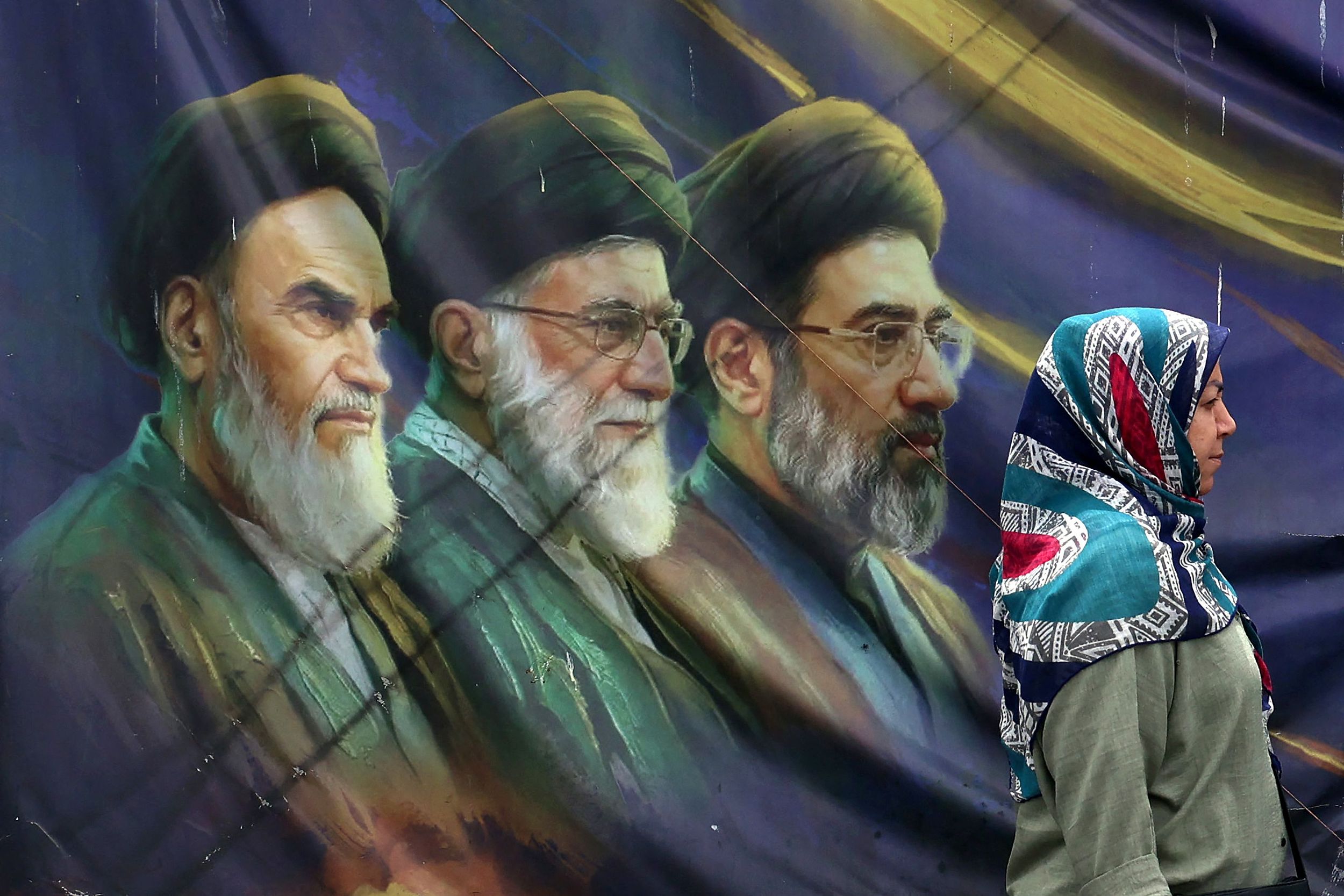
According to official plans, Khamenei’s funeral will last six days. Streets and squares in Tehran are adorned with multilingual banners, with giant fist statues and ballistic missile installations at Azadi Square.
Previously, the funeral was delayed multiple times due to the war between Iran and the US and Israel. In early June, as a US-Iran memorandum was nearing completion, Iran announced the funeral arrangements. The state funeral will be held in stages across Tehran, Qom, and Mashhad, with his body ultimately laid to rest at the Imam Reza Shrine in his hometown of Mashhad.
Separately, two IRGC members and a person involved in planning the funeral said Mojtaba had hoped to attend the burial ceremony in Mashhad on the 9th and recite eulogies for his father’s body. However, security officials stopped him due to concerns that Israel might use the opportunity to assassinate him or track his hiding spot.
Given Mojtaba’s ongoing treatment and communication difficulties, key decisions on national security, war, and foreign affairs are effectively in the hands of senior IRGC commanders like Vahidi and their allies. Insiders say Mojtaba has not recorded any video or audio speeches because he doesn’t want to show a weak image.
On the 6th, the funeral procession in Tehran is expected to draw 15-20 million mourners. Before the ceremony began, about 100 countries sent official delegations, public groups, or notable figures to attend the farewell, including at least 8 heads of state (presidents or prime ministers), speakers from 12 parliaments, and foreign ministers, minister-level officials, or envoys from many countries.
Mehran Kamrava, a professor of government at Georgetown University in Qatar, analyzes that Iran’s government is holding such a grand state funeral for Khamenei to convey confidence to the public and show that the country is operating normally under a united new leadership.