

Elon Musk, the world’s richest man, is reportedly planning to pour roughly $100 million into supporting Republican candidates in this November’s congressional elections through his America PAC.
Sources say America PAC has already briefed other GOP groups on its budget and is gearing up for a massive election push starting in August. Initial targets include at least five competitive Senate races in Alaska, Iowa, Maine, Michigan, and Ohio, with plans to also get involved in House races across California, Wisconsin, and Washington state.
Nearly all of America PAC’s core funding comes from Musk’s personal donations, and the group is working hand-in-glove with the Republican National Committee and Trump-affiliated groups like “Make America Great Again Inc.” He’s also directly funneled eight-figure sums to candidates close to Vice President Vance, while building his own voter mobilization network through America PAC in key swing states.
Just a few weeks ago, Musk became the first human in history to see his net worth cross the $1 trillion mark, following SpaceX’s successful IPO. But lately, both of his crown jewels have been under pressure — SpaceX shares keep sliding, while Tesla just hit a fresh low not seen since 2026. In the span of just five trading days, his personal fortune shrank by roughly $130 billion.
Musk is a hugely influential connective tissue in American politics, deeply woven into several critical nodes of the country’s political machinery.
Since the civil rights era, Democrats have pushed for minority-focused legislation that directly addresses the core demands of immigrant communities. Musk, who was born in South Africa, built his early business empire on California’s green energy policy support — and the Democratic Party’s long-standing advocacy for environmental subsidies and tech incentives aligned perfectly with his interests.
But after Biden took office in 2020, the administration tightened eligibility for green energy subsidies while imposing stricter regulatory demands on Tesla’s autonomous driving tech and SpaceX’s spectrum usage. That’s when the two sides started drifting apart.
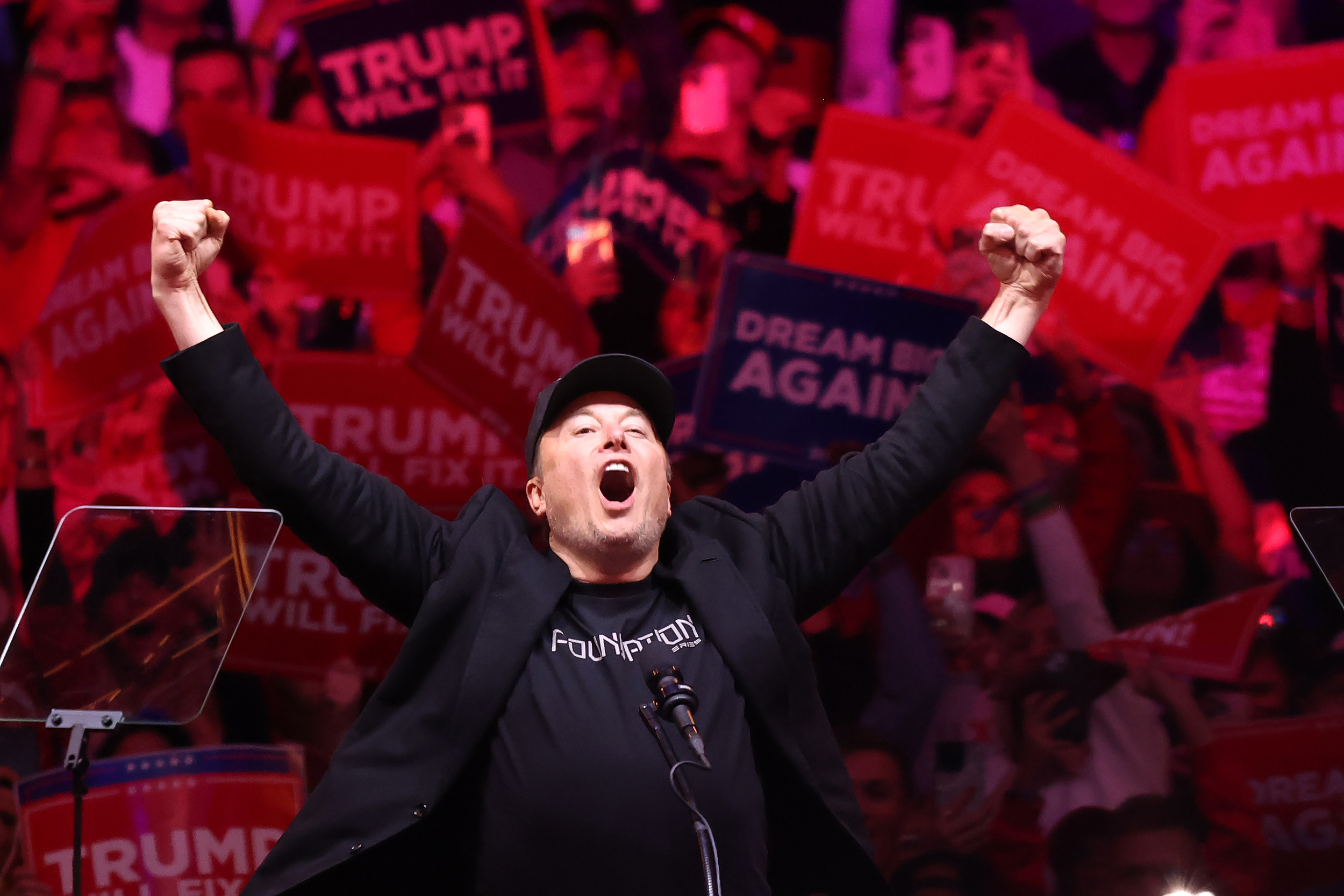
Four years later, in the 2024 election, Musk threw nearly $300 million behind Trump’s victory, cementing his place deep inside the Republican power structure — including leading the “Department of Government Efficiency” in what became a storm inside the federal bureaucracy.
By early last year, Musk’s unpopularity ratings briefly eclipsed Trump’s, and a lot of that public anger spilled over onto Tesla showrooms. He eventually stepped down from the “Department of Government Efficiency” at the end of May last year. The department never really had public accountability, and its staff had been steadily leaving headquarters. After that, Musk at one point threatened to form a third party amid deteriorating relations with Trump and the GOP, though things thawed somewhat by the fall.
Analysts say Musk’s renewed, steadfast backing of the GOP this time is essentially a rational calculation rooted in his own business interests and political positioning.
His SpaceX needs NASA’s long-term launch contracts, Department of Defense orders, and spectrum licenses. Tesla needs a permissive regulatory environment for autonomous driving. And xAI needs low-barrier policy space in the AI sector.
On the Q2 2026 earnings call, Musk said SpaceX and Tesla’s business overlap is growing, and he didn’t rule out a merger down the line — which would require regulatory scrutiny in the countries where his core operations sit.
If Democrats take control of Congress, they’d likely tighten those regulations and cut the corresponding subsidies, which would render all the political capital Musk has accumulated utterly worthless.
Per the congressional election calendar, voting day is November 3rd, with state-level certification wrapping up in late November. Right now, the races are razor-thin. As of the end of July 2026, Trump’s approval ratings have hit historic lows, and multiple polls suggest the GOP is likely to lose the House — though they’d probably hold the Senate.
