

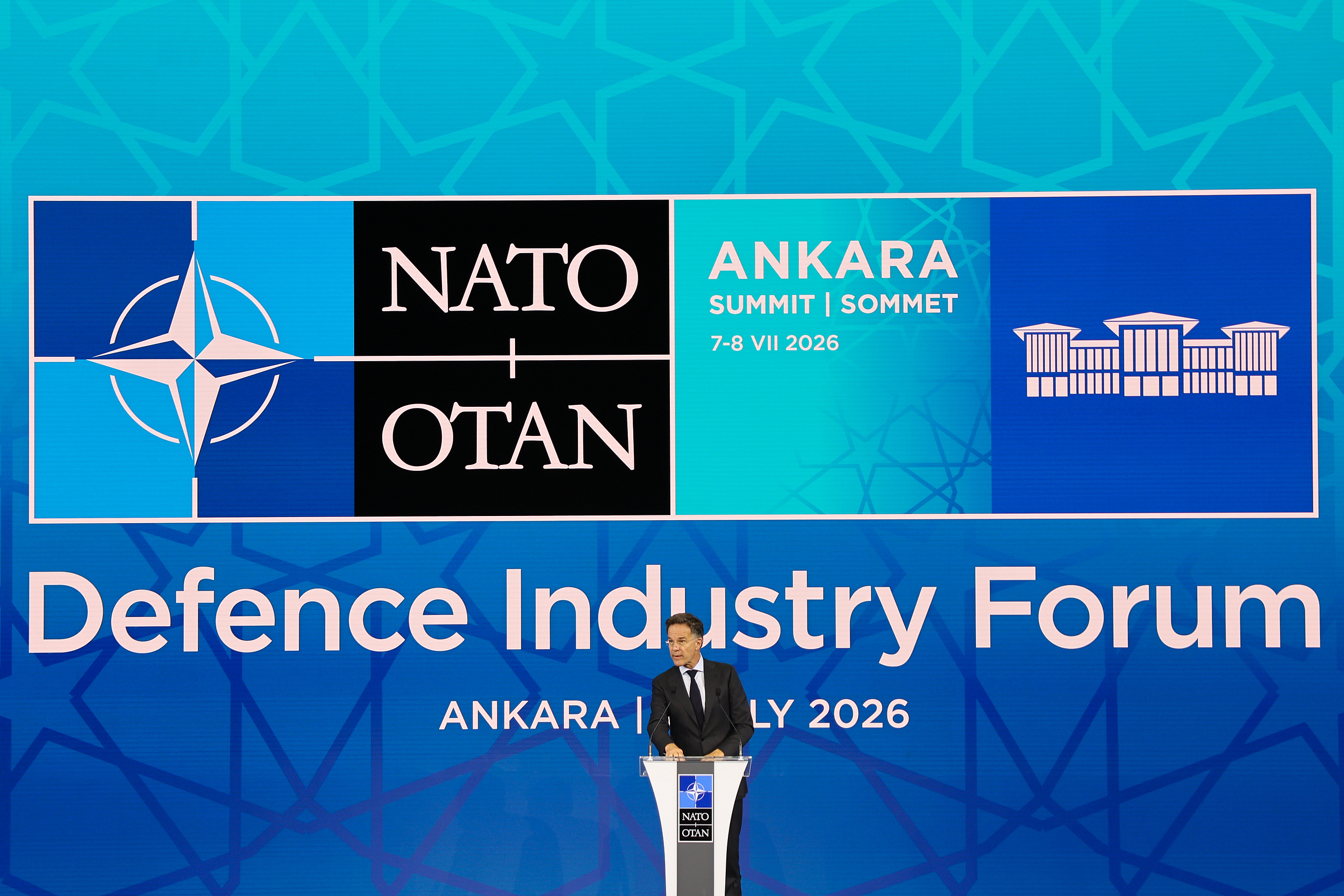
This year’s NATO Summit kicked off in Ankara, Turkey, on July 7, 2026, with a sharp focus on reviewing progress toward the ambitious goal of member nations spending 5% of their GDP on defense. Member states rolled out a slew of new defense cooperation projects and also held intense talks on continued support for Ukraine.
According to reports, NATO Secretary General Mark Rutte announced on the day that member countries will invest over $40 billion in military procurement and defense initiatives over the next five years. He also revealed that European allies’ defense spending in 2026 will jump by 258 billion euros (about 2 trillion yuan) compared to the previous year, urging them to hit the 5% GDP target by 2035, with funds funneled into critical areas like missile and interception systems.
As part of implementing the US-proposed “NATO 3.0” transformation vision, this massive procurement and investment plan aims to tighten transatlantic defense supply chains. It covers everything from buying military gear and deploying space-based assets to building up long-range strike capabilities, and is expected to create hundreds of thousands of jobs on both sides of the Atlantic.
Denmark, Finland, Germany, and Norway are buying drones from US-based Northrop Grumman, while American firms have also snagged several contracts for long-range strike systems. Eleven NATO member countries are teaming up to purchase Sweden’s Saab “GlobalEye” early-warning aircraft. Turkey, the host nation, is using this summit to solidify its role as a key hub for NATO’s arms exports. Market enthusiasm for European defense stocks is heating up fast.
Beyond that, the summit also hammered out details for a potential $70-80 billion military aid package for Ukraine in 2026, covering weapons purchases and troop training. Discussions also touched on extending support into 2027, though Italy and Slovakia voiced opposition. The summit made it clear that Ukraine doesn’t yet meet the unanimous membership criteria, so no formal talks on joining NATO will move forward for now.
Founded after World War II as a collective defense alliance, NATO gradually expanded its reach after the Cold War, getting involved in global interventions and geopolitical power plays. The US, as a founding member and the alliance’s dominant military force, has long steered NATO as a key tool for maintaining global hegemony and European security.
Since his first term, Trump has been grumbling about NATO, arguing the US is footing an unfair share of the bill without getting enough in return, and even threatening to pull out. Under this pressure, NATO members have already hiked their defense spending target from 2% to 3.5% of GDP.
But let’s be real: these spending targets aren’t legally binding treaties. Every member state has a veto power over summit decisions. Spain is the only one among the 32 allies flat-out refusing to comply, sticking to just 2% of GDP and prioritizing domestic spending on healthcare and pensions instead. That’s been a major sore point for Trump.
As a key NATO member on Europe’s southern flank, Spain is a crucial strategic anchor for the alliance, providing vital access for US forces into the Mediterranean. But this role sits awkwardly with NATO’s main eastward expansion focus, creating a structural mismatch.
Earlier, Spain refused to let the US use its southern bases at Rota and Morón de la Frontera for strikes on Iran. It also declined to join any NATO operations aimed at securing ships through the Strait of Hormuz, arguing such actions lacked UN authorization and violated the UN Charter and international law.
Thanks to the Russia-Ukraine war and trade spats, the cracks across the Atlantic are widening. Since last year, the US “reciprocal tariff” policy has really shaken up traditional US-Europe ties. The White House’s latest National Security Strategy even “downgraded” Europe’s standing, which is speeding up Europe’s push for “strategic autonomy,” especially in defense planning. The two EU powerhouses, Germany and France, are already working to build a stronger “European pillar” within NATO to better coordinate their actions.
Late last year, the European Parliament passed the European Defense Industrial Program. This is arguably the EU’s biggest defense reform in years, aiming to shift Europe’s military industry from a “peacetime mode” to a “war-ready posture.” Key elements include isolating supply chains, giving the EU crisis management powers, and providing financial backing.
According to public reports, during the recent Iran conflict, only a handful of NATO members offered limited, non-combat support, mainly through base access, air cover, intelligence sharing, and logistics. Trump has been pushing for the US to scale back its military commitment to European security, expecting European allies to handle conventional defense while the US keeps the nuclear umbrella. The US military is already planning to slash the number of jets, tankers, and aircraft carriers assigned to NATO.
Right at the summit’s start, Trump once again dropped an awkward comment for European allies, saying the US should take control of Greenland, a Danish overseas territory, and that its status was affecting his relationship with NATO. Danish Prime Minister Mette Frederiksen shot back, hoping allies would respect each other’s sovereignty.
A report from the Stockholm International Peace Research Institute in April this year showed global military spending hit a record $2.887 trillion in 2025. Regional conflicts and NATO’s new spending targets pushed the 29 European NATO members to spend a combined $559 billion on defense in 2025, with 22 of them meeting the 2% GDP threshold. That’s the fastest growth rate since 1953.
Analysts point out that NATO’s biggest military buildup since the Cold War is ramping up regional security tensions and raising the risk of confrontation with non-member neighbors. Russia sees “NATO 3.0” as pushing Europe to take the lead on conventional defense and beefing up border forces, which directly crosses its red lines and seriously threatens the strategic security of its western border.