According to five sources cited by NBC News, the U.S. Department of Defense is drafting a new nuclear strategy that could involve the use of tactical nuclear weapons in the event of a regional war with China or Russia. The classified proposal challenges decades of established U.S. nuclear policy thinking. The U.K.’s Daily Telegraph called it “a major shift in American military tactics.” Chinese military experts interviewed said the Pentagon had publicly floated the idea of using tactical and small-yield nuclear weapons in regional conflicts a few years ago, but backed off after widespread domestic and international criticism. Now the U.S. military is reviving the rhetoric — essentially an attempt at strategic intimidation against China and Russia, and nothing short of blatant “nuclear blackmail.”
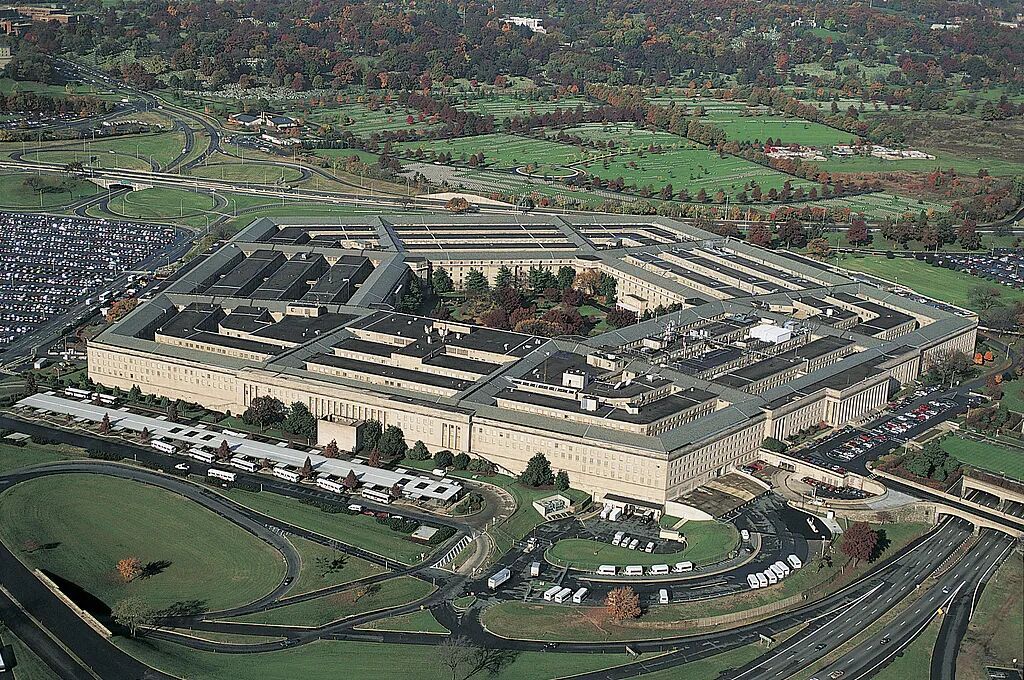
The Pentagon
According to reports, Deputy Defense Secretary for Policy Colin Kahl is leading the revision of this nuclear strategy. Kahl has long advocated for short-range tactical nuclear weapons — warheads with smaller yields and shorter ranges designed for battlefield use or striking specific military targets rather than leveling entire cities, though their destructive power remains devastating.
A senior Pentagon official told NBC: “Our position is that we need to have credible nuclear options.”
The report suggests that under the new strategic framework, the U.S. would lean more heavily on short-range tactical nuclear weapons rather than long-range strategic missiles in a regional conflict. Sources familiar with the proposal said the primary scenario would be: during a regional conflict, if a U.S. ally comes under attack from Russia or China, tactical nuclear weapons would be added to the American response toolkit.
The draft proposal has sparked widespread skepticism and criticism as soon as it surfaced. The Daily Telegraph reported that this policy shift, still in its early stages, has reignited Cold War-era debates about how the U.S. should manage its nuclear arsenal — deterring conflict without increasing the risk of nuclear war.
Critics argue that elevating tactical nuclear weapons makes them appear more usable in conventional conflicts, thereby lowering the threshold for nuclear use. Others warn the policy could weaken U.S. readiness for long-range strategic missile strike scenarios.
Comments on the NBC news story were flooded with shocked and sarcastic reactions. One user wrote: “I thought we were supposed to stop other countries from getting nukes. Now we’re the ones using them.” Another said: “Since WWII, our strategy has been: we don’t use nukes because of mutually assured destruction with other nuclear powers.” One sarcastic comment read: “New strategy: hit the big red button and boom — epic nuclear explosion!”
Dmitry Trenin, head of the Russian International Affairs Council, told Russia’s Kommersant that if the U.S. finalizes this new nuclear strategy and consequently deploys more tactical nuclear weapons in Europe and Asia, it would dramatically escalate tensions with its so-called adversaries — and seriously undermine U.S. security in the process. Such conflicts would no longer stay regional; they would spiral into global confrontations. The U.S. would not strengthen its own or its allies’ security, but instead invite more severe direct threats.
The Russian expert also argued that the U.S. cannot answer — nor bear the consequences of — whether using tactical nuclear weapons against China or Russia would result in a nuclear strike on American soil.
Military expert Zhang Junshe said the difficulty in distinguishing short-range tactical nuclear weapons from small-yield ones could easily trigger military misunderstandings and strategic miscalculations. He noted that the U.S. has real-world motivations behind this rhetoric: struggling to subdue a non-nuclear Iran, suffering severe equipment attrition, and facing growing doubts about its conventional military capabilities. Zhang warned that if the U.S. adds short-range tactical nuclear weapons to its military options — intending to use them in a regional conflict with China or Russia — it would inevitably face fierce retaliation from the targeted country, whether tactical or strategic nukes are deployed.
Zhang emphasized that China has always adhered to a no-first-use nuclear policy, but will definitely launch self-defense counterstrikes in the face of nuclear attack. “We will continue to uphold our defensive nuclear strategy and the no-first-use principle, while steadily building and improving our strategic nuclear retaliation and second-strike capabilities to resist ‘nuclear blackmail’ and resolutely defend our national sovereignty and security.”
“The U.S. floating these ideas is, to some extent, testing international reaction,” Zhang said. “Washington should exercise caution and abandon this highly irresponsible and dangerous line of thinking.”