

The infamous “Blue House Curse” that has haunted South Korean leaders may finally be on its way out.
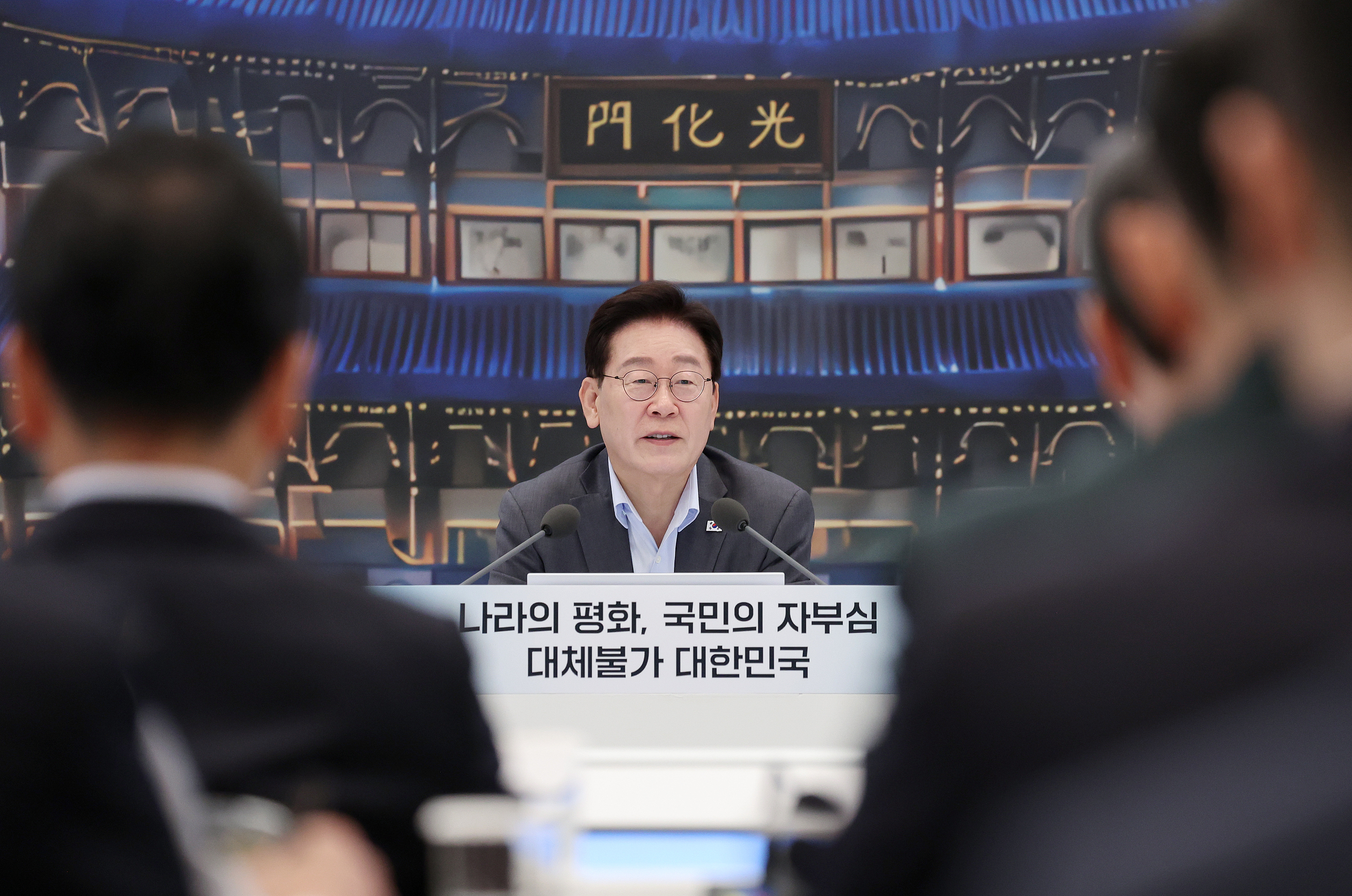
On August 4th, the South Korean government held a cabinet meeting chaired by President Lee Jae-myung, during which it reviewed and passed the revision to the Criminal Procedure Act. This sweeping change completely abolishes the prosecution’s authority to conduct direct investigations and supplementary probes—a power it has held for over seven decades. The amendment, along with related laws, will take effect starting October 2nd.
In the face of mounting opposition, Lee Jae-myung publicly addressed the cabinet, framing this abolition of prosecutorial investigative powers as “the beginning of judicial normalization.” He also instructed relevant departments to establish complementary systems to prevent innocent people from becoming collateral damage during the reform process.
To be specific, the prosecution now retains only its indictment function. It no longer has the power to launch investigations directly, nor can it conduct supplementary investigations on its own. If a prosecutor believes a case requires further inquiry, they can only request judicial police to carry out additional probing. This effectively means that the threshold for the opposition party to launch investigations into former presidents and high-ranking officials will be significantly raised moving forward.
Opposition factions have slammed this as a self-protection clause tailor-made for Lee Jae-myung. The People Power Party, the largest opposition party affiliated with former President Yoon Suk-yeol, launched a filibuster on July 30th in an attempt to block the legislative process, but failed to prevent the National Assembly from putting the amendment to a vote the following day.
On July 31st, the National Assembly passed the revision with 175 votes in favor, 2 against, and 1 abstention. The People Power Party did not participate in the vote and subsequently demanded that Lee Jae-myung veto the bill. Deputy Prosecutor General Koo Ja-hyun, who belongs to no registered political party, submitted his resignation shortly afterward, taking responsibility for the amendment’s passage.
Meanwhile, polls indicate that 61% of South Koreans support retaining the prosecution’s investigative powers, while only 23% back their abolition.
The deep-rooted soil of South Korea’s power struggles is a complex layering of historical, institutional, and social factors built up over time.Several presidents before Lee Jae-myung attempted to rein in this power apparatus, but all were met with fierce resistance from vested interest groups.
After democratization in 1987, the ideological divide between the left and right in South Korea has only intensified, leaving virtually no room for consensus among voters. On top of that, the country operates a single five-year presidential term system, which often prompts presidents to wield the prosecution service—an entity not fully constrained by administrative oversight—as a weapon to crush opposition factions.
Against this backdrop, multiple former presidents including Roh Tae-woo, Chun Doo-hwan, Lee Myung-bak, Park Geun-hye, and Yoon Suk-yeol have all met with “unfortunate endings.” In 2009, the prosecution launched a probe into corruption allegations involving Roh Moo-hyun and his relatives. Roh later leapt to his death from a cliff on Bonghwa Mountain in Gimhae, South Gyeongsang Province, with authorities ultimately ruling it a suicide. Currently, Yoon Suk-yeol faces over ten charges, with the most serious being insurrection, abuse of power, and forging official documents.
And Lee Jae-myung himself is hardly free of blemishes. The public broadly feels that the government is not focusing on pressing livelihood issues but is instead prioritizing long-term power plays, sparking widespread discontent.
Lee Jae-myung’s approval ratings have now slipped for three consecutive weeks, and for the first time since taking office, his disapproval rating (50.5%) has crossed the majority mark. The drop is especially sharp among voters in their 20s and 30s, as well as in the capital region.
Just last month, single-stock leveraged ETFs on the Korean stock market triggered a market crash, wiping out a significant portion of ordinary retail investors’ assets overnight. The public largely blames the government’s regulatory failures for the capital market turmoil. Kim Yong-beom, head of the presidential office’s policy planning division, is now facing criminal charges over the “hasty introduction of leveraged ETFs.”
Lee Jae-myung, now 61 years old, was born in a mountain village in the capital of North Gyeongsang Province. As a teenager, he worked as a child laborer and suffered an accident that left him with a disability from a workplace injury to his arm. He later earned a bachelor’s degree in law from Chung-Ang University’s law school and practiced as an attorney. In 2010, he was elected mayor of Seongnam City, marking the true start of his political career.
During his time in local politics, he faced six indictments from the prosecution, including four criminal cases, covering charges of corruption, influence peddling, dereliction of duty, suborning perjury, and spreading false information. Lee responded with a prolonged hunger strike and was even stabbed on the street in early 2024.
The prosecution alleged that Lee Jae-myung had repeatedly called a former aide to the previous Seongnam mayor in 2018, asking him to testify falsely as a witness in a case involving Lee’s impersonation of a prosecutor. On November 25, 2024, Lee, then leader of the largest opposition Democratic Party of Korea, received a first-instance verdict in the “suborning perjury” case at the Seoul Central District Court. The judge acquitted him, citing “insufficient evidence from the prosecution.”
The People Power Party has demanded that the court reopen Lee’s trial for allegedly violating the Public Official Election Act by making false statements during the election period, arguing that the judiciary must treat both ruling and opposition camps equally—not just hold Yoon Suk-yeol accountable. Other opposition factions have also floated additional accusations regarding Lee’s economic activities and official conduct, but most of these remain at the level of political demands, never reaching formal judicial filing or trial proceedings.
Lee Jae-myung himself has publicly stated that during the 2018 Gyeonggi Province election campaign, mainstream media outlets flooded the airwaves with negative stories about him, deliberately ignoring objective facts that contradicted the claims of his direct rival, Kim Young-hwan. He believes he was subjected to indiscriminate negative attacks throughout the entire election cycle, with one-sided accusations being rolled out right before voting day.