

On the evening of July 24, local time, the Houthi-controlled Hodeidah region in Yemen was hit by multiple airstrikes from the Saudi-led coalition. The strikes targeted telecom facilities and Kamaran Island in the Red Sea.
According to reports, the coalition later announced it had no intention of hitting Hodeidah’s port, stressing that all local ports remain open for shipping. They described the airstrikes as a “measured military response” aimed specifically at Houthi military assets directly linked to threats against commercial shipping in the Red Sea.
The coalition includes Saudi Arabia, the UAE, Bahrain, Kuwait, Egypt, Jordan, Sudan, Morocco, and Yemen’s Southern Transitional Council, all united in their goal to counter the Houthi movement.
On July 20, the Houthis declared a maritime blockade against Saudi Arabia. Three days later, they used missiles and drones to attack two Saudi oil tankers in the Red Sea that violated their blockade order.
Houthi spokesperson Mohammed Abdulsalam stated on social media on July 24 that the maritime blockade “only targets Saudi Arabia” and is a response to Saudi Arabia’s own “blockade” of Houthi-controlled areas. He said the aim is to pressure Riyadh into accepting a “fair solution.” He also clarified that the Bab el-Mandeb Strait remains open.
U.S. President Donald Trump said on July 23 that if the Houthis attack Saudi vessels again, he will hold Iran responsible and impose “major military punishment” on both Iran and the Houthis. On the same day, Israeli Defense Minister Israel Katz said Israel is prepared for any scenario involving Iran.
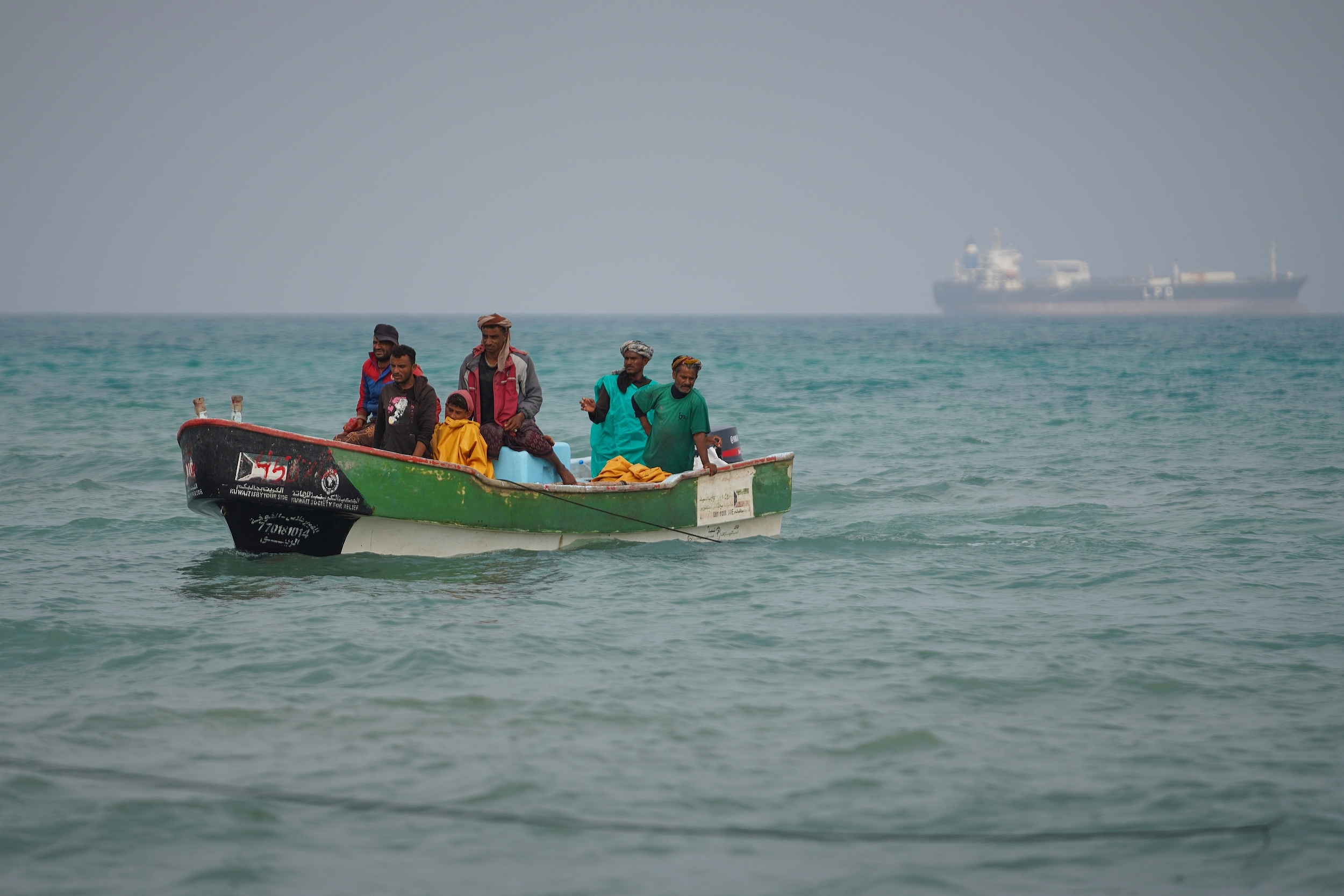
The Houthis and Iran both belong to the Shia branch of Islam, and the group has deep roots in northern Yemen. The Houthis are leveraging the U.S.-Iran conflict to expand their influence, while Iran uses the Red Sea shipping lanes controlled by the Houthis to its advantage—creating a mutually beneficial partnership. Israel and the Houthis have been locked in a long-standing conflict, which has escalated in recent years over the Gaza issue.
With two major global energy transit chokepoints—the Strait of Hormuz and the Bab el-Mandeb—disrupted by Middle East tensions, oil giant Saudi Arabia is now forced to reroute its crude exports around Africa, via Egypt’s Suez Canal. This detour adds about a month to shipping time and doubles transportation costs.
According to data from Kpler and the London Stock Exchange Group’s shipping research, a tanker sailing from Saudi Arabia’s western Red Sea port of Yanbu to Asia via the Bab el-Mandeb typically takes just 19 days. But the alternative route—through the Suez Canal, the Mediterranean, the Strait of Gibraltar, and around the Cape of Good Hope—stretches to 48 days.
By the numbers, the longer route raises fuel costs alone from $1.26 million to about $2.87 million, plus an additional $1 million in Suez Canal transit fees.
The Suez Canal, located at the northern tip of the Red Sea and connecting to the Mediterranean, is one of the few lock-free canals capable of handling large commercial vessels. Data from Energy Aspects shows that due to depth restrictions, large tankers must pass through the canal partially loaded and then refuel once they enter the Mediterranean.
To pull this off, Saudi Arabia can divert some of its crude through the Suez-Mediterranean (SUMED) pipeline. This 320-kilometer pipeline bypasses the Suez Canal, linking Egypt’s Ain Sokhna port on the Red Sea to Sidi Kerir on the Mediterranean, with a capacity of 2.5 million barrels per day.
Before the Iran tensions erupted, Saudi Arabia was exporting about 7 million barrels of oil daily. To keep global markets stable, Saudi Aramco has started increasing crude supplies through the SUMED pipeline. Trade sources said on July 23 that Aramco has also begun offering spot crude from the Sidi Kerir port to some long-term customers in Europe and North America, in addition to its usual Asian shipments.
Since July, Brent crude futures have been on a tear, surging from around $70 per barrel to above $100 in just three weeks—a jump of more than $30—as market jitters over geopolitical risks have spiked.
Kpler reported on social media on July 24 that shipping traffic through the two key Middle Eastern waterways—the Strait of Hormuz and the Bab el-Mandeb—showed a split on July 23. While transit through the Strait of Hormuz dropped sharply, the Bab el-Mandeb Strait, linking the Red Sea to the Gulf of Aden, saw a modest recovery, with 49 vessels passing through that day, up from recent levels.
Kpler noted that some ships which had turned back due to security risks in the Gulf of Aden and the Red Sea have resumed their journeys and completed transit. However, others are still holding off, waiting to see how the situation unfolds. International shipping companies continue to assess the regional security landscape, and overall activity reflects a “cautious but selective recovery” pattern.
On a separate note, the U.S. and the UK are planning a high-level meeting in London next week to discuss forming an international coalition aimed at “protecting maritime shipping in the Strait of Hormuz.”
The U.S. military has completed its 13th consecutive night of strikes, targeting Iran’s military command centers, drone storage facilities, communication networks, and coastal surveillance posts. The goal is to weaken Iran’s threat to shipping in the Strait of Hormuz. Trump stated that the U.S. is negotiating with Iran but hasn’t ruled out escalating the intensity of the strikes.