

After the Houthi rebels in Yemen issued fresh threats against Saudi Arabia, two oil tankers loaded with Saudi crude destined for Asia abruptly turned back in the Red Sea on July 21. Around the same time, another tanker came under attack near the Strait of Hormuz, the entrance to the Persian Gulf.
The Houthi spokesperson, Yahya Saree, announced on July 20 that the group was imposing a maritime blockade on Saudi Arabia. This move is a direct response to what they describe as over a decade of Saudi-led blockades on Yemeni ports and airports, as well as recent airstrikes on Sanaa International Airport. The blockade, effective immediately, includes closing the Bab el-Mandeb Strait and targeting key Saudi ports such as Jeddah, Jizan, and Yanbu.
Later that day, the Houthis sent emails to multiple shipping companies, clarifying that the restrictions aren’t just for ships flying the Saudi flag—they also apply to any vessel loading or unloading cargo at Saudi ports. They urged shipping firms to take “due precautions” when planning routes involving Saudi ports and warned that ships engaged in such trade could “become targets” within the Houthis’ operational reach.
In response, the Saudi-led coalition took steps to protect member nations’ vessels passing through the Bab el-Mandeb Strait. The coalition stated it would act against any threats to navigation safety in accordance with international law and the United Nations Convention on the Law of the Sea.
The coalition, which includes Saudi Arabia, the UAE, Bahrain, Kuwait, Egypt, Jordan, Sudan, Morocco, and Yemen’s Southern Transitional Council, was formed primarily to combat the Houthi insurgency. Interestingly, Kuwait and Qatar have voiced opposition to the blockade, reaffirming their support for freedom of navigation under the framework of international law.
The Houthis share a Shia Muslim affiliation with Iran and have deep grassroots roots in northern Yemen. Iran’s Islamic Revolutionary Guard Corps is the Houthis’ main external backer. The Houthis are leveraging the window of opportunity created by US-Iran tensions to expand their influence, while Iran uses the Houthi-controlled Red Sea shipping lane as a strategic asset. It’s a classic case of mutual benefit.
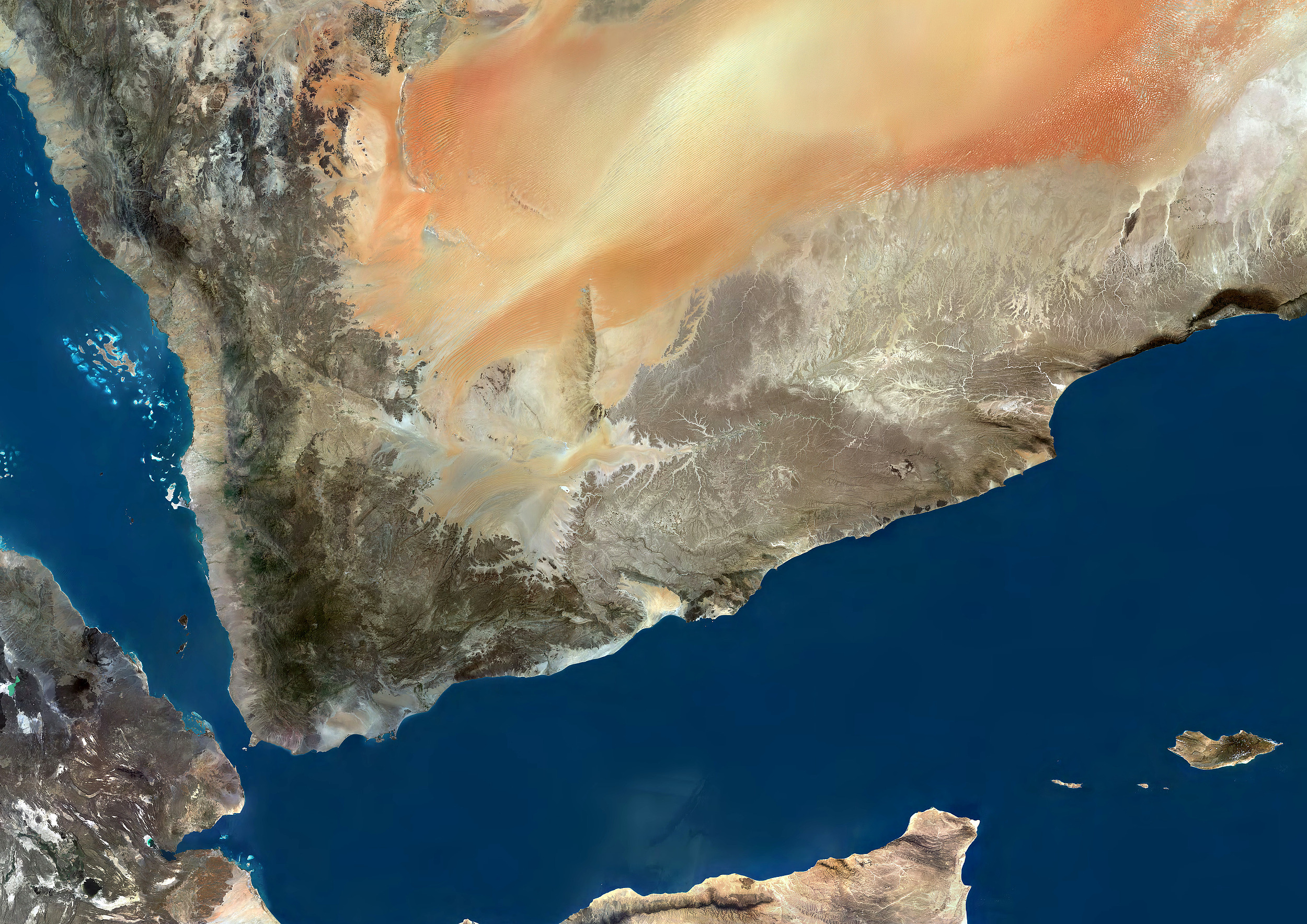
The conflict between the Houthis and Saudi Arabia, fueled by a long-standing mix of sectarian divides, geopolitical rivalry, and clashing core interests, has been simmering since the full-scale war erupted in 2015. Now, the confrontation is escalating once again.
The Bab el-Mandeb Strait, a chokepoint controlled by the Houthis, connects the Red Sea to the Gulf of Aden. It’s often called the “water corridor” linking Europe, Asia, and Africa, and is a critical artery for global trade. According to Qatari sources, about 11% of all global maritime trade passes through this narrow waterway.
This strait is also a vital lifeline for Saudi energy exports. According to China’s Ministry of Foreign Affairs website , Saudi Arabia holds the world’s second-largest oil reserves at 267.2 billion barrels, and natural gas reserves of about 6 trillion cubic meters, roughly 3.2% of the global total. Oil revenue accounts for 68% of the kingdom’s state income and 27% of its GDP.
To bypass the choked Strait of Hormuz during the Iran conflict, Saudi Aramco built a pipeline running east to west, transporting crude from the Persian Gulf oil fields to the Red Sea port of Yanbu. This pipeline has a peak capacity of 7 million barrels per day, with about 5 million barrels destined for export.
Saudi Arabia has increasingly relied on the Bab el-Mandeb Strait for its crude exports. Data from industry experts shows that the Yanbu port has recently been operating near its peak daily loading capacity.
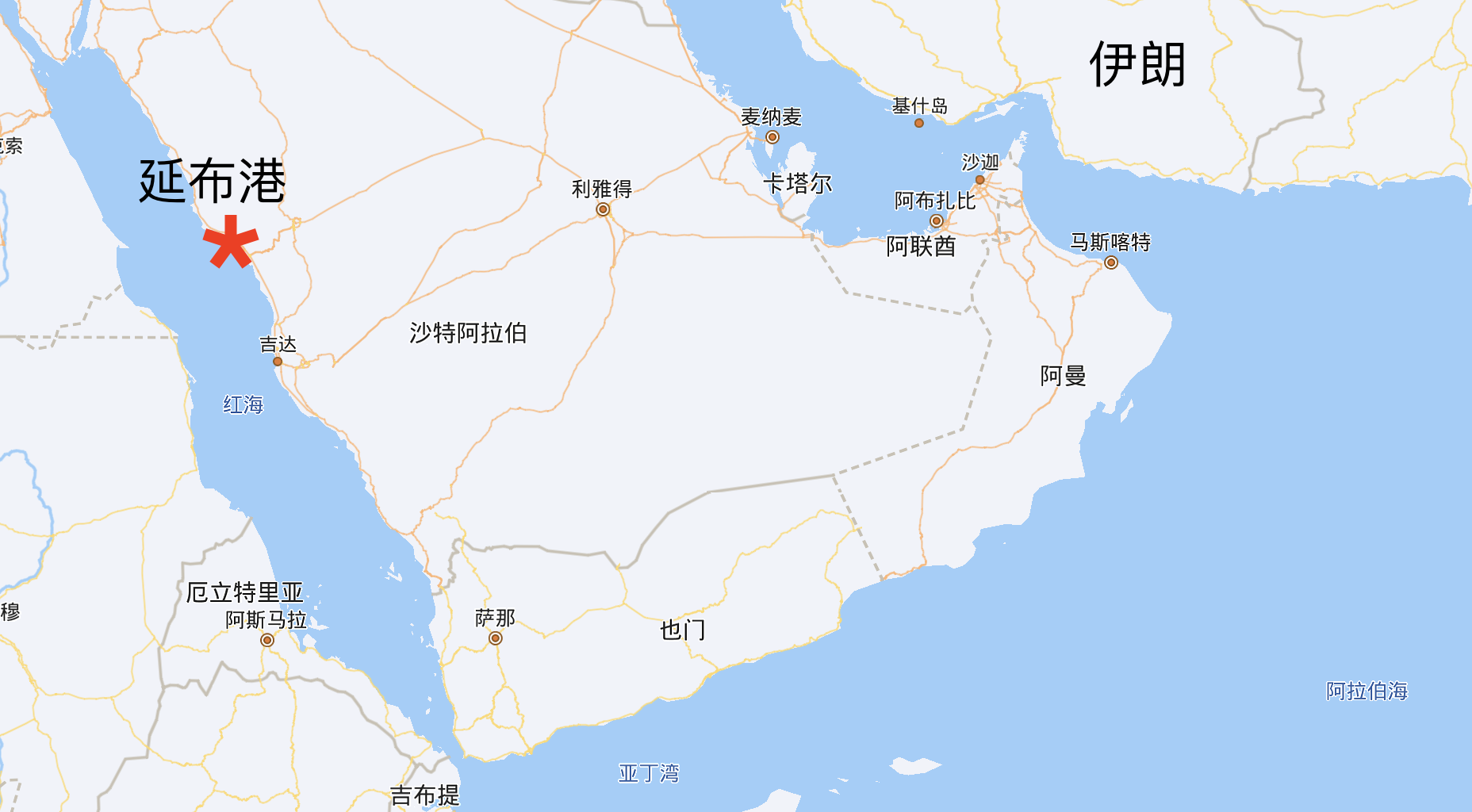
Meanwhile, at least three sources revealed last week that Iran has asked the Houthis to be ready to block the Red Sea oil route if the US, as threatened by President Trump, attacks Iranian infrastructure like power plants.
A source close to the Houthis confirmed, “They are ready. Missiles and drones have been deployed around the Bab el-Mandeb Strait and in Yemen’s highlands overlooking Hodeidah and the Gulf of Aden. They are just waiting for the order to act.”
Similar to the situation in the Strait of Hormuz, a Houthi blockade would send global energy and shipping costs soaring, disrupt supply chains, and escalate regional tensions. Under the Sabah Defense Treaty, Pakistan could even be dragged into the conflict, pushing the already fragile Middle East back to the brink of chaos.
The global ‘oil tap’ is tightening again, and prices are bouncing back. Earlier this week, international oil prices hit their highest level in five weeks. Brent crude futures rose 2% to close at $91.01 per barrel, the highest closing price since June 10.
A recent report from Goldman Sachs highlights that the renewed risk of escalation in the Middle East poses an upside risk to their forecasts of $80 per barrel for Brent crude and $75 for WTI crude in the fourth quarter of 2026. If shipping through the Strait of Hormuz remains disrupted, Brent could break through $120 per barrel in Q4 2026.
Analysts warn that the ‘twin strait’ dynamic means roughly 25% of the world’s crude supply is now at risk; war risk insurance premiums have skyrocketed, with a single transit fee for a tanker jumping from $250,000 to $10 million, forcing many vessels to stay put. The cascading rise in energy, shipping, and food costs would significantly fuel global inflation, directly hammering manufacturing and trade worldwide.