

According to a report on August 19, South Korean military officials have confirmed that the “Ulchi Freedom Shield” joint exercise with the US will be cut short by half, wrapping up early after the defensive phase concludes.
The drill was originally scheduled to run from the 17th to the 27th, but the number of field maneuver sessions has been slashed dramatically from 51 last year to just 22 this time around. Pentagon officials say the schedule change was carried out at the direction of President Trump and Secretary of War Pete Hegseth, with some activities cancelled outright and others converted to simulation-based training.
A US Forces Korea spokesperson said last week that this year’s exercise is designed to adapt to North Korea’s evolving capabilities, and will include training to counter drones, GPS jamming, and cyber attacks. At least 18,000 South Korean troops are taking part.
Meanwhile, Trump is pushing his aides to arrange a meeting with North Korean leader Kim Jong-un as early as this fall. He has reportedly discussed in private the possibility of sitting down face-to-face with Kim during his next trip to Asia, which could happen in November.
In a social media post on August 16, Trump said he had asked the Pentagon to significantly scale back the joint military drills with South Korea. He described these exercises as enormously expensive — with the US footing a large chunk of the bill — and added that they send a completely inappropriate and hostile signal to North Korea.
Given his self-described good relationship with Kim Jong-un, Trump expressed frustration that the US had agreed to participate in joint exercises with South Korea so long ago. Trump also took to social media to say, “Kim Jong-un has always shown me great respect. We’ve had important meetings, talked, and spent time together. I know him, and he knows me.”
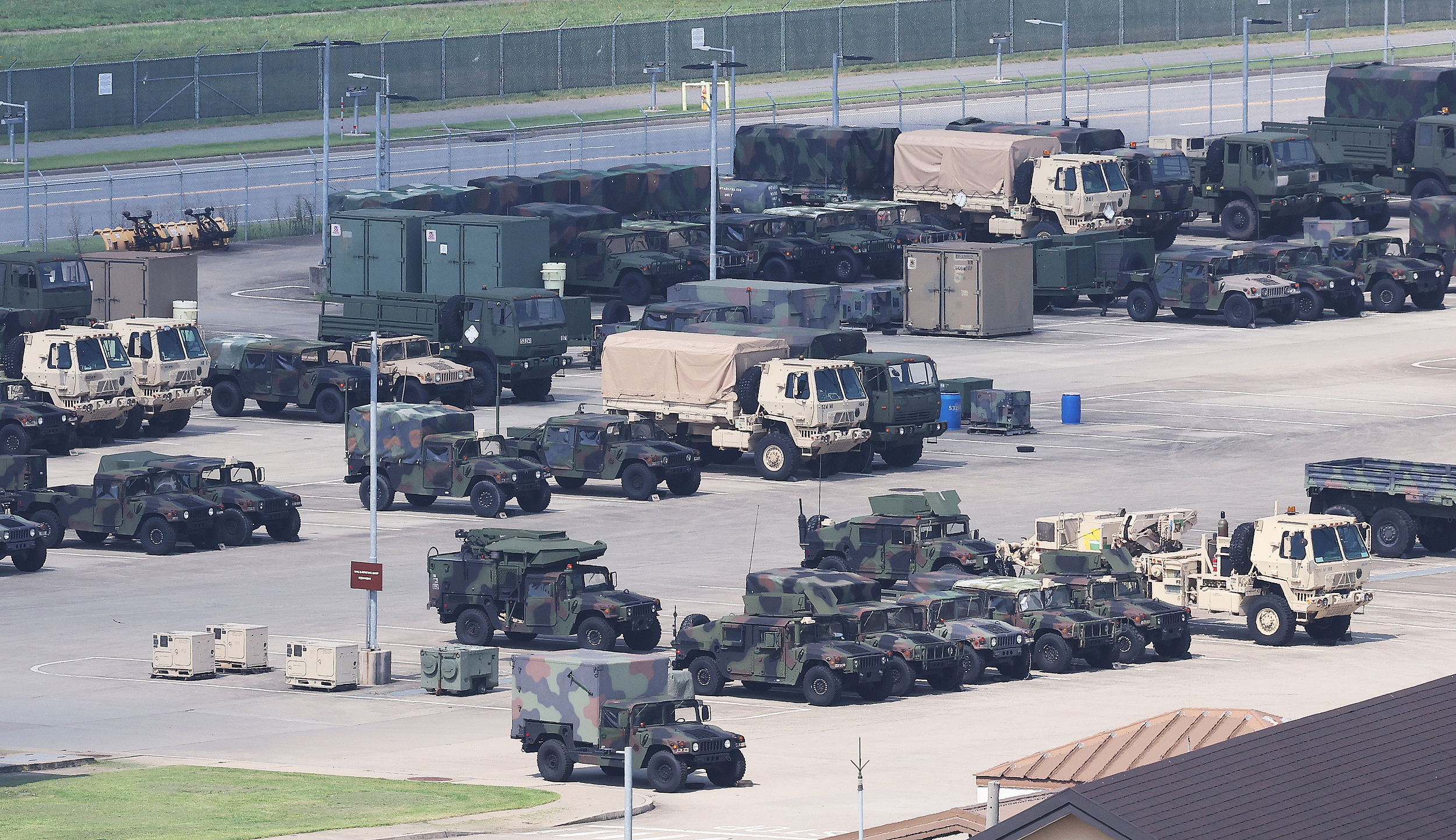
Since cancelling the exercises outright is no longer feasible at this late stage, Trump has directed the Pentagon to dramatically reduce the scale of the US-South Korea drills. In closing his post, he also noted that he had recently asked South Korea to join the US in pushing for the denuclearization of Iran, but Seoul declined.
North Korea has repeatedly condemned the US-South Korea exercises as “rehearsals for an invasion war.” On August 12, it test-fired a ballistic missile with a range exceeding 700 kilometers in response to the drill’s show of force, vowing to counter new threats with new deterrence capabilities.
Analysts point out that the White House’s move to voluntarily shrink the scale of the exercises breaks with decades of established practice in US-South Korea joint drills. It suggests the Trump administration will no longer fully accommodate Seoul’s security demands, while signaling a major recalibration of its geopolitical approach to Northeast Asia.
In May, at the 23rd Shangri-La Dialogue, Hegseth publicly praised South Korea for increasing its defense spending in recent years, strengthening its military, and helping shoulder collective defense responsibilities. He placed Seoul in the category of “model allies” who are “most capable, clear-headed, and ready to defend their own interests.”
The origins of US-South Korea joint exercises date back to the aftermath of the Korean War. The “Ulchi” series of drills officially began in 1968 and gradually evolved into the current annual joint exercise system, with North Korea as the primary target.
When Trump first took office in 2018, there was a general easing of tensions on the Korean Peninsula. He met with Kim Jong-un three times during his first term, including discussions on North Korea’s nuclear program. However, the Trump administration later backpedaled on its position and failed to respond to Pyongyang’s positive overtures, causing the denuclearization process to stall.
As the 2024 US election approached, inter-Korean relations hit rock bottom. In June of that year, the pro-Western Yoon Suk-yeol government in South Korea decided to resume loudspeaker broadcasts toward the North and launch a series of hostile activities, citing North Korea’s so-called “garbage balloons” sent toward the border areas and the capital region, along with other military provocations.
After Lee Jae-myung was elected South Korea’s new president on June 4 last year, he pledged to push for the restoration of communication channels such as the inter-Korean military hotline and to halt actions that provoke tensions. A week later, the South Korean military stopped its loudspeaker broadcasts toward the North. The following day, North Korea reciprocated by ceasing its own broadcasts to the South.
During this year’s Liberation Day celebrations on August 15, Lee Jae-myung unveiled an “inclusive and stable blueprint for peaceful coexistence with North Korea,” vowing to begin the process of transforming the unstable armistice regime on the Korean Peninsula into a peace regime. However, North Korea still designates South Korea as its “primary enemy” and has explicitly rejected Lee’s peace overtures, including his proposal to formally end the Korean War and resume inter-Korean dialogue, refusing to accept his gestures of goodwill.