The “Islamabad Memorandum of Understanding” text is expected to be officially signed in Switzerland this Friday (June 19), but the US and Iran still have different takes on whether transit through the Strait of Hormuz will be free. Managing the strait is the first phase of the agreement.
On June 15, Iranian Foreign Ministry Spokesperson Baghaei stated that Iran will manage security and transit through the Strait of Hormuz for a “specific period” and will charge fees for related shipping services. In the next phase, Iran, as a coastal state of the strait, will work with Oman to take necessary steps to ensure safe passage for ships.
On the same day, US Vice President Vance publicly said the US-Iran memorandum is expected to keep the Strait of Hormuz “open for the long term without tolls,” with specific arrangements to be settled in further technical talks. President Trump posted on social media that, with the US-Iran deal, the strait will reopen for free for 60 days to allow for mine clearance operations.
The Strait of Hormuz, between Iran and Oman, is the only sea passage from the Persian Gulf to the Indian Ocean. While its deep-water shipping lanes mostly lie within Omani territorial waters, Iran holds significant control. The UN Convention on the Law of the Sea says coastal states of international straits cannot arbitrarily restrict or impose tolls on transit.
As of April 2026, over 168 countries and entities have formally ratified the UN Convention on the Law of the Sea, including China, Russia, Japan, India, and most major coastal and global powers. Iran has not formally ratified it, so it argues it is not bound by the “right of transit passage.” The US also hasn’t formally ratified it.
As early as March 30, Iran’s Parliamentary National Security Committee passed a bill to charge fees for ships passing through the Strait of Hormuz. The plan includes financial arrangements and a fee system in Iranian rials, as well as maintaining the leading role of the Revolutionary Guard and other armed forces.
Last month, the Iranian government announced the creation of a new agency to manage the strait, the “Persian Gulf Strait Authority,” and a social media account with the same name went live that day. The account posted, calling itself the official channel, promising real-time updates on the latest developments in the strait. The account is run by Iran’s Supreme National Security Council and the Islamic Revolutionary Guard Corps Navy.
Earlier reports suggested that the core rules of the “Persian Gulf Strait Authority” might include charging a “safe passage fee” in Iranian currency only; requiring all civilian and commercial ships to submit detailed information about owners, crew nationalities, cargo, and routes before passing; and extending regulatory authority to underwater pipelines and data cables running through the strait.
Last week, the Iranian government started working on the “Strait of Hormuz Environmental Service Fee Regulations.” Sources from shipping safety operators say that currently, the single-pass fee for bulk carriers can be up to $120,000, and for oil tankers up to $160,000. Rates vary based on ship type, cargo, and owner nationality, but are significantly lower than the $1-2 million seen at the start of the conflict.
US intelligence says Iran hopes to use the service fees from ships passing through the Strait of Hormuz for post-war reconstruction.
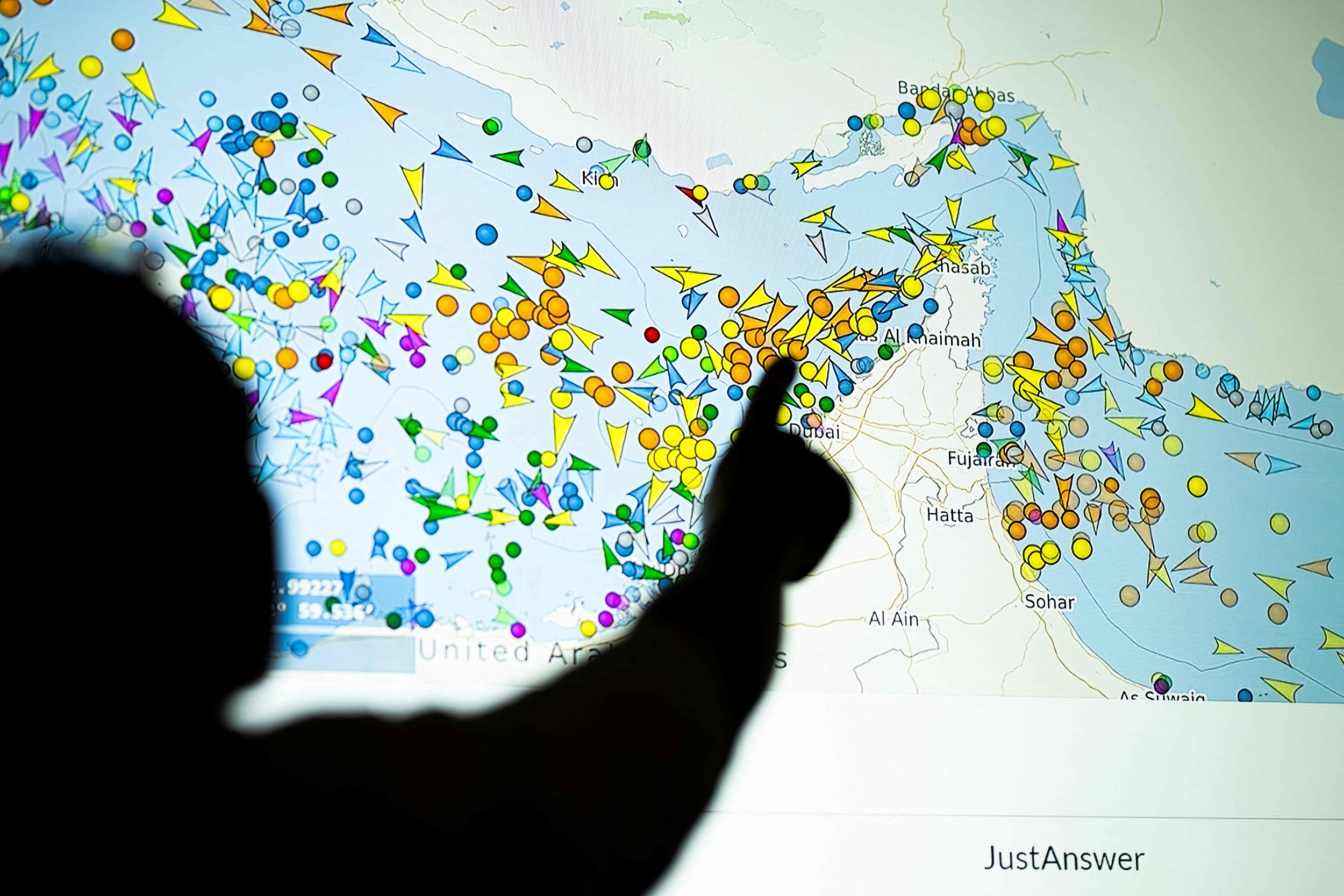
The tense situation in the strait is hitting global energy markets and the economy hard, driving up oil prices and shipping insurance. Shipping platform data shows about 300 fully loaded ships anchored and waiting inside the Persian Gulf, a similar number of empty ships waiting off the Gulf of Oman to return for cargo, and another 250 ballasted ships on standby inside the Gulf.
On June 15, Chinese Foreign Ministry Spokesperson Lin Jian said at a regular press conference that the Strait of Hormuz is an important strait for international navigation. Restoring stability there serves the common interests of regional countries and the international community, and he hopes the strait can return to safe and free passage as soon as possible.
All signs point to high uncertainty about whether the US-Iran agreement can actually be carried out. Besides the issue of managing the Strait of Hormuz, key disagreements over the Israel-Lebanon situation and how the US will unfreeze Iranian assets remain unresolved.