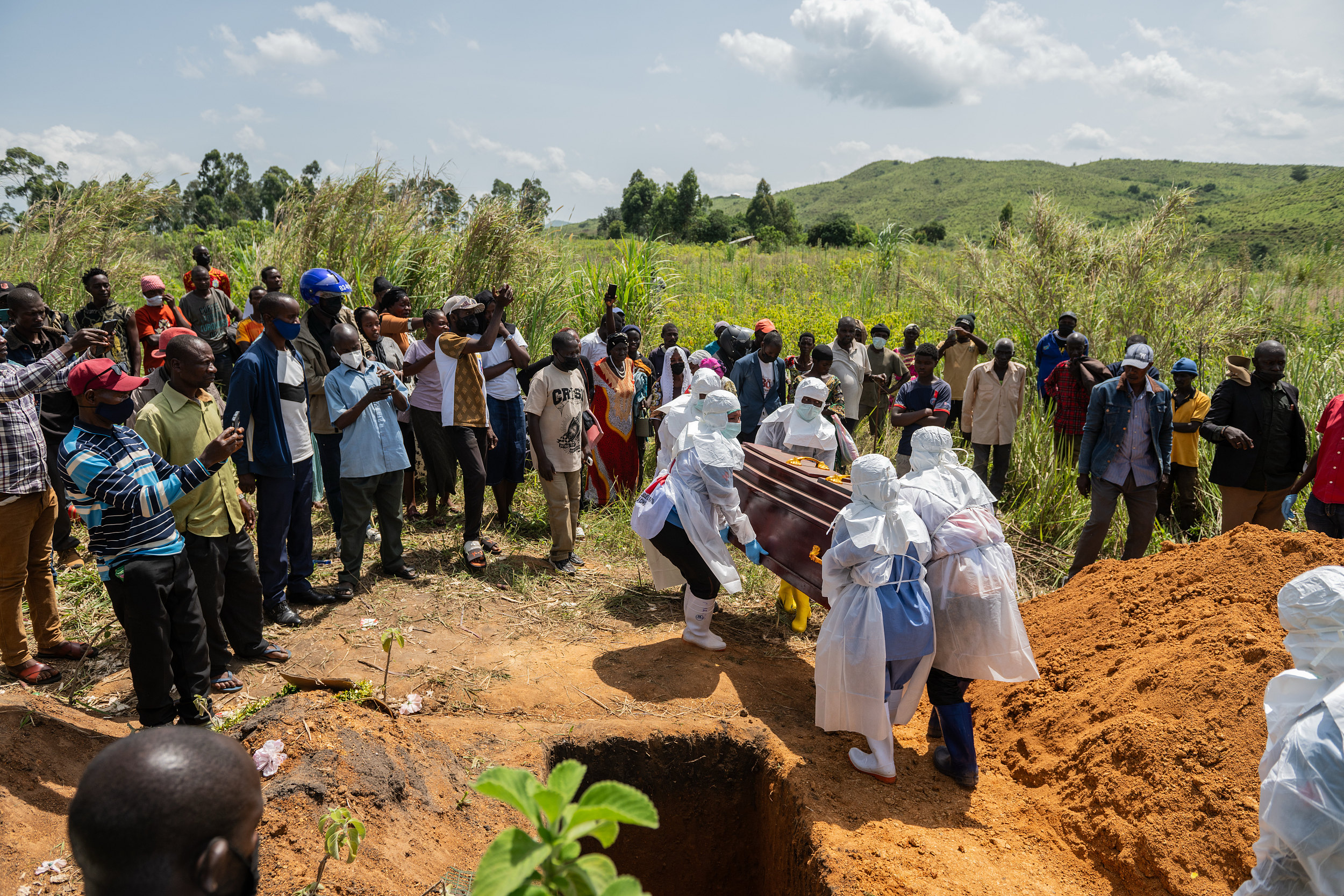
The Ebola outbreak in the Democratic Republic of Congo is still in its early stages, according to the country’s Health Minister, Kamba. The outbreak typically goes through several phases, including an increase in cases, a peak, a plateau, and a decline. Currently, the DRC is still in the phase of increasing cases and deaths.
The World Health Organization (WHO) reported 220 suspected cases of Ebola, including 100 deaths, as of May 25. Due to delays in detecting cases, health workers are racing against time to respond to the outbreak.
According to publicly available information, the Ebola virus can cause Ebola hemorrhagic fever, which is mainly transmitted through contact with the blood, bodily fluids, secretions, and excretions of infected individuals or animals. The clinical manifestations of the disease include fever, bleeding, and multi-organ damage, with a mortality rate of 50% to 90%.
Recently, the infectious disease department of Fudan University’s Huashan Hospital published an article stating that Ebola is not as easily transmitted as influenza or COVID-19, which can spread quickly through the air. Instead, Ebola is primarily spread through bodily fluids, such as blood, vomit, diarrhea, saliva, urine, semen, and contaminated objects.
China has established a multi-dimensional defense system against Ebola, from border control to clinical warnings. Currently, the overall risk to China is considered low. The Chinese Foreign Ministry has stated that there are no suspected cases of Ebola among Chinese citizens.
On May 23, the Chinese Center for Disease Control and Prevention issued a notice stating that individuals returning from the DRC and Uganda should self-monitor their health for 21 days after entering China.
If symptoms such as fever, fatigue, headache, sore throat, vomiting, diarrhea, or unexplained bleeding occur, individuals should seek medical attention immediately. Before seeking medical attention, individuals should contact their local disease control center or community health service center for guidance. When seeking medical attention, individuals should inform their doctor of their travel history and any potential contact with infected individuals.
Medical institutions should ask patients about their travel history, residence, and potential contact with infected individuals when they present with symptoms such as fever, fatigue, headache, sore throat, vomiting, diarrhea, or unexplained bleeding. If a patient has recently returned from the DRC or Uganda, the hospital should report this to the local disease control center immediately.
According to the General Administration of Customs, individuals arriving from the DRC and Uganda who exhibit symptoms such as fever or bleeding must declare this information when entering China. Customs will conduct strict health inspections and disinfection of vehicles, containers, and luggage from these countries.
Earlier this month, the WHO declared the Ebola outbreak in the DRC and Uganda a “Public Health Emergency of International Concern” (PHEIC), the highest level of alert under the International Health Regulations. This declaration triggers a coordinated international response, including border control measures and vaccine distribution.
Since the implementation of the International Health Regulations in 2005, the WHO has declared eight PHEICs, including the H1N1 pandemic, the West African Ebola outbreak, the Zika virus outbreak, the DRC Ebola outbreak, the monkeypox outbreak, the polio outbreak, and the COVID-19 pandemic.
This is the 17th Ebola outbreak in the DRC since the virus was first discovered in 1976. The previous outbreak ended in December 2025. The DRC has the most experience in responding to Ebola outbreaks and has a highly sensitive surveillance system.
Analysts point out that the frequent Ebola outbreaks in the DRC are the result of a combination of ecological, conflict, and health factors. The country’s vast tropical rainforests are home to fruit bats, the primary host of the Ebola virus. Local residents often come into contact with infected animals or their bodily fluids while hunting or handling bushmeat.
The current outbreak is caused by the Bundibugyo strain of the Ebola virus, according to the DRC’s National Institute of Biomedical Research. The first suspected case was a nurse who died in April after exhibiting symptoms such as fever, bleeding, vomiting, and severe fatigue.
The Ebola virus family is large, and different outbreaks may be caused by different strains, making it challenging for healthcare workers to respond to new outbreaks. The sharing of contaminated medical equipment or inadequate laboratory protection can also lead to the spread of the virus within hospitals, putting healthcare workers at risk.
The “Huashan Infection” article pointed out that current vaccines and treatments are mainly effective against the Zaire strain, and the “ring vaccination” strategy established globally in recent years may not be directly applicable to this outbreak, leading to high tension among WHO officials.
The outbreak is mainly occurring in areas affected by conflict, poverty, and population movement, making it difficult for health workers to access these areas. Last year, the security situation in the affected provinces deteriorated, and some areas were in a state of conflict.
WHO Director-General Tedros Adhanom Ghebreyesus called on all parties involved in the conflict to agree to an immediate ceasefire, allowing medical teams to safely and sustainably access the affected areas to control the outbreak.