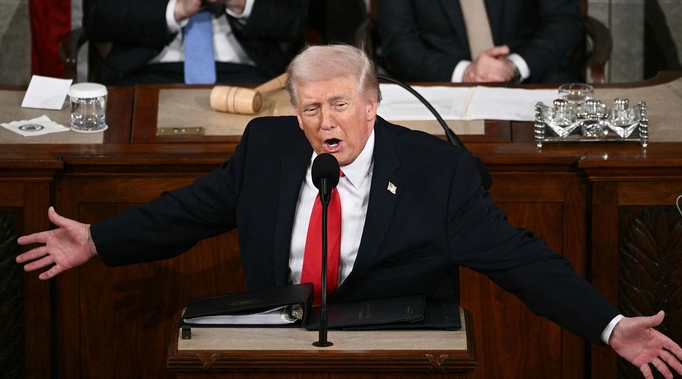
Some analysts point out that, given external factors such as the US midterm elections, a temporary ceasefire is more likely than a comprehensive peace agreement this year.
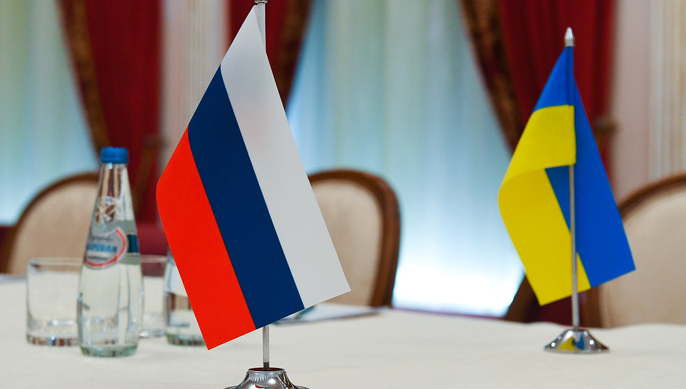
Influenced by NATO’s eastward expansion and the conflict in eastern Ukraine, Russia launched a “special military operation” against Ukraine on February 24, 2022. Now, four years later, the prospects for peace remain highly uncertain. This trend continues to impact the global order, as well as security and prosperity.
The international community is again calling for both sides to take the lead in achieving an immediate, comprehensive, and unconditional ceasefire. UN Secretary-General Guterres, in his latest statement, called on all parties to abide by the UN Charter, international law, and relevant UN resolutions, and to respect Ukraine’s independence, sovereignty, and territorial integrity.
Furthermore, according to scholars, given the upcoming US midterm elections in November, a temporary ceasefire is more likely than a comprehensive peace agreement this year.
The Russia-Ukraine conflict has also exposed internal rifts and strategic dilemmas within NATO. If a new security guarantee mechanism cannot be established, similar conflicts are likely to occur in other regions.
China maintains a consistent stance on the Russia-Ukraine conflict: upholding objectivity and impartiality, advocating a peaceful resolution, opposing taking sides, and insisting on achieving a ceasefire through dialogue and negotiation, while promoting the construction of a balanced, effective, and sustainable security architecture.
Territorial Affiliation Remains Unresolved
The multilateral mediation efforts surrounding the peace process in Ukraine have experienced numerous twists and turns. In January of this year, the first trilateral meeting between the US, Russia, and Ukraine failed to yield any substantial results, with the core territorial issue remaining unresolved. According to US President Trump, only the issue of the Donbas region’s status remains unresolved between Russia and Ukraine.
At an expanded meeting of the Russian Ministry of Defense on December 17th last year, President Putin emphasized his bottom line: he would not compromise on the issue of Ukraine ceding territory. His consistent position, besides Crimea, which has long been incorporated into Russia, also includes the four eastern Ukrainian regions of Donetsk, Luhansk, Zaporizhzhia, and Kherson.
The first two regions are located in the Donbas region, which was once part of the Russian Empire but was transferred to Ukraine, an independent and internationally recognized sovereign state, after the collapse of the Soviet Union.
Putin stated that these lands historically belonged to Russia, pointing out that the escalation of the Russia-Ukraine conflict was fundamentally caused by NATO expansion, that sabotage forces within Ukraine were supported by the West, and that Russia’s “special military operation” aimed to eradicate the root causes of the conflict and ensure its own security. Most European countries, however, condemned it as an act of aggression.
Zelensky responded that Ukraine would not legally or de facto recognize Donetsk and Luhansk as belonging to Russia. He also warned that Ukraine needed genuine security protection to avoid becoming a victim of “mad historical views,” and that other European countries could also become Russia’s “inherent territory.”
The Cost of War: Devastation
Ukraine has been far more profoundly affected by the war, especially in terms of territory, economic structure, social welfare, and political landscape. Russia currently firmly occupies approximately 20% of Ukraine’s territory. Its industrial system, energy resources, and infrastructure are already severely damaged. The World Bank estimates that Ukraine’s reconstruction costs over the next 10 years will reach $588 billion.
UN statistics show that over 2,900 civilians have been killed or wounded in Ukraine, and 12 million people are in need of humanitarian aid, creating one of the largest refugee crises since World War II.
Zelensky has explicitly abandoned plans for direct NATO membership. On February 24th, he stated that he had not yet decided whether to run for re-election, but would certainly remain in office if the war continued.
Russia has also paid a heavy price for its protracted war of attrition. Severely damaged by Western sanctions, its international standing has declined significantly, and its economic prospects face serious challenges.
Due to the EU’s drastic import cuts and being forced to accept substantial price reductions in Asian markets, Russia’s energy export revenue has plummeted. Soaring defense budgets have also severely squeezed spending on civilian and industrial development.
On February 24th, Russian Presidential Press Secretary Peskov stated that Russia maintains a clear and consistent position on mediating the Ukrainian crisis, but the mediation process depends on concrete actions taken by Ukraine. He also pointed out that the objectives of the special military operation have not yet been achieved, and therefore the operation will continue.
Transatlantic Rift
Due to the Russia-Ukraine conflict and trade disputes, the transatlantic rift is deepening. The European security architecture is facing a comprehensive restructuring. The White House’s new National Security Strategy report “downgrades” Europe’s status, significantly accelerating Europe’s “strategic autonomy,” primarily reflected in defense planning in the military sphere.
The European Parliament passed the European Defence Industry Plan last year. This plan represents the EU’s most significant defense reform in recent years, aiming to shift the European military-industrial complex from a “peacetime” to a “wartime readiness” model. Its core components include supply chain isolation, deployment rights in crisis situations, and financial support.
Entering 2026, Trump, who had vowed to resolve the Russia-Ukraine conflict within “24 hours,” has abandoned his 20-point agreement, which was seen as biased towards Russia and aimed at strategic retrenchment from Europe. However, he has set a June deadline for a ceasefire between Russia and Ukraine, believed to be related to the US midterm elections in November.
Bruegel Institute researcher Kokogard previously pointed out to pudiu.com News that if Trump insists on his established Russia-Ukraine strategy, it will inevitably threaten the interests of NATO and Europe. Between supporting Ukraine and following Trump, Europe will certainly choose the former. Kokgaard stated that the EU will never again open its borders to Russian economic interests, whether it’s piped natural gas or other goods. Preventing Russia from re-arming its military through economic development and further threatening Europe is in the EU’s interest.
However, the EU’s stance on Russia and Ukraine is not monolithic. Due to historical and geopolitical reasons, some Central and Eastern European countries maintain a pro-Russian position, while also hoping that European countries will face reality. Hungarian Prime Minister Viktor Orbán asserted that the remaining Ukrainian territory will once again become a buffer zone between Russia and NATO.
Meanwhile, the Russia-Ukraine conflict has accelerated the fragmentation of the international order. Countries with regional influence, such as India, Brazil, Saudi Arabia, and Turkey, are more focused on their own energy and food security and are no longer taking sides.