Extreme heat and relentless heatwaves are scorching vast swathes of Asia, Europe, and North America. South Korea just recorded its highest temperature in 122 years, while 25 major Italian cities are under the most severe red alert for heat. This isn’t just about sweltering days—it’s triggering a cascade of crises: wildfires, drought, and energy shortages. Spain’s wildfires have already consumed five times more land than the annual average; the Danube River is drying up, forcing Hungary’s only nuclear plant to face its first full shutdown in 44 years due to lack of cooling water; and in Washington State, wildfires have cut power to 60,000 people and forced a state of emergency. Beyond making daily life brutally difficult, this extreme heat is delivering a heavy blow to regional economies and supply chains—a stark wake-up call for climate action worldwide. The UN has issued its latest warning: this heatwave is merely the opening chapter of the climate crisis, and only coordinated efforts by all nations can fend off the increasingly frequent extreme disasters ahead.
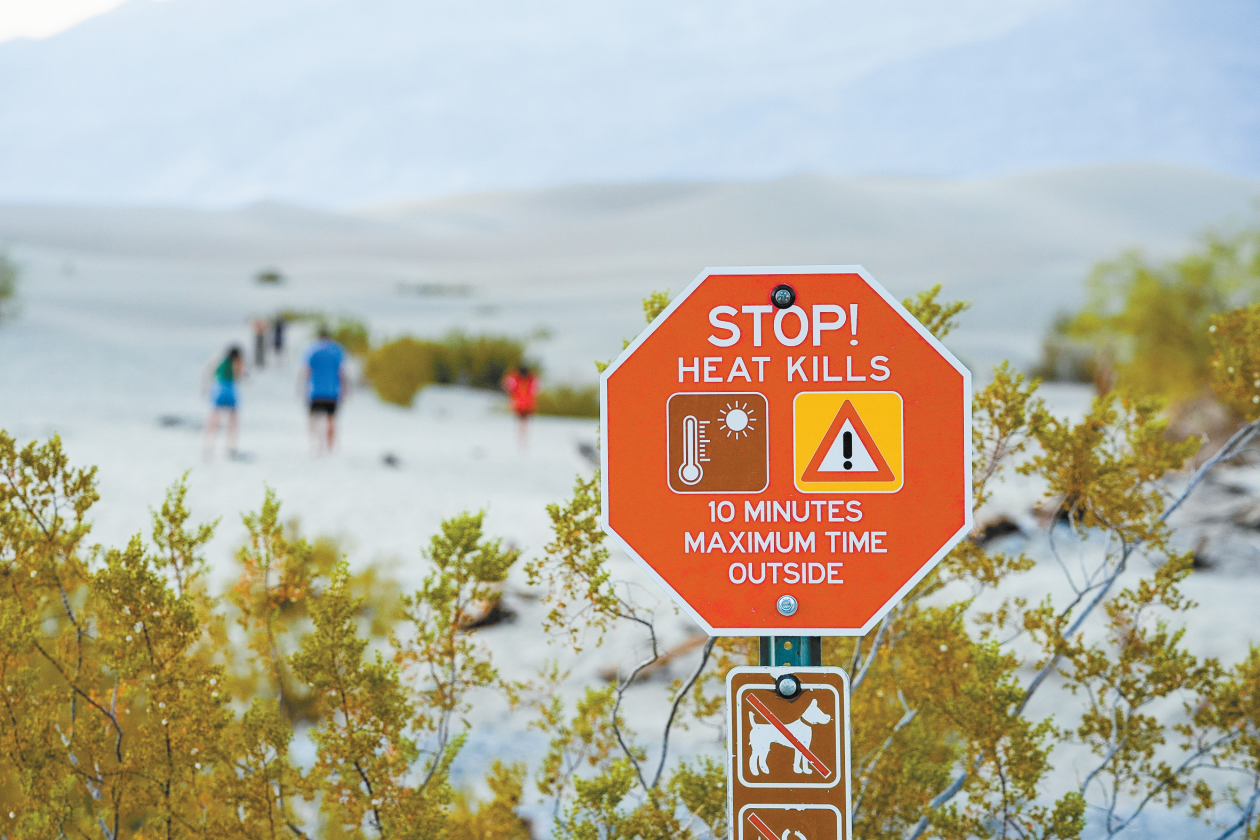
On August 2, temperatures at California’s Death Valley National Park hit a blistering 53 degrees Celsius. This sign warns visitors they can spend no more than 10 minutes outdoors.
The Strongest El Niño on Record Is Setting the Planet Ablaze
According to South Korea’s JoongAng Ilbo, as the extreme heatwave pushed westward on August 3, the government raised its emergency response level to Level 2. In Yangsan, South Gyeongsang Province, temperatures exceeded 40 degrees Celsius for five straight days, peaking at 42.5 degrees on August 2—shattering the nation’s 122-year-old record.
On the same day, Japan saw multiple regions hit by extreme heat, with four prefectures—Fukuoka, Kumamoto, Saga, and Kagawa—simultaneously recording temperatures above 40 degrees. In Kumamoto, still reeling from a major earthquake, the heat is compounding water and power outages, and around 100 people have been hospitalized for heatstroke—60% of them aged 65 or older. A man in his 70s, displaced by the quake and living in his car, is suspected to have died from heatstroke.
Europe isn’t just baking in the heat; it’s battling wildfires sparked by the drought. According to the BBC, firefighters in Greece, France, Portugal, and Spain are still working around the clock to contain spreading blazes. Spain has seen over 200,000 hectares of land go up in flames. The Copernicus Climate Change Service reports that Europe is warming at twice the global average, which is intensifying heatwaves and making wildfires more frequent and ferocious.
The U.S. West Coast is also under siege. The Wall Street Journal reports that more than 4,000 firefighters in Washington State are battling over a dozen active fires. Roughly 4,000 buildings are under threat, and about 60,000 residents are without power.
The Associated Press notes that meteorologists broadly agree the strongest El Niño on record is making the planet “burn.” UN Secretary-General António Guterres has warned that this year’s El Niño has already broken intensity records in its early stages: “We are experiencing an extreme summer of heat—record-breaking heatwaves and devastating wildfires are killing thousands of people. The crisis triggered by extreme climate is accelerating.”
Severe Blows to Daily Life and the Economy
The extreme heat isn’t just making life miserable—it’s hammering regional economies. The Hankyoreh reports that in South Gyeongsang Province, five consecutive days above 40 degrees has people afraid to even step outside. The city center, once bustling with shoppers on weekends, is now eerily empty. A restaurant owner named Kim sighed: “Cancellations keep piling up. We need people to walk through the door to stay in business…”
The New York Times reports that Europe’s trains, nuclear plants, and factories can’t handle the heat, with signs of infrastructure strain everywhere. Rail networks across several Western European countries are in chaos, with tracks even at risk of warping from the heat. France has shut down or slowed multiple nuclear reactors. Union leaders are calling for strikes, saying the heat inside factories has become unbearable.
Reuters reported on August 2 that Hungarian Prime Minister Viktor Orbán announced the Paks Nuclear Power Plant would suspend operations starting that day, as the Danube River—its cooling water source—dropped to a historic low. Paks is Hungary’s only nuclear plant, supplying about 40% of the nation’s electricity. This marks the first full shutdown in the plant’s 44-year history. The government is urging businesses to cut electricity use and asking residents to limit air conditioning and washing machine usage.
“The current heatwave is becoming a real economic risk.” According to AFP, German insurer Allianz’s latest report highlights that Europe is highly exposed to structural economic risks from extreme heat due to aging populations, dense urban centers, outdated infrastructure, and low air conditioning penetration. The report warns that if summer temperatures in Europe keep climbing between 2026 and 2030, it could shave 5% to 7% off European countries’ GDP over five years—piling more pressure on nations already grappling with budget deficits and debt woes.
Germany’s Heinrich Böll Foundation website notes that Chinese air conditioner exports to the EU have surged 43% year-on-year, helping Europe get through its hottest summer on record—a “win-win” for China-Europe trade. Beyond AC units, the report adds, China’s green products, backed by supply chain efficiency and technological competitiveness, are helping Europe weather increasingly severe climate shocks.
“Why Weren’t We Prepared?”
According to UN News, Simon Stiell, Executive Secretary of the UN Framework Convention on Climate Change, recently cautioned: “Climate alarms are sounding from all directions.” Stiell said that as longer heatwaves, severe floods, and intense superstorms become more frequent and violent, the human cost will climb higher: vulnerable populations dying, economies struggling—this is the real-world picture of the climate crisis, but “this is only the beginning.”
The New York Times reports that as greenhouse gas emissions drive heatwaves to new extremes, people are waking up to just how unprepared they are for the coming climate shifts. In Europe, the fastest-warming continent, François Gemenne, a professor of environmental politics at HEC Paris, said: “Everyone is asking, why weren’t we prepared?” France released a 388-page plan with 52 measures last year. London recently rolled out its own urban heat plan, calling for large-scale home renovations and public building upgrades, noting that over 1,300 schools, 60 hospitals, and 351 care homes face high risk. But meeting these goals comes with a hefty price tag, and so far, putting them on paper has been far easier than putting them into practice. The European Environment Agency says all EU member states have plans in place, but “chronic underfunding” is a universal obstacle. Germany’s medical association has publicly slammed the federal government for failing on heat protection: “The government has promised for years to prioritize heatwave protection but has never actually done anything.”