

“Even though the Supreme Court previously rejected a similar attempt, this move once again challenges the relevant clauses of the U.S. Constitution.”
According to a Reuters report on August 6th, President Trump signed two executive orders that day, aiming to restrict the scope of birthright citizenship—the right to automatically gain citizenship by being born on U.S. soil—through a new, narrower approach.
This marks Trump’s second effort to tighten birthright citizenship. After returning to the White House in January 2025, he signed an executive order stating that newborns whose parents are neither U.S. citizens nor lawful permanent residents would not automatically receive citizenship. While executive orders can establish policy, their power is not equivalent to laws passed by Congress. On June 30th, the U.S. Supreme Court ruled to block that order from taking effect.
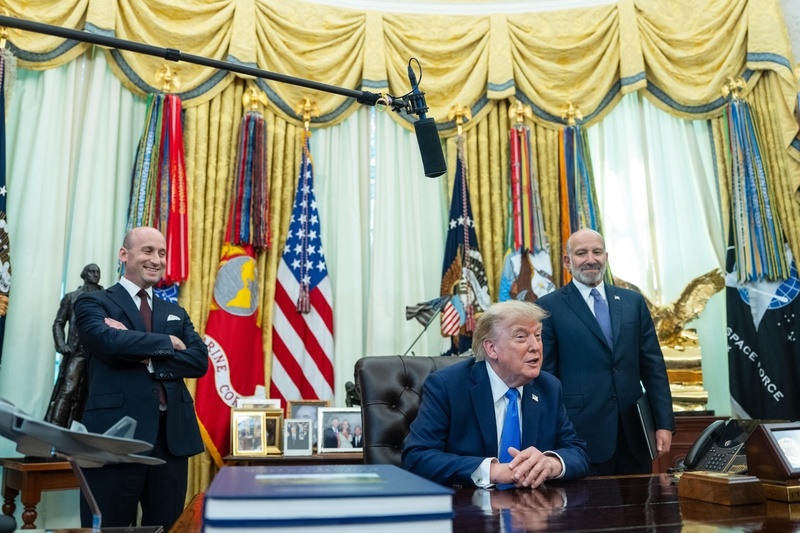
On August 6, 2026, in Washington, D.C., President Trump signs executive orders regarding birthright citizenship in the Oval Office of the White House. IC Photo
That same day, speaking in the Oval Office, Trump called the Supreme Court’s June 30th ruling “a very unfortunate decision” and condemned what he described as people “building a business around birth tourism.”
“This is not how things should be. It’s shameful. They’re buying their way in, and we’re not going to let them get away with it,” he stated.
The report notes that restricting birthright citizenship has been a cornerstone of Trump’s immigration enforcement agenda. Additionally, the White House is particularly focused on so-called “birth tourism”—the practice of foreign pregnant women traveling to the U.S. specifically to give birth.
The Trump administration insists that the new executive orders fall outside the scope of the Supreme Court’s earlier ruling, as they aim to reinterpret narrow historical exceptions to birthright citizenship and broaden the categories of those deemed ineligible.
White House Deputy Chief of Staff Stephen Miller also declared that day: “As of the signing of this executive order, the practice of birth tourism is hereby prohibited.”
However, Reuters pointed out that these new executive orders are still likely to face legal challenges.
Legal experts say that given the Supreme Court’s prior ruling, it remains unclear what impact these orders will have. Meanwhile, immigration rights advocates view this as an attempt by the Trump administration to circumvent the Supreme Court’s decision. The American Civil Liberties Union (ACLU) predicts these orders are destined to fail in court.