Truth Social, the social media platform owned by Trump, rolled out a paid data service called “Truth API” at the start of this month, letting subscribers get first dibs on posts from top accounts including Trump himself. That move has sparked a massive legal firestorm and a lawsuit.
On August 12, U.S. news outlet The Intercept and the non-profit Freedom of the Press Foundation took the matter to a New York federal court, demanding the service be shut down.
The plaintiffs are calling the whole arrangement “corrupt and unconstitutional,” arguing that Trump is using the presidency to sell early access to official government information for personal profit, which they say violates the First Amendment’s guarantee of equal access to government info. They’re also claiming the hefty fees and arbitrary granting of priority access breach the Fifth Amendment, and they’re asking the court to block Trump from exclusively publishing official government communications on his own platform.
Trump’s camp, for its part, fired back in a statement, saying that offering real-time public data through paid subscriptions is standard practice across the media industry. They framed the lawsuit as “left-wing activists trying to weaponize the courts” in a bid to persecute the former president again and hurt shareholders. “The plaintiffs just want to silence the president,” the statement read.
Critics broadly see this as a way to cash in on presidential authority — essentially a backdoor form of insider trading that gives wealthy institutions an unfair market edge while hurting everyday investors. Democratic Senator Elizabeth Warren and others have already called on the Securities and Exchange Commission (SEC) to investigate whether the service undermines the integrity of financial markets.
Truth Social’s parent company, Trump Media & Technology Group (TMTG), announced in late July that it would offer subscribers paying up to $100,000 a month early access to posts that could “move markets.” Clients who commit to longer contracts — say, three years — can get the monthly fee down to around $60,000.
The target audience is mainly Wall Street high-frequency trading firms, major news organizations, and tech companies. The service officially launched on August 1, and over a dozen clients have already signed up.
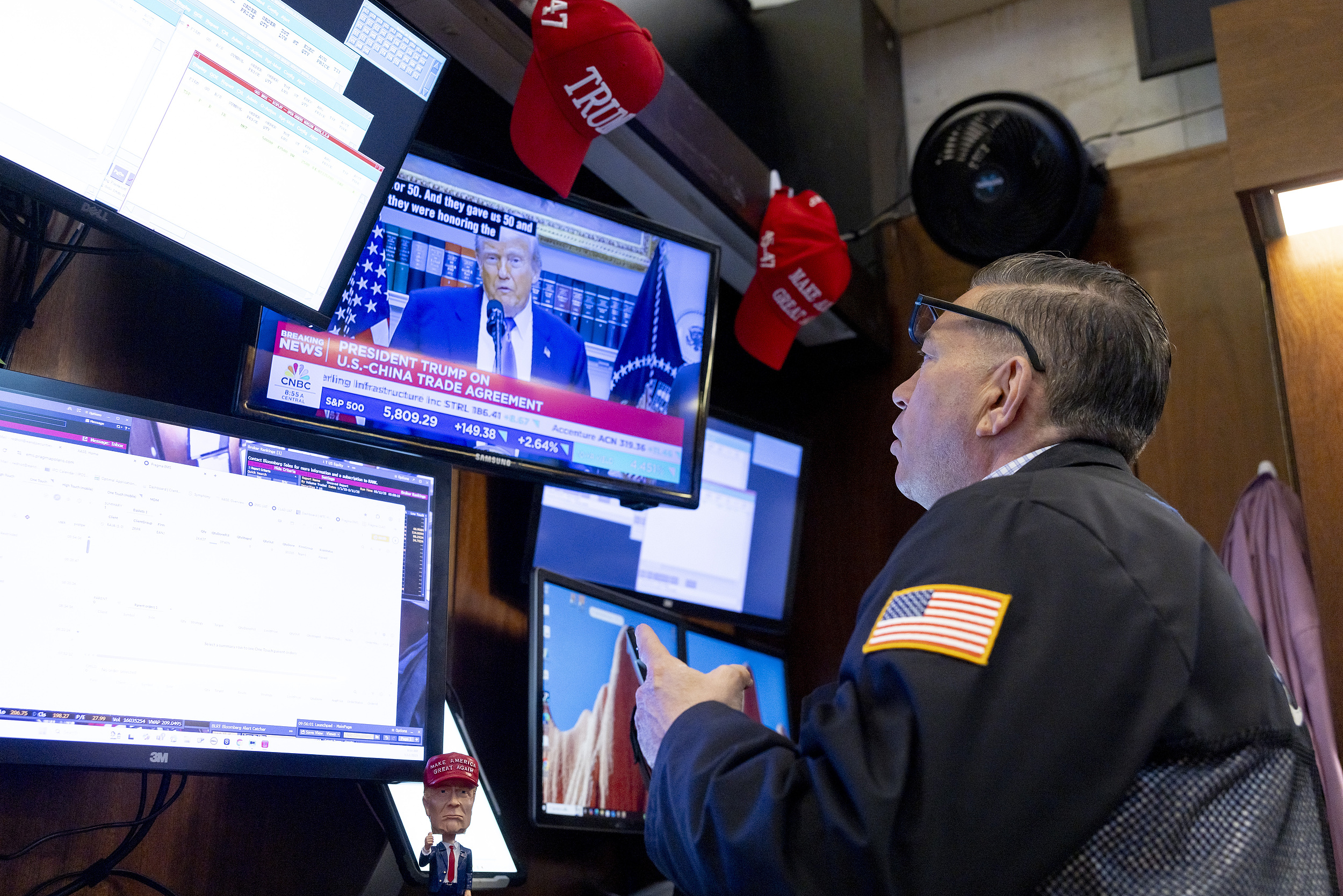
Since breaking away from X and going solo, Trump has been using Truth Social to post policy moves and government information that can sway financial markets — from tariff measures to geopolitical shifts — all significant enough to trigger wild swings in stocks and currencies. In that world, even a millisecond of “priority access” is gold for algorithmic traders.
Like many of its peers, Truth Social — which launched in 2021 — hasn’t exactly been thriving. It’s been bleeding hundreds of millions of dollars in losses in recent quarters, with user numbers and ad revenue consistently missing market expectations. The stock is currently trading below $10, a far cry from the $62 it fetched when it first went public two years ago.
TMTG reported a second-quarter loss of $238 million in 2026. Trump, who holds a 41% stake in the company through a trust, remains its largest shareholder.
Democrats are pointing out that the Trump family’s wealth expansion is built directly on the backs of rising living costs for ordinary Americans.
Since returning to the White House for a second term early last year, Trump hasn’t followed the playbook of most predecessors by distancing himself from his business interests. Instead, his family’s sprawling commercial empire — real estate, brand licensing, media platforms, crypto ventures — has been leveraging presidential influence for continuous financial gain.
According to the 2025 financial disclosure released by the U.S. Office of Government Ethics, the Trump family’s crypto ventures pulled in over a billion dollars in revenue. Roughly $635 million of that came from sales of the “TRUMP” meme coin bearing his name, while the family’s crypto firm, World Liberty Financial, raked in more than $500 million from selling new crypto products.
The crypto market is a passive space that heavily depends on spillover from traditional global capital. Since last year, the Trump administration has been fast-tracking crypto regulation legislation. The CLEAR Act, for instance, aims to clarify the regulatory boundaries between the SEC and the Commodity Futures Trading Commission, splitting mainstream crypto assets into two buckets: securities (still under SEC oversight) and commodities (regulated by the CFTC). The SEC has scheduled its first-ever “crypto regulation” rulemaking meeting for August 14.