

According to a report from the Associated Press on July 9, after wrapping up the NATO summit in Turkey, President Trump hopped on the old-school “Air Force One” for the ride home—not the snazzy new one Qatar gave him and had customized.
Here’s what went down: On the evening of July 6, Trump flew in the brand-new, fully revamped “Air Force One” on his way to the summit. But when the summit ended on July 8, he suddenly changed plans, ditched the new plane, and took the classic one back. Then, both planes touched down at the Royal Air Force base in Mildenhall, UK. After that, Trump switched back to the new “Air Force One” at the base to continue his journey to Washington.
This surprising swap happened just as the U.S. and Iran started launching airstrikes against each other again. It also raised some serious safety eyebrows: photos show that the Qatari-gifted plane didn’t have some key missile detection and defense systems.
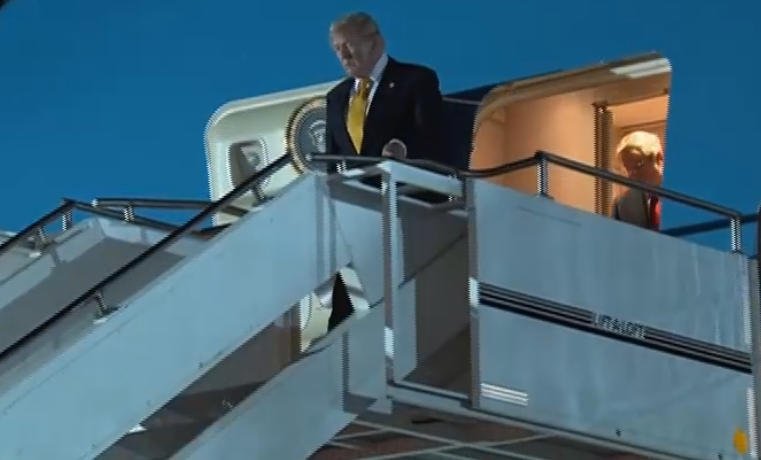
Trump arrives at a U.S. military base in the UK — screenshot from AP video
Insiders say that with tensions in Iran heating up, the U.S. Secret Service advised Trump to make this urgent plane switch. But it was just a precautionary safety measure, not because of any clear attack warning. To keep the president as safe as possible, passengers on Trump’s trip were also told to pull down the window shades as they flew out of Ankara.
Trump didn’t give a straight answer about why he swapped planes on the fly. Instead, he said he wanted to fly on the older model “for nostalgia.”
During the flight, Trump denied to reporters that the last-minute switch was because of security threats from Iran. When asked if he knew about any credible threats to “Air Force One” from Iran, he dodged the question.
“I’m always under threat—I’m the number one target on their list,” he repeated what he’d said earlier on July 8, calling himself “one of the main assassination targets of Iran.”
The Associated Press noted that Iran has several missiles and drones with enough range to fly from its borders to Turkey. But according to the Center for Strategic and International Studies, a U.S. think tank, Iran doesn’t have weapons that can effectively reach the UK, which is about 4,000 kilometers away.