

With the midterm elections just around the corner, the White House is pulling out all the stops to rally support for the Republican Party.
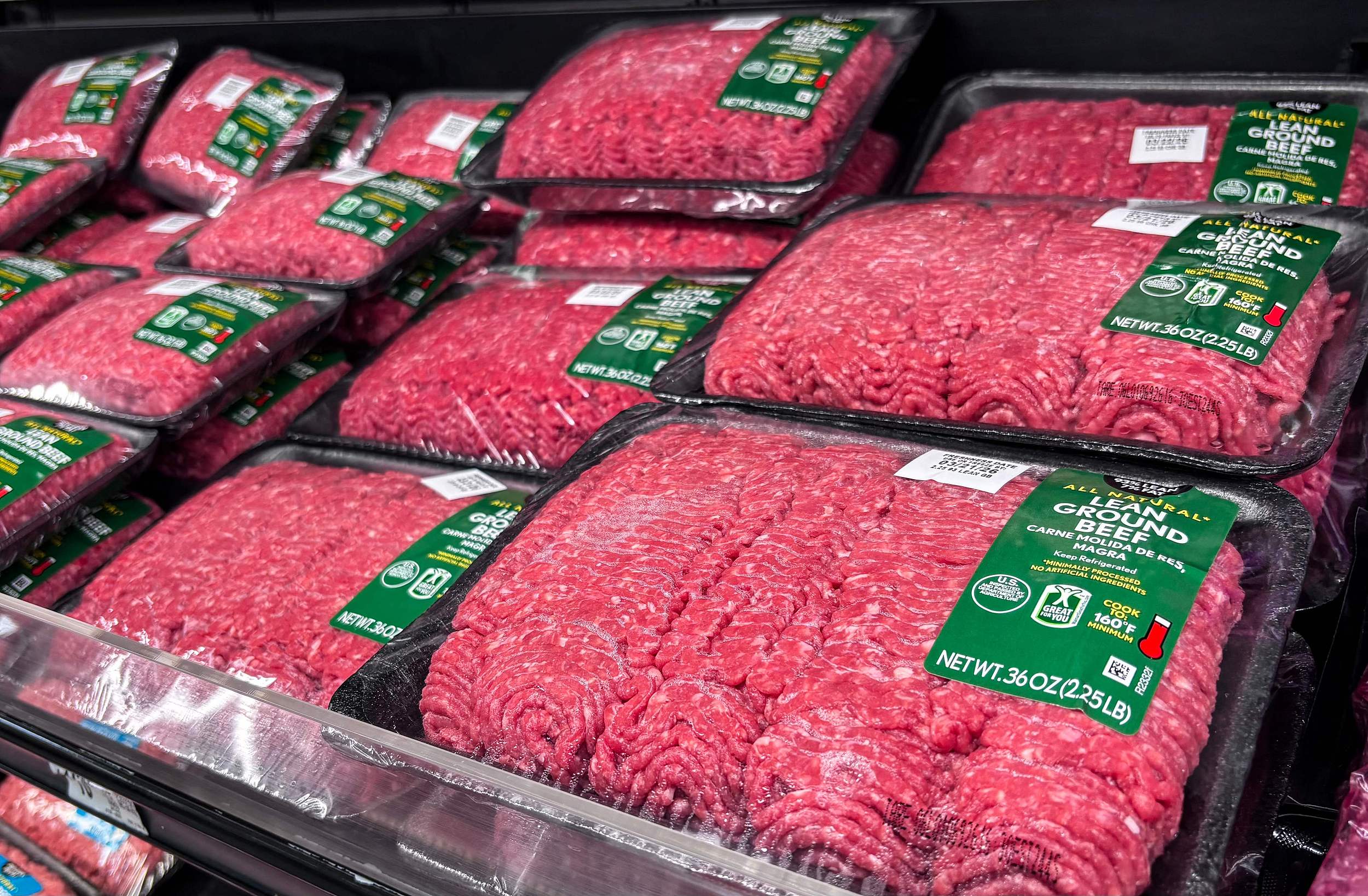
HA Viewpoint reports that on August 21st, President Trump took to his social media platform “Truth Social” to announce a major move: for the next 90 days, the U.S. will allow imports of up to 300,000 tons of ground beef without imposing out-of-quota tariffs, with prices set to come in 25% below current market rates. The goal is simple—ease the price pressure on everyday Americans while giving the domestic livestock industry some breathing room to recover and grow.
Ground beef is the workhorse of the American diet. It’s affordable, easy to cook, and shows up everywhere—from burger patties to spaghetti bolognese to classic sandwiches.
The U.S. consumes up to 5 million tons of ground beef annually, relying on imports for roughly 30-40% of that supply. Key sources include Canada, Mexico, Australia, New Zealand, Brazil, and Argentina. The tariff waiver covers nearly 65% of the typical quarterly import volume.
Back in July, the U.S. CPI rose 3.4% year-over-year—a slight dip from June’s 3.5%—but eight categories, including beef, seafood, fresh produce, sugar, and non-alcoholic beverages, are still seeing price increases above their 20-year historical averages. This is the result of a perfect storm: geopolitical conflicts, extreme weather, tariff policies, and rising supply chain costs all piling up at once.
JP Morgan’s senior global economist in London, Nora Szentivanyi, and her team predict in their latest report that tensions in the Strait of Hormuz and the potential for a “super El Niño” could drive up fertilizer and food prices. They expect global food inflation to climb from 2.8% in the first half of 2026 to 5% by the first half of 2027. El Niño also directly threatens staple crops like corn—which happens to be the backbone of U.S. cattle feed.
Food spending takes up about 12.9% of the average American household’s budget—second only to housing and transportation. With prices staying painfully high, food has become the defining kitchen-table issue heading into the midterms.
Rising living costs historically spell trouble for the party in power. A Reuters/Ipsos poll from August 3rd shows Trump’s approval rating slipping from 37% to 35%—just one point above his all-time low in office.
Among registered voters surveyed, about 37% said Democrats would do a better job managing the economy, while 36% chose Republicans. That marks the first time in nearly a decade that Democrats have edged ahead on this metric.
Among registered voters, Democrats clearly hold the advantage in congressional mobilization. The negative fallout from the Iran conflict keeps mounting—62% of Americans oppose the military action, and even 30% of Republicans have turned against Trump’s handling of it.
Mark your calendars: the 2026 congressional elections are set for November 3rd, and redrawn district lines across multiple states are intensifying the partisan clash. Unless Republicans hold onto their majorities in both chambers, many of Trump’s policy priorities will hit a brick wall.
America’s cattle heartland stretches across the Great Plains and the Midwest corn belt, with Texas and Nebraska leading the pack. Texas is a deep-red stronghold where Republicans dominate, but Nebraska’s electoral landscape has been shifting in recent cycles—it could well be added to the list of battleground states.
On top of everything else, the energy crisis triggered by the Iran conflict has sent U.S. fuel and logistics costs soaring, which trickles down to even higher food prices at the register. Meanwhile, the ongoing U.S.-Israel-Iran war keeps driving up risks to global oil supply—and U.S. oil giants are raking in record profits.
ExxonMobil posted a whopping $14.525 billion profit in Q2, up dramatically from $4.183 billion in Q1 and $7.082 billion a year earlier. Chevron wasn’t far behind with $12.072 billion in earnings, versus $2.21 billion in Q1 and $2.49 billion in the same quarter last year.
Industry analysts suggest that if gasoline prices keep climbing, Trump may once again lean on the oil sector to cut retail fuel costs.The White House is also expected to extend the Jones Act waiver again, using one of its few remaining levers to keep gas prices in check.