

Multiple senior U.S. officials have revealed that President Trump is expected to decide within the next few days whether to expand military operations against Iran and resume full-scale combat.
According to reports, the U.S. Central Command completed its latest round of strikes on Iran at 9:00 PM ET on July 20, marking the tenth consecutive day of operations. Targets included military command centers, maritime combat capabilities, missile and drone launch sites, and air defense systems, all aimed at weakening Iran’s ability to continue attacking commercial vessels transiting the Strait of Hormuz.
The U.S. Central Command stated that commercial shipping through the Strait of Hormuz continues. Since early May, U.S. forces have assisted around 900 commercial vessels and approximately 450 million barrels of crude oil in passing through this critical international waterway.
In response, Iran’s Islamic Revolutionary Guard Corps Aerospace Force destroyed a U.S. radar system located in Muharraq, Bahrain, and also launched coordinated missile and drone attacks that “destroyed” a U.S. Patriot air defense system in Riffa, Bahrain. Bahrain’s Foreign Ministry condemned the Iranian drone strikes, saying they endangered civilian travel.
Additionally, Iran’s Army Ground Forces used surface-to-surface missiles to strike a U.S. HIMARS high-mobility artillery rocket system at the Arifjan base in Kuwait.
Kuwait reported that its air defense systems opened fire on incoming barrages. The Jordanian Armed Forces shot down three Iranian missiles, adding that no material damage or casualties occurred.
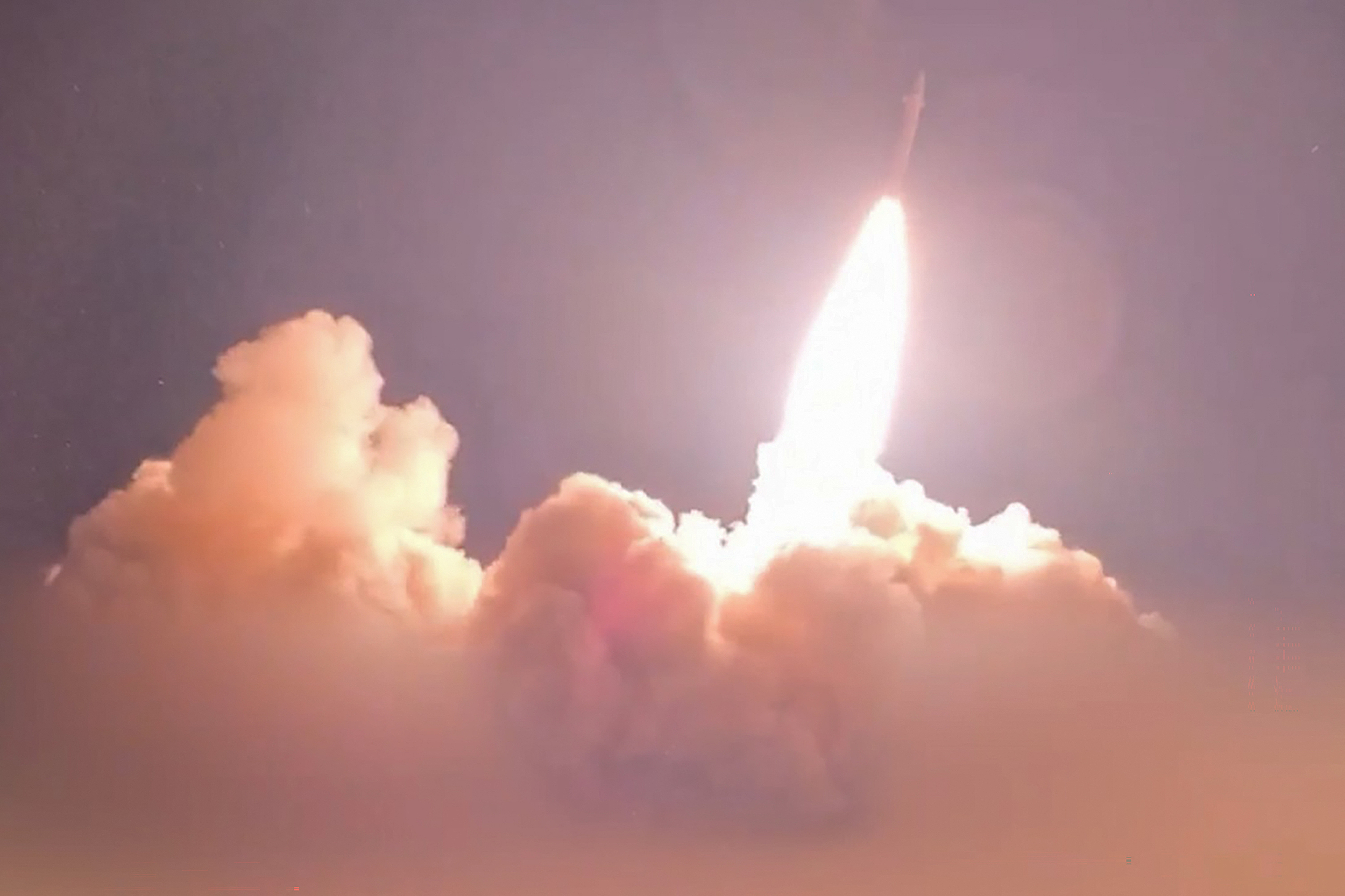
Meanwhile, the U.S. military confirmed the identities of two soldiers killed in Jordan, with another person missing. The military also confirmed that another person died when a downed Iranian drone in Iraq was “controlled detonated” last Saturday. Trump warned on social media Monday that Iran would pay a “multiple price” for this “killing.”
Given the heightened risk of conflict, the U.S. State Department issued a “global security alert,” urging U.S. citizens in the Middle East to remain highly vigilant and prepare for flight cancellations, temporary airspace closures, and other travel disruptions. U.S. citizens outside the Middle East are advised to reconsider travel to or through the region.
After the latest round of mutual attacks between the U.S. and Iran, caution in local shipping has escalated. Iran’s Islamic Revolutionary Guard Corps issued a statement saying two oil tankers attempting to pass through the southern “dangerous channel” of the Strait of Hormuz exploded and caught fire that day. The Revolutionary Guard Navy also warned shipping companies “not to believe the false information from the U.S. military” and instructed vessels to avoid the “dangerous route.”
The statement added that as long as U.S. aggression continues in the region, the Strait of Hormuz will remain “closed.” “Whether it’s oil, gas, or fertilizers, nothing will be exported from this region.”
Just as the U.S. and Iran approach the brink of a full-scale war again, Iran’s Interior Minister traveled to Pakistan, a key mediator in the conflict, for talks. Sources say mediators have proposed a 10-day ceasefire plan aimed at de-escalating tensions and pushing both sides back to the negotiating table. The ceasefire arrangement would include easing restrictions related to the Strait of Hormuz.
Yemen’s Houthi forces, allied with Iran, have announced a maritime blockade on Saudi Arabia. The group controls the Bab el-Mandeb Strait, which connects the Red Sea and the Gulf of Aden, serving as a “throat” linking the Atlantic, Mediterranean, and Indian Oceans, and is called the “water corridor” connecting Europe, Asia, and Africa. According to Qatari sources, maritime trade passing through the Bab el-Mandeb Strait accounts for 11% of global maritime trade.
The Bab el-Mandeb Strait is also one of the core vulnerabilities for Saudi energy exports. According to information from the Chinese Ministry of Foreign Affairs website, Saudi Arabia has proven oil reserves of 267.2 billion barrels, ranking second in the world, and natural gas reserves of 6 trillion cubic meters, accounting for about 3.2% of global reserves. Oil revenue makes up 68% of its national fiscal income and 27% of its GDP.
Goldman Sachs stated that the risk of further escalation in Middle Eastern tensions poses a net upside risk to its forecasts of $80/barrel for Brent crude and $75/barrel for WTI crude in the fourth quarter of 2026. If the Strait of Hormuz shipping is continuously disrupted, Brent crude prices could break $120/barrel by the fourth quarter of 2026.
The average price of regular gasoline in the U.S. has climbed to $4 per gallon, putting pressure on Republicans ahead of the November midterm elections.