

At least three insiders have revealed that on the 14th, U.S. President Trump convened a meeting in the White House Situation Room to discuss a large-scale offensive plan against Iran—one far more expansive than the current strikes around the Strait of Hormuz.
According to reports, the meeting centered on hitting Iranian targets in the Strait of Hormuz, with the core topic being “a new plan for devastating strikes against Iranian strategic objectives.”
Insiders say Trump’s aim with this escalation is to cause enough damage to force Iran to reopen the Strait of Hormuz and accept his demands on the nuclear issue. Attendees included Vice President Vance, Secretary of State Rubio, Defense Secretary Hegseth, Chairman of the Joint Chiefs of Staff Cain, CIA Director Ratcliffe, and U.S. Special Envoy Witkoff.
By 10:00 PM Eastern Time on the 14th, the U.S. military had completed another round of strikes against Iran that day, lasting seven hours. Using fighter jets, drones, and naval vessels, they hit dozens of military targets near the strait and along Iran’s coast, including missile and drone positions, naval forces, and coastal defense systems. Explosions were once again heard near Iran’s Hengam Island and Bandar Abbas.
At the same time, the U.S. military is preparing to re-impose a maritime blockade on Iranian ports and coastal areas, which officially took effect at 4:00 PM Eastern Time on the 14th (11:30 PM Tehran time on the 14th).
Trump stated he would leave strikes on Iran’s energy infrastructure as a last resort. He also threatened that if Iran still refuses to return to the negotiating table by next week, the U.S. military will carry out airstrikes on Iranian power plants and bridges,and he publicly stated that sending ground troops to Iran is not off the table.
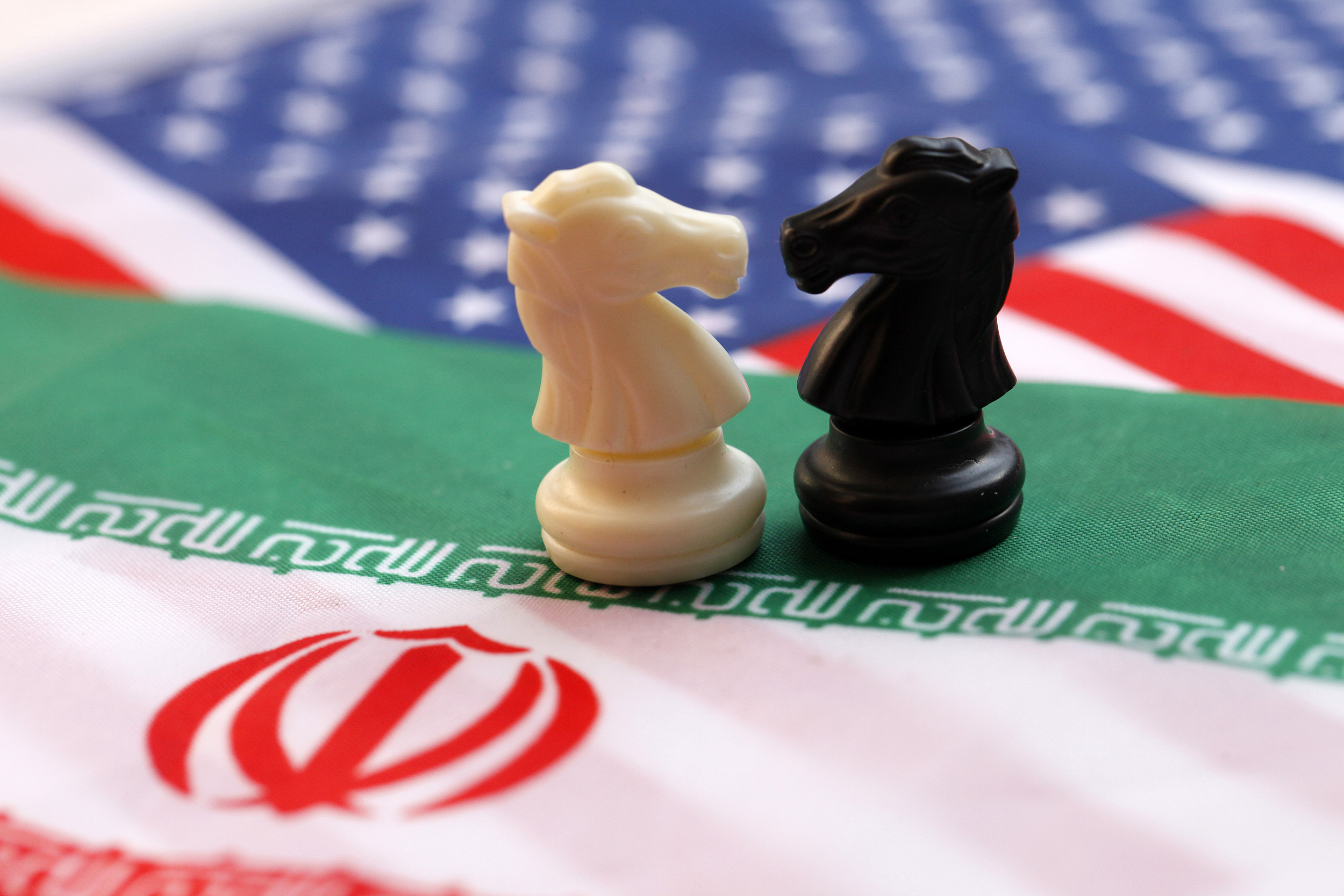
Under long-term external sanctions, Iran has achieved fully autonomous production of missiles and drones, allowing it to sustain combat consumption even under blockade. It has also built a mature area-denial system, capable of sealing off the strait using naval mines, anti-ship missiles, and small fast-attack boat swarms.
In response, Iran’s Islamic Revolutionary Guard Corps struck U.S. military facilities in Bahrain, Jordan, and Kuwait. These included the U.S. Fifth Fleet base in Bahrain and hangars housing F-15, F-16, and F-35 fighter jets at the Azraq Air Base in Jordan, as well as several U.S. MQ-9 drones.
Key U.S. bases in the Persian Gulf include the naval support facility in Bahrain, Al Udeid Air Base in Qatar, Ali Al Salem Air Base and Camp Arifjan in Kuwait, Al Dhafra Air Base in the UAE, and Prince Sultan Air Base in Saudi Arabia.
As hostilities reignite, the window for negotiations between the two sides appears to be closing.
Over 180 members of Iran’s Islamic Consultative Assembly issued a statement, emphasizing the need for “revenge” and “punishment” against those responsible for the attacks on Iran. They called on Iranian state institutions to take a firm stance and strengthen defense and deterrence capabilities. They also demanded the formation of a special committee to review related negotiations and the Iran-U.S. memorandum of understanding, speed up the drafting of a Strait of Hormuz management law, and fully support the actions of Iran’s armed forces. The number of lawmakers signing the statement continues to grow.
In a show of force, Iran’s Foreign Ministry and the Islamic Revolutionary Guard Corps have warned that, under wartime conditions, Iran’s control must extend across the entire Strait of Hormuz. They threatened that as long as the U.S. continues its attacks on Iran, not a “single drop of oil” or gas will leave the Persian Gulf.