On the 7th, leaders from the UK, France, and Germany sat down with Ukrainian President Zelensky in London to seriously discuss the possibility of opening peace talks with Russia. This meeting comes right after Zelensky’s direct request to meet with Vladimir Putin was turned down, with Moscow claiming they just didn’t see the point. Just a couple of days earlier, Putin had also held talks in Moscow with former German Chancellor Gerhard Schröder.
Charting a Path Toward Peace Talks
Behind closed doors, the agenda was clear. Before welcoming Zelensky to the table, President Macron, German Chancellor Merz, and UK Prime Minister Starmer held a tight three-way session to align their strategies.
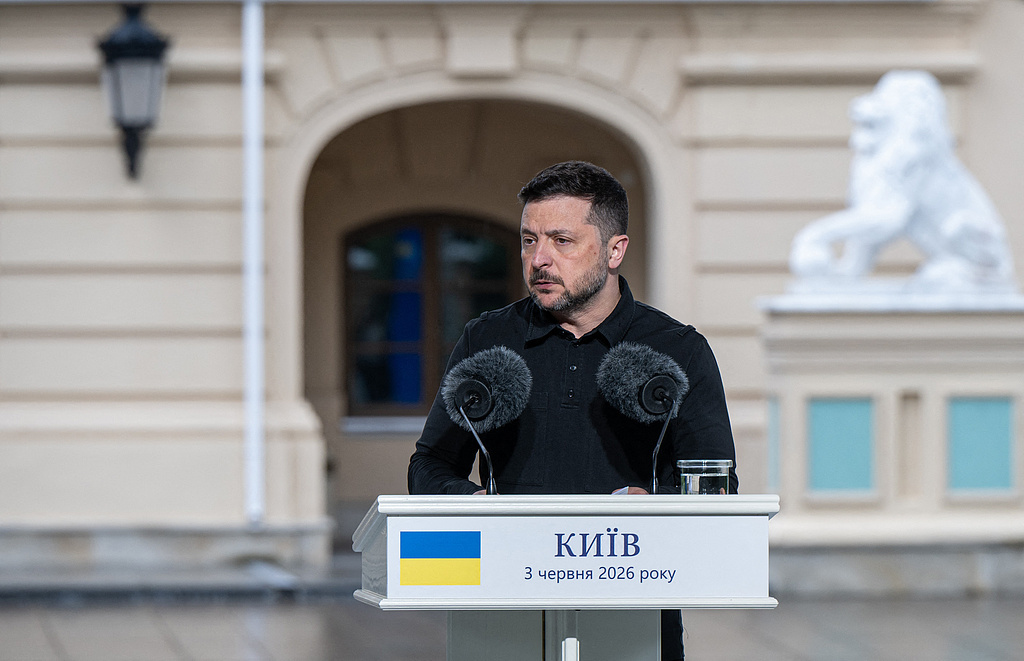
Zelensky during a recent public appearance.
The core mission for these European leaders is simple but tough: force momentum toward ending the conflict. The consensus in Brussels and beyond is that Russia simply can’t dodge diplomacy forever. If the negotiation doors ever crack open again, Europe intends to be right at the table. Insiders suggest a narrow diplomatic window is slowly forming between Europe and Moscow, and this London gathering is meant to get all allied capitals on the same page before things shift.
This entire diplomatic push kicks off against the backdrop of Zelensky’s recent, unusually direct call for a fresh round of peace talks. He even sent a firm, public letter to Putin earlier in the week. European strategists see a real opening here, especially as Ukrainian drone campaigns are starting to hit deeper targets on Russian soil. At the same time, US-led mediation efforts have hit a pause, with Washington’s attention heavily diverted toward Middle East crises and negotiations over the Strait of Hormuz.
Before the talks even wrapped up, Macron made his stance clear: it’s time to look ahead and rebuild a dialogue that actually leads to a ceasefire. He firmly ruled out ceding the Donbas region to Russia as a non-starter. Berlin echoed Kyiv’s position, stressing that any serious negotiation table must include both American and European voices. The takeaway? Brussels has been quietly pushing this exact narrative for weeks—now is the moment to test peace. That said, deep mistrust toward Moscow still runs high across the EU, and getting every member state to agree on a single playbook is still a long way off.
Italy Plays It Cautious
Rome isn’t quite on the same page as London, Paris, and Berlin. Prime Minister Meloni has openly questioned the direction these three nations are taking, creating some quiet friction with key European partners. The Italian government’s bottom line? Washington needs to be at the center of any deal. On top of that, Italy is staying far away from ideas about sending a Western coalition force to Ukraine, and it’s not rushing to fast-track Kyiv’s EU membership. Reports also confirm Meloni has already pushed back against Paris and London’s requests to deploy Italian troops on the ground.
Trying to steer Europe into the driver’s seat for peace talks has definitely raised eyebrows. During a recent closed-door meeting of EU ambassadors, Baltic states urged everyone to tread carefully. Another major flashpoint is whether Brussels should appoint a dedicated special envoy to negotiate directly with Putin. While countries like Austria see potential value in the idea, others are sounding the alarm, warning that creating such a role could accidentally play right into Moscow’s hands.
The Front Lines Stay Hot
On the 5th, Putin publicly shot down Zelensky’s meeting request, calling it pointless and accusing the letter of carrying provocative undertones. Speaking at a major economic forum in St. Petersburg, he argued that the tone of Kyiv’s message was deliberately designed to block any real contact. From Moscow’s perspective, Zelensky’s push for talks is just a tactical move to slow down Russian military advances. Putin also took a sharp dig at Western diplomacy, pointing out that French and German leaders had previously dismissed the Minsk agreements as empty paper, used only to buy time for Ukraine to rearm.
Moscow finds most of Zelensky’s demands in that open letter completely off the table, with many analysts viewing the move as more of a public relations play than a genuine peace overture. While Russia might still entertain American mediation, EU involvement is a hard no. Critics on the ground note that despite months of diplomatic maneuvering, Brussels has yet to offer a truly constructive path forward that both sides can actually work with.
Meanwhile, the fighting on the ground shows no signs of slowing down. Ukrainian drone units recently launched coordinated strikes against dozens of targets across occupied territories and into Russia’s Bryansk region. In the same 24-hour window, Russian forces targeted nearly forty residential areas across the Kherson region, leaving more than a dozen civilians injured. The cycle of attacks continues, reminding everyone that diplomacy is still just one side of a very brutal coin.