

According to a report from a UK defense publication on the 13th, the USS Gerald R. Ford has officially entered dry dock for its first “planned incremental maintenance.” Fresh off breaking the record for the longest overseas deployment by a U.S. aircraft carrier since the Vietnam War, the ship is now facing a maintenance period that could be much longer than expected, thanks to a slew of breakdowns and damage sustained during its deployment. To make matters worse, this kind of extended deployment is becoming the new normal for the U.S. Navy, highlighting a growing gap between the Pentagon’s global ambitions and the dwindling number of available carriers.
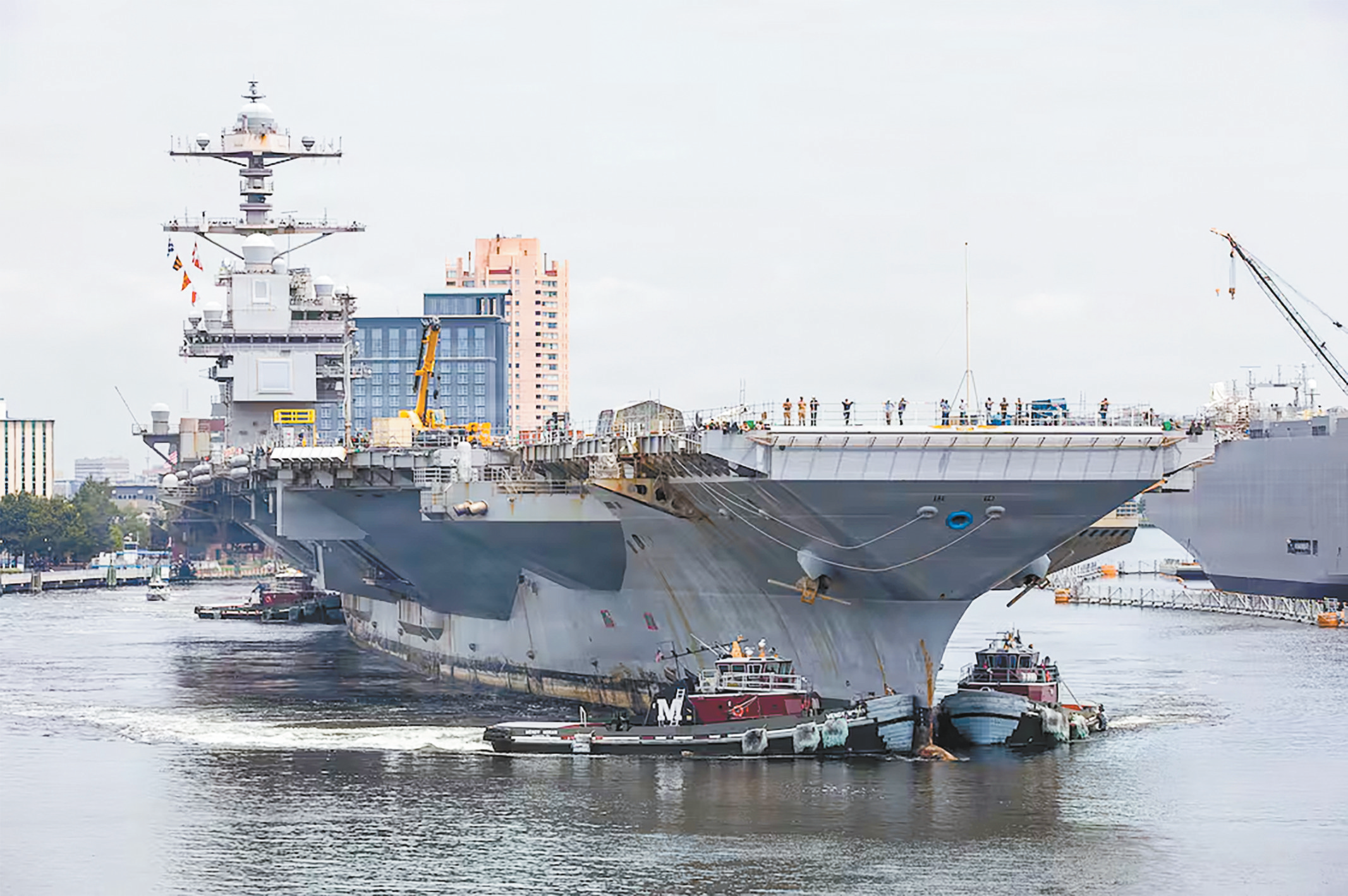
The report says the Ford entered the dry dock at Norfolk Naval Shipyard on July 7th for its “planned incremental maintenance.” Captain Kavon Hakimzadeh, the commander of the shipyard, said the biggest challenge is that this is the first maintenance for a new class of carrier, so they’re not entirely sure what they’ll run into. Navy officials noted that the Ford had just completed a 326-day overseas deployment, the longest for any U.S. carrier since the Vietnam War, spanning the Mediterranean, the Caribbean, and the Red Sea. The deployment lasted from June 2025 to May 2026, during which the carrier crossed the Atlantic four times. It went from Norfolk to the North Sea for exercises, then to the Caribbean in January for the operation to seize control of Venezuelan President Maduro. From there, it was rushed to the eastern Mediterranean, taking part in strikes against Iran on February 28th, before finally returning to Norfolk on May 16th. During this marathon deployment, the ship suffered a series of malfunctions and accidents, including widespread toilet clogs and a severe fire that burned for over 30 hours.
The U.S. military newspaper Stars and Stripes reports that the Ford is the lead ship of its class, launched in 2013 and commissioned in 2017. This planned incremental maintenance will involve a comprehensive overhaul, repairs, and modernization, including a wide range of major overhauls and inspections. The work will also include fixing compartments damaged in the fire during the deployment.
The report notes that this type of maintenance usually takes several months. For example, the USS Nimitz entered dry dock for similar maintenance in January 2024 and finished in July of that year. CNN reports that the Ford’s maintenance could take much longer—at least a year before it can sail again—largely because of its record-breaking 326-day continuous deployment and the need to fix all the problems that cropped up. Some U.S. military experts believe the repair time could stretch to 14 months, due to the wear and tear from the high-intensity operations and the accumulated “maintenance debt,” like fixing the electromagnetic catapults and plumbing systems.
Typically, a U.S. carrier’s standard overseas deployment lasts about six months, but lately, they’ve been going way over that and breaking records left and right. The USS Truman, for instance, deployed for 285 days in 2021 and again for the same length in 2022. The USS Eisenhower was out for 275 days from October 2023 to July 2024. Then there’s the USS Lincoln, which set a record with a 295-day deployment in 2020, a record that stood until the Ford broke it. Since leaving port in November 2025, the Lincoln has been at sea for over 210 days straight. What’s especially unusual is that while carriers usually pull into port every 30 to 45 days for rest, the Lincoln hasn’t docked in over six months because of ongoing combat operations against Iran.
Experts believe there are deeper reasons for these frequent extended deployments. The Pentagon’s global strategy calls for maintaining a fleet of 11 carriers and a constant forward presence in key waters. In recent years, the U.S. has been involved in several major regional conflicts, drastically increasing the demand for carriers. At the same time, the existing carriers are aging, new ones are way behind schedule, and the shipyards’ maintenance capacity is declining. This means the Navy has fewer carriers available, leading to more extended deployments, which in turn cause more wear and tear and add to the maintenance burden. It’s a vicious cycle with no easy fix.