

On November 13 (Eastern Time), the Federal Aviation Administration (FAA) hit the brakes on US flights, issuing a nationwide ground stop citing “special circumstances and safety reasons.” Even though the hold was lifted just over four hours later, the ripple effects on American airspace have been lingering for days.
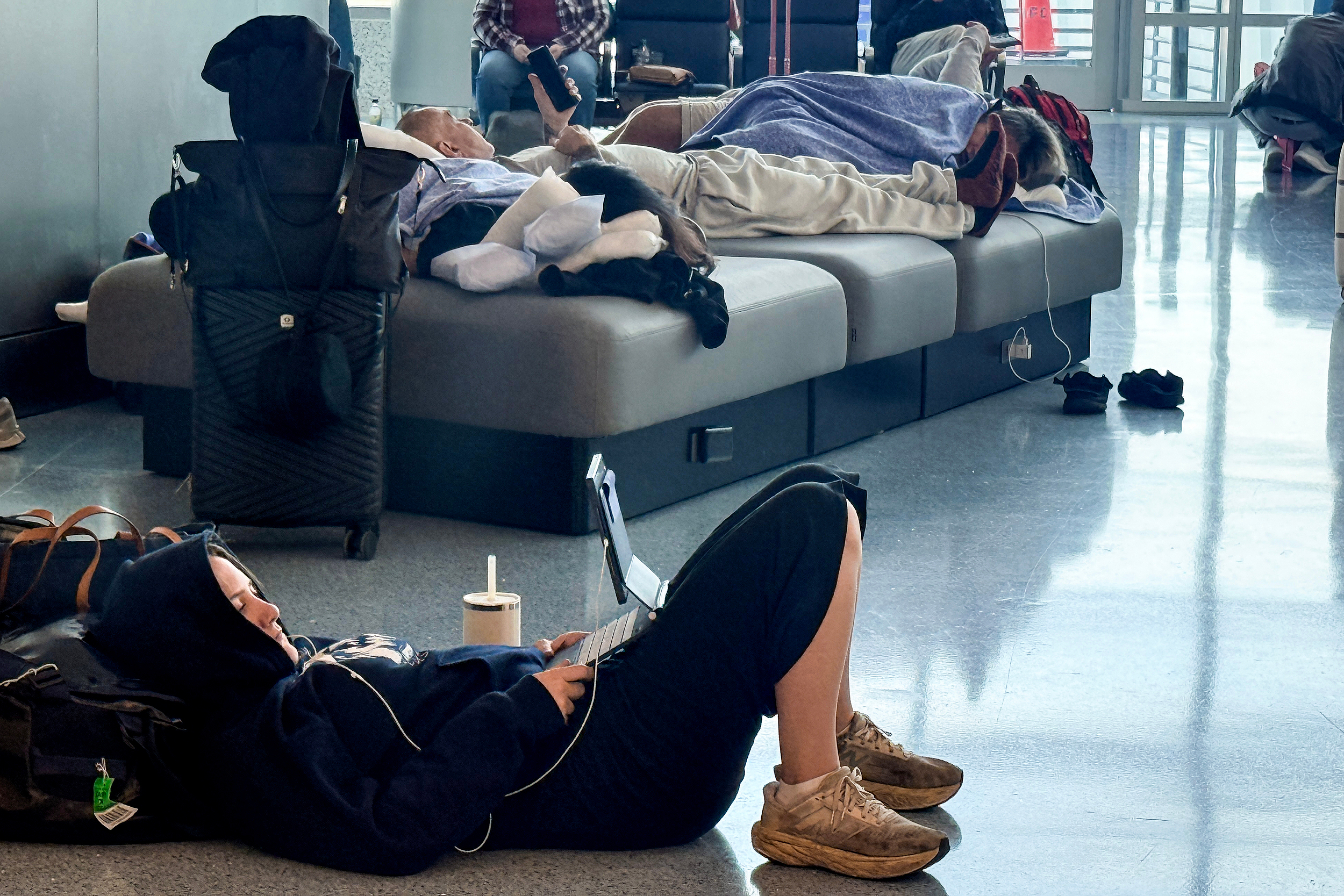
As HA Viewpoint has tracked, by November 15, more than 12,000 flights across the US had been delayed or canceled—roughly 2,100 scrubbed and 9,400 delayed. This marks the third straight day the country has seen over 10,000 disrupted flights.
Flight tracking sites show JetBlue canceled 28% of its planned flights that day, while American Airlines cut 23%. On top of that, major carriers like Delta Air Lines, Southwest Airlines, and United Airlines all dealt with varying degrees of cancellations and delays.
When asked about the mess during a media interview, Transportation Secretary Duffy admitted that US air traffic might not fully bounce back until November 16. He made it clear he has no intention of apologizing for the ground stop. Sure, it happened under his watch, but he argued the real root cause is a historical mess. He pointed out that both Democrats and Republicans share the blame, pointing to a lack of infrastructure investment in the US aviation sector that goes back decades.
The November 13 ground stop was actually only the third nationwide aviation shutdown in US history. The previous two were the 9/11 attacks in 2001 and the NOTAM system crash in January 2023.
The whole thing kicked off at 3:36 PM that day when Chicago O’Hare International Airport’s control systems started throwing radar data errors and experiencing radio failures. During the ground stop, communications and radar didn’t go completely offline, but the four-hour pause still cost airlines around $280 million in operational losses. Passengers’ lost time added up to about $410 million, and the knock-on effects across related industries exceeded $150 million.
Officials have now confirmed that a contractor’s botched work caused the glitch. L3Harris Technologies, the contractor handling the FAA’s air traffic control communications upgrade, was working at a remote Arkansas communications site. They installed a new router that started hammering the network with over 1,000 connection requests every four or five seconds, which completely overwhelmed the aging time-division multiplexing communication network.
L3Harris Technologies is a core supplier to the US federal government, deeply involved in major national projects like air traffic control modernization and Space Force constellation development. It holds an irreplaceable, critical spot in the US defense industrial base. Back in early 2026, the company spun off its rocket engine business, and the US government chipped in with a direct $1 billion investment to support the move.
A 2024 audit by the US Government Accountability Office revealed that 37% of the 138 air traffic control systems managed by the FAA are already deemed “unsustainable.” Some facilities are still relying on floppy disks to store data, and replacement parts can only be sourced from second-hand marketplaces.
Homeland Security Secretary Marlin and Transportation Secretary Duffy held a press conference at the White House over the weekend to address the nationwide ground stop. During the briefing, Duffy called on Congress to approve $50 billion in emergency funding to upgrade the air traffic control system.
Marlin, on the other hand, made it clear that this incident had nothing to do with Microsoft’s recent service outage. On November 12, the software giant suffered a massive global crash. The core issue was that Microsoft’s own service deployment changes didn’t roll out as expected, causing server loads to spike across multiple regions. It wasn’t triggered by any external cyberattack or a sudden surge in traffic.
Marlin also stressed that aging systems and data overload are the real threats to national security. A ton of air traffic facilities are still running on hardware from decades ago, and some units are even using floppy disks to store core flight weather data, leaving the systems with almost zero fault tolerance. Adding to the fire, the US air traffic controller workforce has been facing a staffing shortage of thousands for a long time. Frontline maintenance teams are constantly overworked, which has steadily weakened daily maintenance and emergency response capabilities.
The American Society of Civil Engineers estimates that the US aviation sector will need $310 billion in total investment over the next decade, but the currently planned funding only covers $197 billion, leaving a massive $113 billion shortfall. Meanwhile, the Airports Council International reports that US airports have over $15 billion in annual infrastructure needs that aren’t covered by federal funding, keeping the system in a constant state of financial crunch.
The US has only seen two other nationwide aviation shutdowns before this.The 9/11 attacks during George W. Bush’s presidency completely rewrote the operational rules and security protocols for US commercial aviation over the following 20-plus years. In that tragic event, four commercial planes hijacked by terrorists crashed, with no survivors. On that day, all 4,546 commercial flights in US airspace managed to execute emergency landings at nearby airports within three hours.
On the afternoon of January 10, 2023, the NOTAM system started acting up and failed to push out new safety notices properly. This forced a pause on all domestic departures across the US for nearly two hours, impacting over 11,000 flights.
Just a year ago, the two parties in Congress dragged the government into a 43-day shutdown over a standoff on a temporary funding bill. During that time, 13,000 air traffic controllers and 50,000 TSA officers worked without pay, dealing a systemic shock to the entire US aviation network. It directly affected over 6 million passengers and 50,000 flights. The national flight delay rate shot up from a normal 5% to 16%, and at its worst, a single day saw over 10,000 delayed flights and 2,800 cancellations.