

The Middle East is back in flames, and the US military is unleashing a fresh, bigger wave of strikes on Iran.
Late on July 8, explosions rocked several Iranian cities, including Sirik, Bandar Abbas, and Chabahar. At the airport in Zahedan, located in the southeastern Sistan-Baluchestan province, four massive blasts echoed in the early hours of the next day. The airport’s flight support building and weather station were hit, killing a firefighter and causing heavy damage. Over in the northeast, a railway bridge was also struck.
Iranian military sources are saying the country’s missile and drone units are gearing up for a response against US bases in the Middle East that will “make them regret it.”
US bases in the region are spread across Qatar, Bahrain, Kuwait, the UAE, and Saudi Arabia, with major hubs being Al Udeid Air Base and the Fifth Fleet’s headquarters. On July 8, Iran’s Islamic Revolutionary Guard Corps launched a barrage of missiles and suicide drones, precisely hitting 85 US overseas facilities, including the Fifth Fleet HQ in Bahrain and the Ali Al Salem Air Base in Kuwait. They also managed to shoot down a US MQ-9 Reaper drone that was snooping around.
Earlier on the 8th, former US President Trump, speaking at a NATO summit in Turkey, voiced his frustration over Iran violating a previous agreement. He warned that US forces would hit Iran’s civilian infrastructure and take control of Kharg Island that night. Right now, over 20 US Navy warships are patrolling the waters around the Middle East. Just last month, US warships and aircraft staged a massive, tight formation flyover in the Arabian Sea to show off their firepower. On top of that, the US Treasury’s Office of Foreign Assets Control revoked a license that allowed Iranian oil sales.
Trump’s latest threats sent global assets into a tailspin. Oil prices shot up, with WTI crude closing at $73.52 a barrel, up $3.08 or 4.37%. Brent crude hit $78.02, climbing $3.86 or 5.2%.
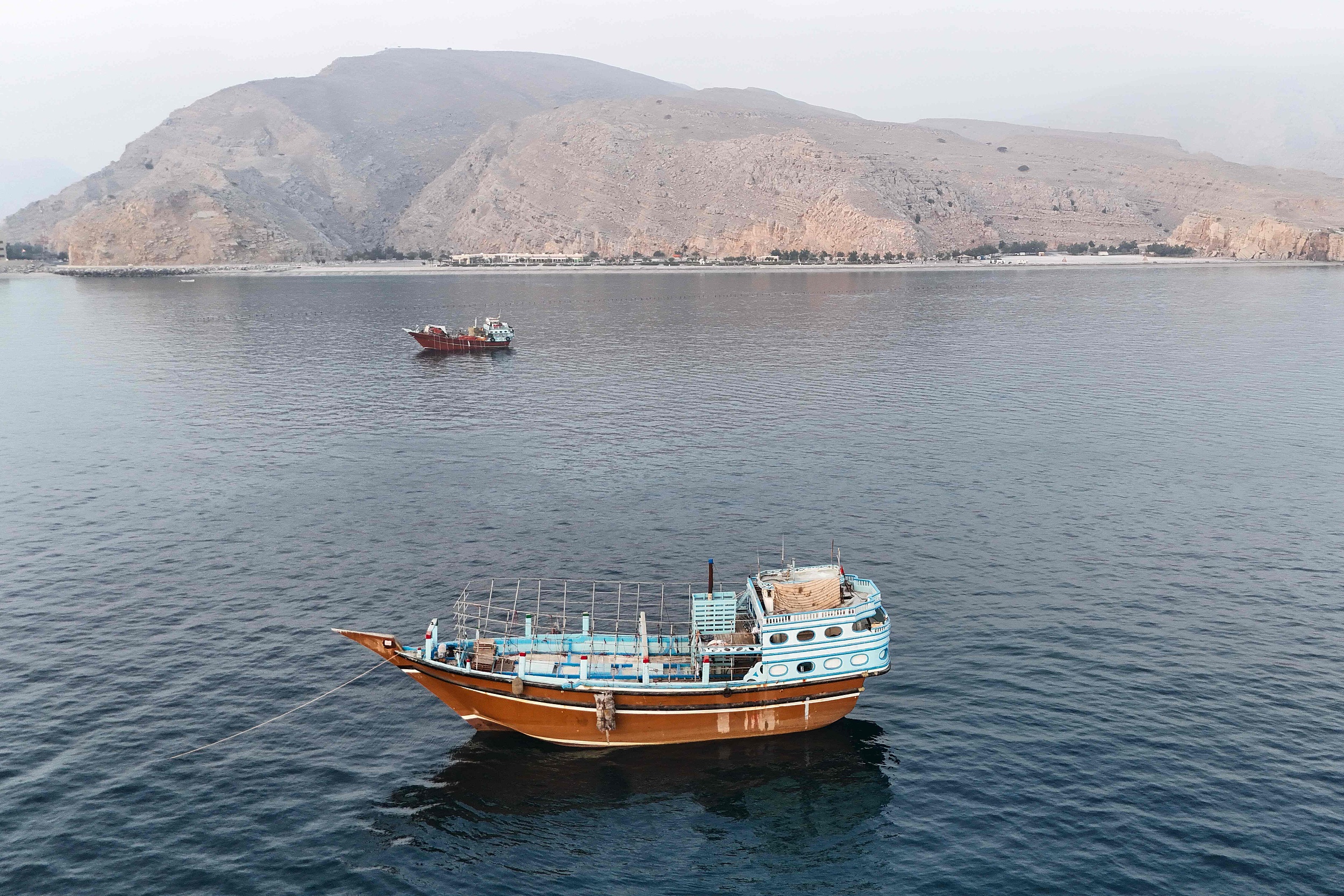
Traffic through the Strait of Hormuz, the world’s oil valve, has pretty much ground to a halt. According to a report from energy research firm Rystad Energy, analyst Jorge León said the situation on July 8 “looks completely stalled,” which shows that the market’s perception of risk is reflecting the reality more than any statements from Washington or Tehran.
After this conflict, Iran has realized the Strait of Hormuz is its ultimate bargaining chip against the US. Even with a ceasefire memo in place, they’re doubling down on controlling it. US intelligence had previously assessed that Iran planned to use service fees from the strait to fund post-war reconstruction. Looks like the fee debate is going to be a long, drawn-out fight.
Last Thursday, Iran’s Joint Military Command warned that all tankers passing through the strait must use approved routes. Iran’s Foreign Ministry spokesperson, Baghaei, cited Article 5 of the US-Iran Memorandum of Understanding signed on June 18, which allows Iran to take necessary measures for managing and providing maritime services in the Strait of Hormuz.
Right now, there are three different shipping lanes in the Strait of Hormuz. The first, in the northern part, is controlled by the Iranian military. The second cuts through the middle and is the usual international route before the blockade. The third is in the southern part, near Omani waters, managed jointly by Oman, the US, and the International Maritime Organization.
Earlier this week, several commercial ships from countries like Saudi Arabia and Qatar reported drone attacks while passing through the strait near Oman. Two of them were hit and badly damaged. Saudi Arabia and Qatar condemned these Iranian attacks on commercial vessels operated by innocent civilians in international waters, calling them unjustified, extremely dangerous, and a clear violation of the ceasefire.
In response to Iran firing on those ships, the US Central Command launched a series of strikes on Iran starting early on July 8, hitting over 80 targets. These included air defense systems, coastal surveillance setups, surface-to-air missiles, anti-ship cruise missiles, and drone launch sites. The attacks killed eight people from Iran’s army aviation and navy, and in Hormozgan province, a US missile strike on a dock killed two fishermen and injured two others.
Iran is currently holding a national funeral for its late former Supreme Leader Khamenei, with an estimated 15 to 20 million people expected to attend—the largest funeral in the country’s history.
During a regular press briefing on July 8, Chinese Foreign Ministry spokesperson Mao Ning responded to questions about the latest Middle East tensions, saying that reigniting conflict serves no one’s interests and that military solutions won’t solve the root problems. She called on both the US and Iran to implement the signed Memorandum of Understanding and resolve disputes through dialogue and negotiation, avoiding the use of force.
As a key mediator, Pakistan’s Foreign Ministry issued a statement urging all sides to exercise restraint and avoid any actions that could further harm regional peace and stability. Pakistan stressed that there’s no alternative to sustained diplomatic engagement and dialogue to achieve the shared goal of regional peace, and urged all parties to honor their commitments under the Memorandum of Understanding.
UN Secretary-General António Guterres, through his spokesperson Stéphane Dujarric, expressed shock at the renewed hostilities between the US and Iran, calling for de-escalation. Guterres warned that the diplomatic progress already made is at risk of derailing, and a full return to confrontation would have disastrous consequences for the people of the region, international peace and security, and the global economy.