In response to recent Iranian fire on commercial ships in the Strait of Hormuz, the US Central Command launched a series of strikes against Iran early on July 8 local time, targeting air defense systems, coastal surveillance systems, surface-to-air missiles, anti-ship cruise missiles, and drone launch sites. Multiple explosions rocked the southern Iranian port city of Sirik, with blast reports also coming from Qeshm Island and the Bandar Abbas region.
Iran is currently holding a state funeral for its late former Supreme Leader Khamenei, with an estimated 15 to 20 million people expected to attend—the largest state funeral in Iranian history. On July 4, US Independence Day, President Trump boasted in a speech that the US was “giving Iran a week off for the funeral,” claiming out of “goodwill” to suspend military operations during the funeral period and not attack the ceremony site.
Meanwhile, the US Treasury Department’s Office of Foreign Assets Control revoked a general license allowing Iranian oil sales, with related wind-down transactions permitted until midnight US Eastern Time on July 17. Officials stated this is not a tit-for-tat response but a punishment that won’t end quickly, and despite the escalation, US negotiators are still sincerely working toward a final agreement with Iran.
As a result, international oil prices jumped immediately. In late Tuesday US stock trading, oil prices surged rapidly. US WTI crude briefly hit $72.51 per barrel, up nearly 5.8% from Monday’s close; Brent crude peaked at $76.36 per barrel, up nearly 6.1% from Monday’s close. Spot gold briefly fell below $4,100 per ounce, hitting a daily low; spot silver expanded its intraday decline to nearly 4.2%.
Although commercial shipping in the Strait of Hormuz is gradually resuming, there remains significant uncertainty around transport capacity, shipping efficiency, and market confidence, with traffic conditions possibly fluctuating at any time.
Currently, three different shipping lanes have emerged in the Strait of Hormuz. The first lane is in the northern part of the strait, controlled by Iran. The second runs through the middle, which was the regular international route before the strait was blocked. The third lane is in the southern part, passing through waters near Oman, coordinated by Oman, the US, and the International Maritime Organization. With different managers, the shipping order in the Strait of Hormuz has become more complex.
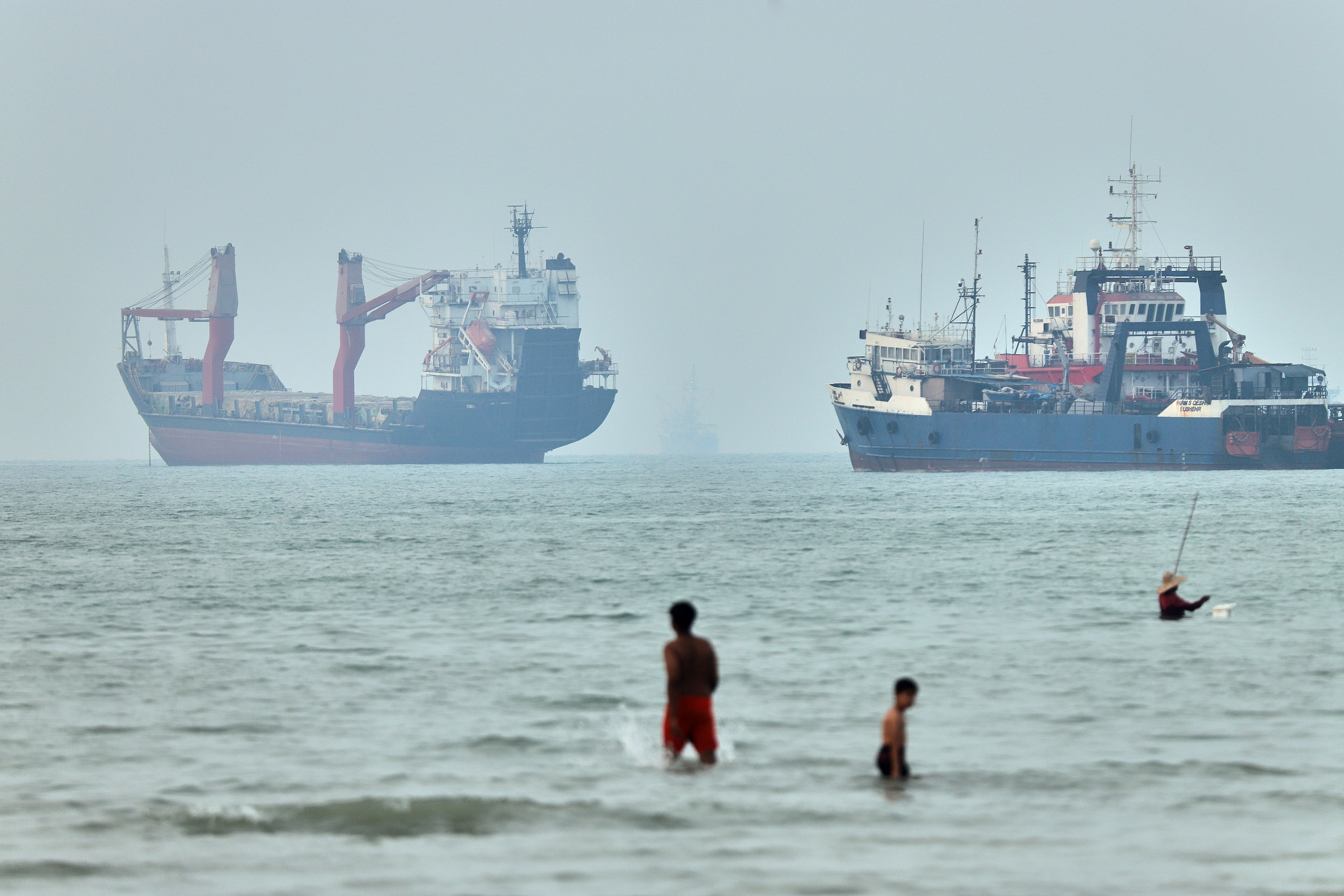
Tehran has repeatedly declared that only routes it approves through the strait are safe. The Iranian Joint Military Command warned last Thursday that all tankers passing through the strait must use its approved routes.
According to reports from Xinhua News Agency, the UK Maritime Trade Operations Office issued a notice on July 7 saying that another oil tanker was attacked by a drone while passing through the Strait of Hormuz. This is the third reported attack on a vessel in the area within 24 hours, with at least two commercial ships hit and severely damaged.
Early that morning, a Qatari-flagged oil tanker, attempting to pass through with US Navy support, was hit by an unidentified projectile about 8 nautical miles east of Oman’s Ras al-Hadd. The shell struck the ship as it tried to leave the strait southward toward the Gulf of Oman, and the incident had no environmental impact. The tanker claimed it was attacked after repeatedly ignoring warnings from the Iranian military, with no casualties reported.
According to US allegations, these Iranian attacks targeted commercial ships operated by innocent civilians in international waters, and Iran’s actions are both unjustified and extremely dangerous, clearly violating the ceasefire agreement.
Iranian Foreign Ministry Spokesperson Baghaei responded that the Qatari Foreign Ministry’s accusations against Iran regarding the attack on its vessel are questionable and go against the principles of good neighborliness, calling such behavior unacceptable. Baghaei cited Article 5 of the US-Iran Memorandum of Understanding signed on June 18: Iran can take necessary measures to ensure the management and provision of maritime services in the Strait of Hormuz.
Baghaei also stated that actions by some commercial ships on routes not coordinated by Iran, such as turning off or tampering with their GPS or AIS trackers to evade monitoring and safety systems, create collision risks, make routes unsafe, and interfere with Iran’s efforts to promote safe passage in the Strait of Hormuz.
The Iranian Foreign Ministry and embassies abroad have repeatedly and clearly emphasized that after the transition period ends, service fees will be charged according to international standards to cover routine public service expenses such as navigation support, navigation insurance, maritime safety maintenance, and marine ecological environment protection. Iran will work with neighboring country Oman to jointly manage and ensure service provision in the strait.
Previously, US intelligence assessed that Iran hopes to use service fees for post-war reconstruction. Tehran estimates that charging for safety and environmental services in the Strait of Hormuz could generate $40 billion in annual revenue.
As previously stated by a deputy director of the Middle East Institute at the China Institutes of Contemporary International Relations in an interview, after this war, Iran recognizes the Strait of Hormuz as a key card in its game with the US. Even after signing the ceasefire memorandum, it will continue to strengthen control over the strait, mainly by pushing for toll collection. While Iran has the geographical advantage for charging, this demand lacks international support, and the US won’t let it happen easily, so the toll issue will remain a long-term struggle.
On July 6, the latest data from the international shipping information platform “Marine Traffic” showed that from July 3 to 5, a total of 108 vessels passed through the Strait of Hormuz, still far below the pre-conflict average of 138 vessels per day.