

The rapid growth of China’s commercial space industry is now catching the attention of the United States. According to a July 29 report by the Financial Times, a recent study from the Center for Strategic and International Studies (CSIS) has raised alarms over what it calls the “stunning” pace of expansion in China’s commercial space sector, which it says could pose a “strategic challenge” to the US.
The report notes that since China opened its commercial space sector to private investment in 2014, the number of related companies has surged from just a few dozen to around 600, covering everything from rocket launches to satellite communications. Meanwhile, China is building space industry clusters, and at least 10 commercial rocket companies have emerged, competing with the previously dominant Long March rocket family.
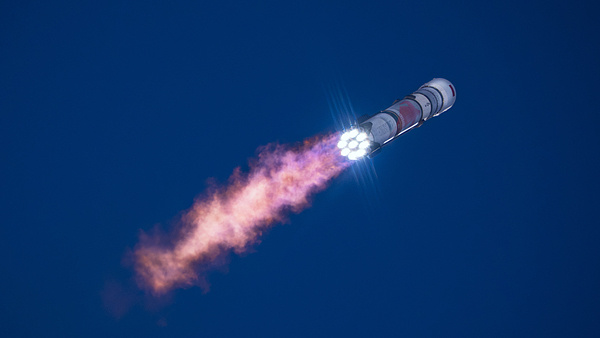
On December 3, 2025, the Zhuque-3 Y1 launch vehicle lifted off from the Dongfeng Commercial Aerospace Innovation Experimental Zone, completing its flight mission as planned, with the second stage reaching its intended orbit.
The CSIS report argues that many Chinese commercial space companies maintain close ties with government agencies, and it paints a picture of these firms helping build a space ecosystem that benefits the Chinese military.
“The US has been focusing on China’s military ‘space threats’ and its moon landing plans, but we’ve failed to notice the development of China’s commercial space sector—which is advancing at an astonishing speed and scale,” said Kari Bingen, a former Pentagon official who led the report.
The report specifically highlights that China’s “Guowang” and “Qianfan Constellation” projects each plan to deploy over 10,000 satellites, directly competing with SpaceX’s Starlink program. It notes that China is accelerating the construction of a low-orbit satellite internet system while also building automated satellite production facilities, with an annual production capacity now estimated at 4,100 to 5,000 satellites—far higher than just three years ago.
The Financial Times points out that China’s commercial space sector still lags behind the US in rocket launches, especially in reusable rocket technology. However, the CSIS believes that if Chinese companies achieve medium and heavy rocket launch capabilities comparable to SpaceX’s Falcon 9, they could rapidly scale up thanks to their manufacturing advantages.
China has previously emphasized that its space policy is clear and transparent: it is committed to the peaceful use of space and is willing to strengthen exchanges, deepen cooperation, and contribute to lasting peace and shared security in space with all countries that share this goal.