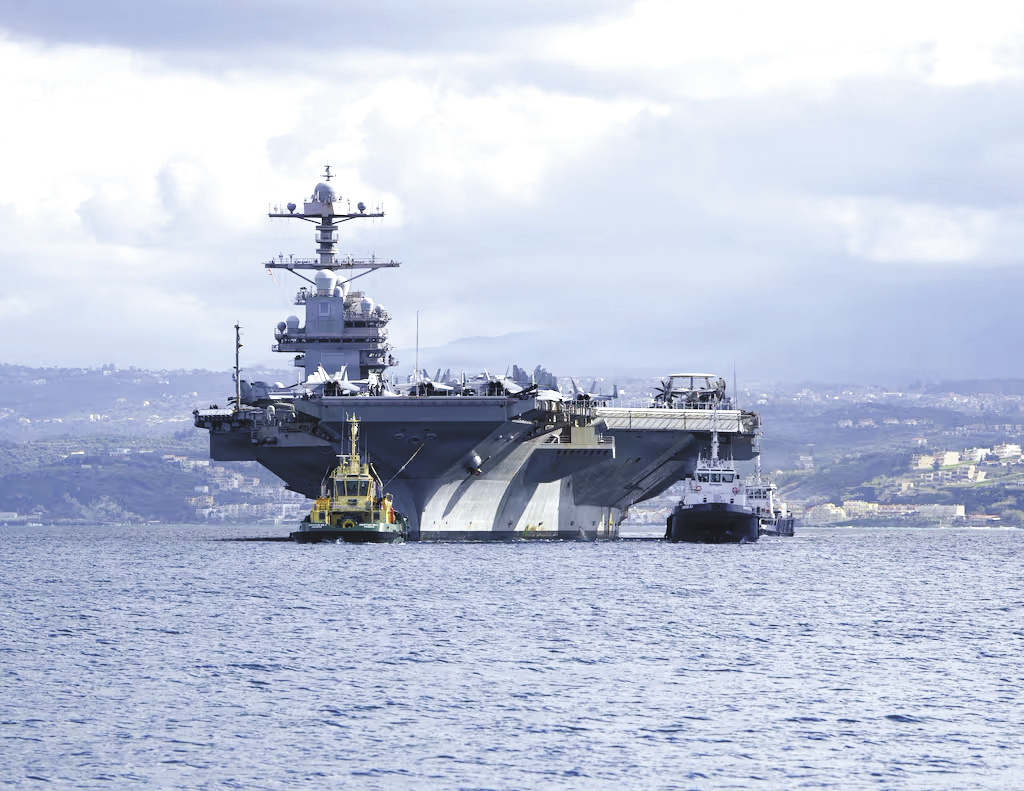
The USS Ford, the Navy’s flagship nuclear supercarrier, just wrapped up a record-breaking overseas deployment, but the homecoming has been anything but smooth. Fresh reports and insider footage reveal that the March fire on board caused far more damage than initially let on. Defense analysts warn the carrier will likely need over a year in dry dock before she’s fully seaworthy again—a delay that’s only going to tighten an already stretched-thin global deployment roster.
This shouldn’t have gotten this bad
Back on March 21, while operating in the Red Sea, a fire broke out in the ship’s laundry compartment. Initial damage control reports noted the flames spread fast, triggering a full-scale emergency response and forcing crew relocations that threw daily operations into chaos. Over two hundred sailors needed treatment for smoke inhalation. Word on the deck had the blaze burning for more than 30 hours, leaving over 600 crew members without a place to sleep. The Navy had to rush over a thousand mattresses from the still-in-commission USS Kennedy, plus airlift nearly two thousand sets of uniforms and athletic gear just to keep the crew clothed.
At the time, official statements tried to play it down, clarifying that the fire itself didn’t rage for 30 hours—only the containment phase did. They reported just two minor injuries and insisted the carrier remained fully mission-ready.
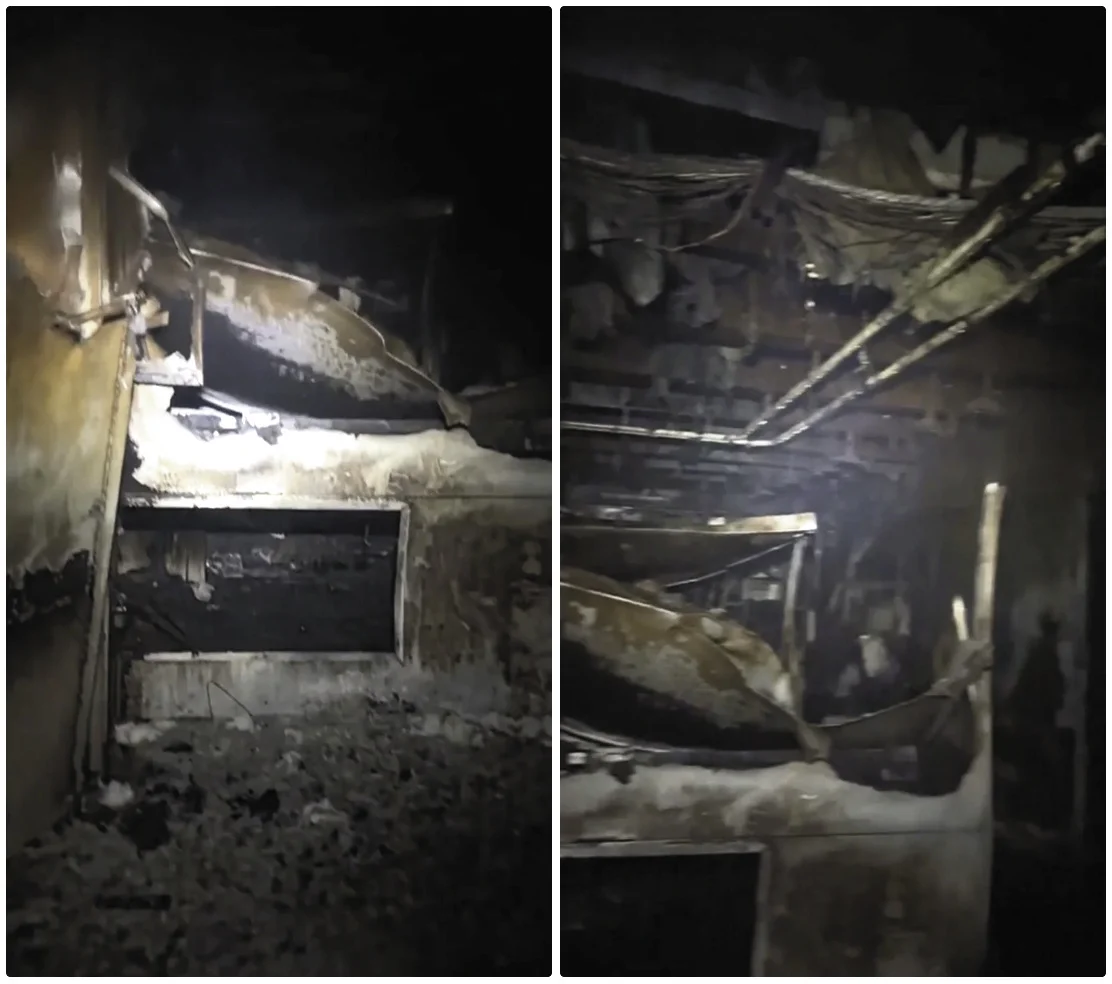
But exclusive video and firsthand accounts from the crew tell a different story. The footage reveals sleeping quarters completely gutted, with bunks reduced to warped, charred metal. The ceiling above was burned right through, leaving live wires dangling down while piles of ash covered the deck. It’s clear the situation was far more severe than initially briefed.
According to a senior defense source, the carrier’s built-in fire suppression systems simply didn’t kick in, leaving sailors to fight the flames manually. One crew member described the panic: “I genuinely thought we were going to lose the ship. It shouldn’t have gotten this bad. The onboard systems were supposed to handle it, but everyone—including me—had to jump in and fight it off.” When pressed on the severity and the system failure, a Navy spokesperson simply stated that investigations are still underway.
That same source confirmed the official narrative significantly understated the fire’s impact on the Ford’s operational readiness. In fact, the ship couldn’t launch aircraft for two days after the incident and had to make an unscheduled stop in a Greek port for emergency repairs.
Fixing the plumbing crisis demands a major overhaul
Beyond the fire, this grueling 326-day deployment—the longest for a US carrier in decades—has pulled back the curtain on a host of underlying maintenance nightmares. Supporting operations across multiple theaters stretched the vessel to its limits, and the wear and tear finally started showing.
Then there’s the infamous toilet backlog that’s become a major morale and hygiene headache. Leaked footage shows multiple stalls completely backed up. Crew members joke that you’d have to walk from the bow all the way to the stern just to find a working one.
Early reports flagged this plumbing disaster months ago, and maintenance officials now confirm the Ford will head to the Norfolk Naval Shipyard for a serious tune-up. The plan involves repairing the fire damage and completely overhauling the waste management setup. Unfortunately, this isn’t a problem you can fix with a plunger. The carrier uses a modern vacuum collection system with narrower pipes, a design the Navy knew was problematic back when the USS Bush faced identical blockages in 2011.
In a candid email sent to the crew earlier this year, the chief machinist mate broke it down: a loose hose behind the toilet bowl is usually what kills the suction. The situation got so bad that technicians had to enlist sailors to help hunt down leaks across hundreds of stalls.
Maintenance commanders explained that the ship’s plumbing is split into four massive zones. It’s a closed system with thousands of moving parts failing daily. If a single control valve blows, it can knock out every toilet in that entire section. The new maintenance strategy? Break those zones down further so a single clog doesn’t paralyze a quarter of the vessel.
A systemic fleet readiness crisis
Defense analysts point out that the Ford’s struggles are just the tip of the iceberg. The US Navy has been battling a wave of onboard fires lately. From the Bonhomme Richard being scrapped after a four-day blaze in 2020, to repeated fires on the USS Lincoln, to the USS New Orleans burning for 12 hours in 2025, and the USS Eisenhower, USS Zumwalt, and USS Higgins all suffering major fire incidents in 2026, the pattern is undeniable.
Even though brass has reviewed these incidents and rolled out new safety protocols, the real-world results fall short. The root cause? Chronic overwork. Time and again, investigations reveal that damage control drills have been rushed, and junior sailors simply aren’t getting the hands-on training they need. When you keep crews deployed at high intensity for months on end, fatigue sets in, morale drops, and proper safety training takes a backseat.
Add to that the relentless pace of global operations, and maintenance windows get constantly pushed back. It’s a vicious cycle: the harder the ships work, the more they break, and the less time they get to fix. Internal reviews have even uncovered falsified maintenance logs and found that nearly 90% of fire suppression stations on some vessels were either broken or uninspected. The Ford’s failed fire suppression system is a textbook example of this exact breakdown.
With the combined toll of an ultra-long deployment and fire-related repairs, the Ford is facing a lengthy stint in dry dock. Officials estimate it will take at least a year before she’s back in the water, forcing the Navy to shuffle other carriers to cover the gap. This only tightens an already strained deployment schedule. Sure, the Navy is trying to squeeze extra mileage out of aging vessels like the USS Nimitz, but a fifty-year-old ship is hitting its limits. Meanwhile, the new USS Kennedy is still in early sea trials and years away from being fully combat-ready. The bottom line? The number of operational US carriers is set to keep shrinking in the coming years.