According to a Wall Street Journal report on August 13, US officials say the military is moving ahead with its “original” Middle East deployment plan — swapping out the USS Abraham Lincoln, which has been on duty in the region for months, for the Japan-based USS George Washington.
Lately, a number of US lawmakers have been raising red flags about conditions aboard the Lincoln. Multiple US media reports point to shortages of food and basic personal items, broken sanitation facilities, and a mail system that’s essentially gone dark. With the deployment now stretching into its ninth month, the pressure on the crew is drawing serious concern.

In April 2026, USA Today first published photos of meal trays provided by crew family members. Photo: USA Today
Connecticut Democratic Senator Richard Blumenthal this week sent a letter to Defense Secretary Pete Hegseth and Acting Navy Secretary Hong Cao, detailing issues on the Lincoln ranging from basic supply shortages and contaminated drinking water to plumbing problems, deteriorating mental health, flight deck safety hazards, and a broken mail system.
Blumenthal also noted that many care packages sent to the ship have been lost or stuck in transit for months due to the mail system failures.
In his letter, Blumenthal pointed out that the Lincoln has been deployed for over 250 days and has gone 200 consecutive days without pulling into port — setting a record for continuous days at sea.
Another lawmaker, Indiana Republican Congressman Marlin Stutzman, said he plans to demand an updated briefing from the Pentagon and the White House. Speaking on CNN Thursday, he said service members deserve the confidence that they’re being properly taken care of.
In early August, the Lincoln also saw a man-overboard incident. A US official confirmed that one person went over the side but was quickly rescued.
“Half a cup of rice and two corn tortillas for one meal”
According to MS NOW, as the Lincoln enters its ninth month of deployment, crew families are increasingly worried about living conditions, workload, and morale.
Family members say there’s a food shortage on board, with some sailors running low on basic toiletries like toothpaste and soap. Sanitation facilities are also failing — toilets not working, mold in the showers, and laundry machines out of commission.
One crew member’s mother told MS NOW that her son described life aboard — including showers being shut off at times, the laundry room being unusable, and food running short. She said during one supply crunch, her son’s entire meal consisted of half a cup of rice and two corn tortillas.

A meal served aboard the USS Lincoln. Photo: Newsweek
Other family members report that some sailors have completely run out of personal hygiene items, including toothpaste, deodorant, and soap.
MS NOW reports that families are especially concerned about the toll of prolonged high-intensity work. Several relatives say sailors are putting in very long days, and depending on their specific jobs, some rarely get a full day off.
A sailor’s father told MS NOW that his son mentioned wear-and-tear holes forming on the Lincoln’s flight deck. That said, this comes secondhand from a family member — the report doesn’t confirm whether the Navy has acknowledged any structural damage to the flight deck.
MS NOW also notes that families worry fatigue from the long deployment and heavy workload could raise safety risks.
According to MS NOW, since the Lincoln left San Diego last November, sailors have had very limited opportunities to actually get off the ship. The vessel made a brief stop in Guam last December, but many sailors weren’t allowed ashore. After that, it didn’t pull into port again until July 7 of this year — spending 208 straight days at sea in between.
On July 7, the Lincoln made a short port call in Oman for replenishment. That stop came 208 days after the previous one. MS NOW calls this a modern record for a US Navy carrier’s continuous time at sea.
Forbes has also reported that since leaving San Diego on November 21 last year, the Lincoln’s crew has had very few chances to set foot on land: a December stop in Guam where most sailors stayed aboard, and a July resupply in Oman where even those allowed ashore were restricted to a secure area within the port.
Family members say they have no idea when their loved ones will come home. MS NOW reports that the Lincoln was originally slated for a roughly seven-month deployment, but the mission has been extended at least twice.
The carrier left San Diego last November, initially heading toward the Pacific, then was redirected to the Middle East in January. After war broke out between the US and Iran in February, the Lincoln and its air wing took part in US military operations and have since been involved in related maritime missions.
Families also say the extended deployment is hurting morale. Some sailors used to look forward to port visits for some R&R, but with the mission keeps getting pushed back, expectations about when they’ll get home are increasingly uncertain.
Multiple sailors reportedly tried to jump overboard
Another concern tied to living conditions and the long deployment is mental health.
US military outlets Navy Times and Stars and Stripes, citing sailors’ families and crew members, report that multiple sailors aboard the Lincoln have attempted to jump overboard. The long deployment has also left some crew and their families worried about psychological well-being. Navy Times notes the US Navy hasn’t disclosed exactly how many attempted jumps or acts of self-harm occurred during this deployment.
Annabelle Loma, the wife of one sailor, said her husband tried to jump from the carrier during the deployment and was placed under medical observation afterward. She said he had been overworked for a long stretch before that.
Another sailor’s wife, Maria Rodriguez, said her husband was on watch when he spotted a crew member about to go over the side. He shouted, rushed over, and grabbed the person’s arm, pulling them back onto the deck. Three other sailors heard the commotion and came to help.
Stars and Stripes also quotes family members saying one sailor texted his wife that he “hoped he wouldn’t wake up tomorrow.” Another parent said his son told him that he and his shipmates often had thoughts that “jumping off the ship would bring relief.”
However, a US Navy official says there’s been no observed increase in mental health issues aboard the Lincoln, nor any uptick in suicidal ideation or attempts. The official stressed that the Navy takes every service member’s physical and mental well-being seriously, and that religious, medical, and mental health professionals are on board to assess and address any issues that arise.
Hegseth calls reports “completely distorted”
Defense Secretary Pete Hegseth, for his part, is pushing back against some of the concerns.
According to Reuters, Hegseth told reporters during a visit to Panama on August 13 that reports about the Lincoln’s condition have been “completely distorted.”
“We make sure that every ship, every sailor, every captain, at every moment, has everything we can possibly provide,” he said.
Hegseth also acknowledged that some deployments run longer than others and expressed respect and gratitude for the sailors serving long stretches at sea. He called their work “incredible” — operating in remote, harsh environments with fewer port visits.
US officials say some of the conditions on the Lincoln aren’t unusual for wartime deployments, but they also concede that months without a port call take a toll on the crew.
Normally, US carriers pull into port during deployments for resupply and to give sailors a chance to rest and recharge. Typical Navy deployments run six to nine months, but in war or conflict situations, they can stretch even longer.
Hegseth also said the US can maintain an indefinite blockade of Iranian ports by rotating ships in and out of the theater.
The Navy has previously denied that the Lincoln is experiencing food shortages or a drop in food quality.
In April, USA Today published photos of food served to crew on the Lincoln and the USS Tripoli, showing some trays with modest portions and processed meats. That reporting prompted some lawmakers to call for an investigation.
The Office of the Chief of Naval Operations responded at the time that both the Lincoln and the Tripoli had sufficient food and could provide healthy meal options for their crews.
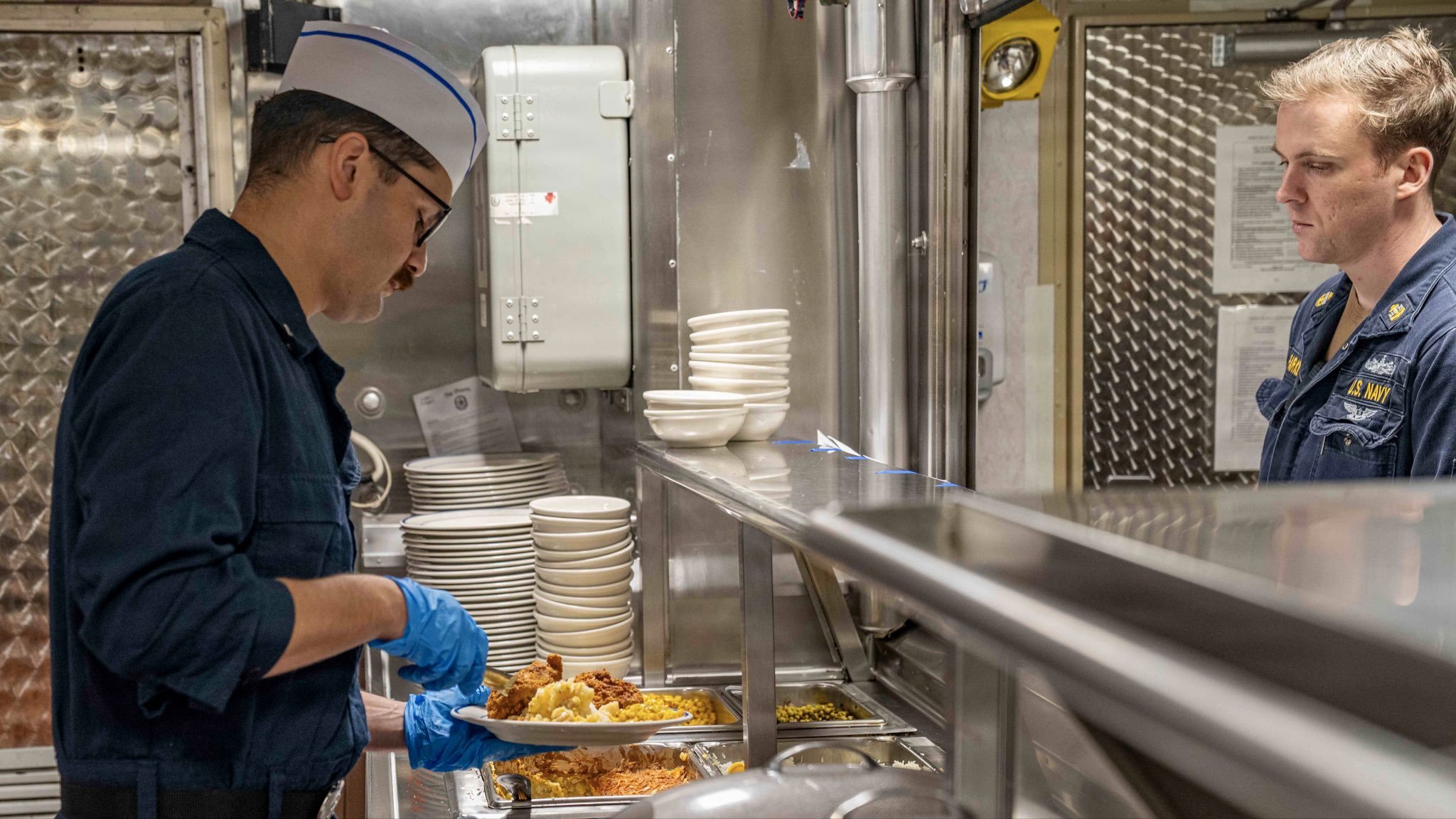
Official Navy photos of Lincoln galley food. Photo: US Navy X account
That stands in contrast to the food shortage accounts MS NOW recently gathered from crew families.
George Washington heads to the Middle East — West Pac left without a carrier
The Lincoln began its original deployment last November and was redirected to the Middle East in January, just before the US war with Iran kicked off. The carrier and its air wing took part in Operation Epic Fury airstrikes and have since been involved in the blockade of Iranian ports.
Reports indicate the Lincoln’s rotation isn’t a direct response to the recent controversies over living conditions. One US official says the plan to replace the Lincoln was already in place.
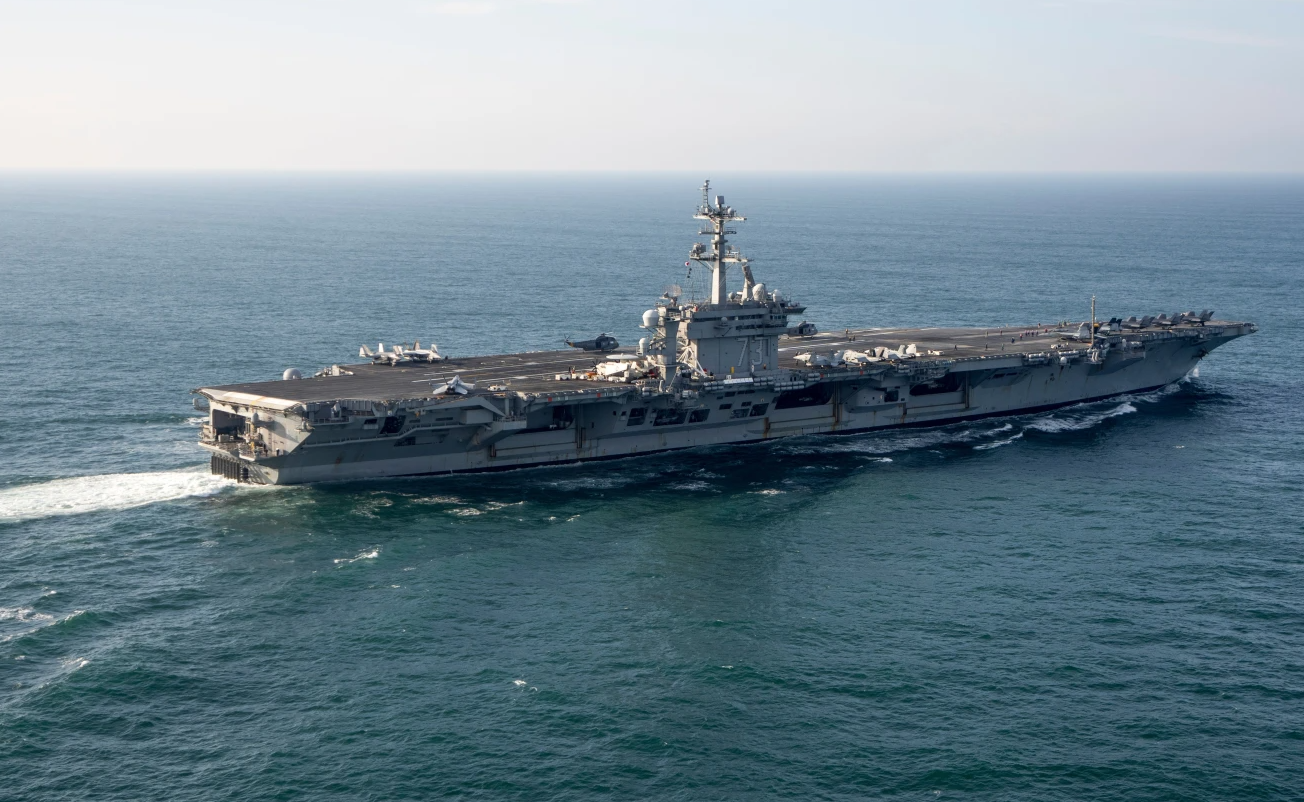
USS George Washington
Taking the Lincoln’s place is the USS George Washington, currently homeported in Japan. The carrier has been operating in the South China Sea in recent weeks and recently made a port call in Vietnam. According to ship tracking data and a US official, the Washington has been steaming west with guided-missile destroyers, transiting the Strait of Malacca en route to the Middle East.
The Washington’s move also means the US Navy temporarily has no aircraft carrier deployed in the Western Pacific.
Bryan Clark, a retired Navy officer and now a senior fellow at the Hudson Institute, says the Washington was originally supposed to continue its mission in the Asia-Pacific region — patrolling, showing force, and strengthening ties with the Philippines, Japan, and others.
“Normally, the Washington would be patrolling, showing the flag, and demonstrating our commitment and support to countries like the Philippines and Japan,” Clark said. “We’re going to give up those strategic opportunities that shape our relationships with countries in the region.”
The carrier swap is also raising broader questions about the Navy’s ability to sustain global deployments over the long haul. The US Navy currently operates 11 active carriers, and carriers returning home still need maintenance.
Clark says the carrier fleet could need up to three years to return to ideal readiness levels due to the Iran war. If two or three carriers on each coast are in various stages of repair or maintenance, the others have to wait in line.
The Lincoln isn’t the first US carrier in recent years to endure an extended deployment. The USS Gerald R. Ford previously spent 11 consecutive months at sea, returning in May — the longest continuous deployment for a US carrier since the end of the Soviet Union.
During the peak of the Iran war in March, the Ford made a brief port call in Split, Croatia, for maintenance and crew rest. Still, the long deployment and tough service conditions took a toll on personnel.
Reuters notes that US Navy deployments typically run six to nine months but can be extended during wartime. Long deployments demand sailors maintain high alert and readiness, especially with the threat of Iranian drone and missile attacks.
White House spokesperson Olivia Wells, asked about reports on the Lincoln’s condition, said President Trump and Hegseth are committed to ensuring US forces “have the resources necessary to confront any threat to America.”