As US-Iran ceasefire negotiations hit a critical point, the Middle East just got a fresh dose of turmoil. On May 28, US forces carried out airstrikes in southern Iran, and Iran quickly hit back. Meanwhile, Israel launched a massive military operation in southern Lebanon against Hezbollah over the past few days.
Experts say the recent two-front exchanges aren’t likely to change the big picture of US-Iran talks. The limited strikes between the two sides seem more like a way to boost their bargaining power. Israel, on the other hand, has its own agenda—trying to gain ground before a ceasefire deal is inked, while also throwing a wrench into the negotiations.
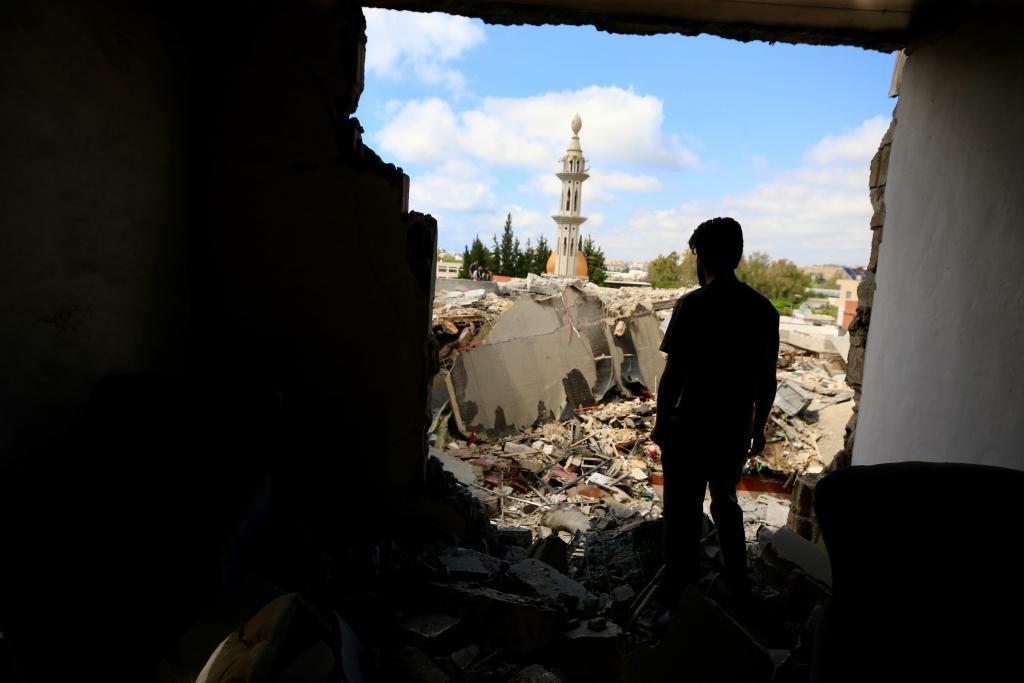
On May 26, residents in the southern Lebanese city of Tyre inspected homes damaged by Israeli airstrikes. (Photo: Ali Hashisho)
Near the Strait of Hormuz, small-scale clashes between the US and Iran have been brewing for days.
Explosions rattled the area around Iran’s southern port city of Bandar Abbas early on May 28. A US official told American media that the airstrike was carried out because Iran launched a drone at a US merchant ship. Another US official told Reuters the action was “purely defensive and meant to keep the ceasefire alive.”
Iran, however, said the US opened fire on barren lands around Bandar Abbas, causing no casualties. Tehran claims this was retaliation for Iran stopping a US oil tanker trying to cross the Strait of Hormuz. Later that day, Iran’s Islamic Revolutionary Guard Corps said it had struck the US air base behind the attack.
Similar exchanges happened just days before. Late on May 25, three blasts were heard in Bandar Abbas. US military and media reports said the airstrikes were “defensive,” targeting two Iranian ships laying mines in the Strait of Hormuz, as well as an Iranian air defense missile site in Bandar Abbas. According to Iranian media, over the past four days, Iran’s armed forces have shot down a large US drone and an Israeli reconnaissance drone.
While the US and Iran were trading blows, Israel launched a heavy offensive in southern Lebanon.
On May 27, the Israeli military said it had struck more than 150 Hezbollah infrastructure and personnel targets in Tyre, Nabatieh, and the Bekaa Valley over the previous day. It also declared all areas south of the Zahrani River a “war zone.”
Hezbollah said on May 26 that it had launched drones and rockets at Israeli military vehicles and troop concentrations along the Lebanon-Israel border in response to Israeli operations. According to The Times of Israel, the temporary ceasefire between Israel and Hezbollah is now essentially dead.
Analysts point out that with US-Iran ceasefire talks at a crucial stage, the US, Israel, and Iran are all making small moves for their own reasons. But the chances of a major escalation are slim.
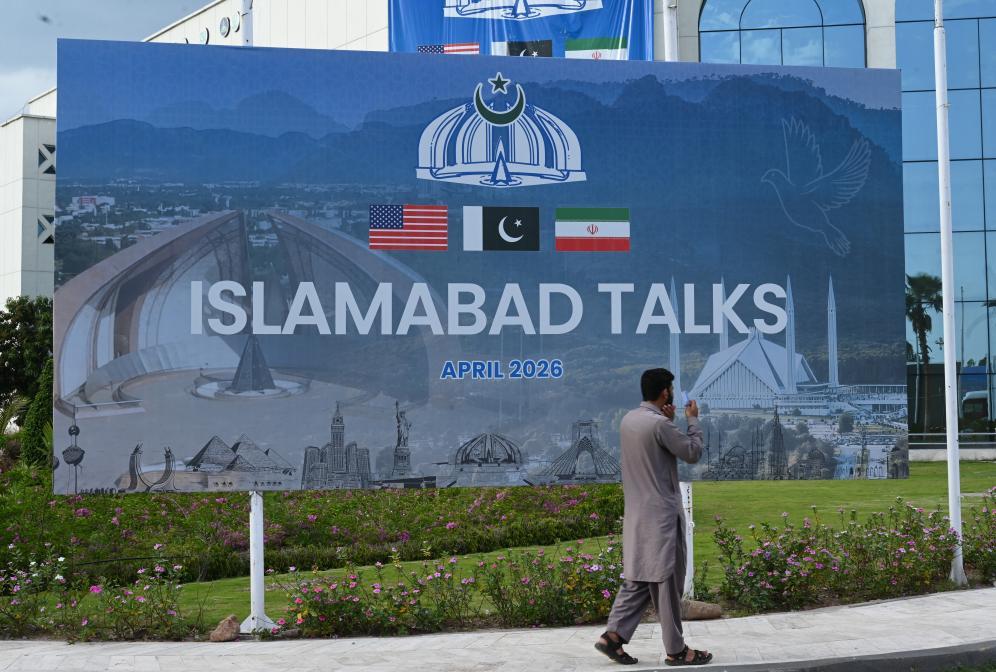
A poster related to US-Iran talks is seen in Islamabad, Pakistan, on April 11. (Photo: Ahmad Kamal)
Israel wants to maximize its gains during the “window” before a deal. Over the past few days, multiple US and Middle Eastern media outlets have reported that a US-Iran ceasefire is close, with some reports saying the deal includes a ceasefire on the Lebanon front. Israel isn’t happy about that.
An article in The Guardian notes that Israel is trying to use this “window” before the deal to hit Hezbollah harder, while also throwing obstacles into the US-Iran talks. Plus, Israeli Prime Minister Benjamin Netanyahu can use the fighting to distract from corruption charges at home and cater to growing domestic calls for tough action against Hezbollah.
Analysts say neither the US nor Iran wants to escalate. The limited strikes are more about adding leverage. The US keeps stressing that its actions are “defensive” and “self-defense,” which shows it’s trying to cool things down. A Wall Street Journal article also points out that the US is clearly working to “avoid escalation.”
Ding Long, a professor at Shanghai International Studies University’s Middle East Studies Institute, says both sides are “pulling punches.” Neither seems eager to restart a full-scale war or expand the conflict. Instead, they’re maintaining a certain level of deterrence to boost their bargaining chips and show strategic resolve.
A Reuters analysis suggests it’s less about actually fighting and more about sending signals. “Each strike is about getting a better negotiating position,” it says. Professor Govinda Clayton of Kent University in the US says this round of clashes should be seen as part of the negotiation game, not as a sign of escalation.