

On the afternoon of July 9, South Korea’s Supreme Court delivered a verdict in the case of former President Yoon Suk Yeol, who was accused of using the Presidential Security Service to block law enforcement from arresting him after the emergency martial law incident. The court sentenced him to seven years in prison. This marks the first time the Supreme Court has issued a third-instance ruling in any of the multiple judicial cases involving Yoon and the emergency martial law.
According to reports, Yoon was accused of mobilizing the Presidential Security Service in early 2025 to prevent the Corruption Investigation Office for High-ranking Officials (CIO) and other agencies from arresting him, after he had declared emergency martial law in late 2024. In January of this year, the Seoul Central District Court handed down a first-instance sentence of five years. Then, in April 2026, the Seoul High Court increased that to seven years during the appeal.
The systematic corruption model centered on Yoon and his wife, Kim Keon Hee, who allegedly divided labor around the presidential office, has become a landmark case in South Korean politics. Kim faces charges including mediation bribery, stock price manipulation, and illegally receiving polling services.
The emergency martial law incident has had a lasting and profound impact on South Korea, particularly across political, social, and judicial spheres. “Many legal proceedings are underway against Yoon, former military figures, and former high-ranking officials,” said Yong-Seung Ji, a professor of international relations at Woosuk University, on July 9. “The South Korean public is paying close attention. This is a people’s revolution that has not yet subsided.”
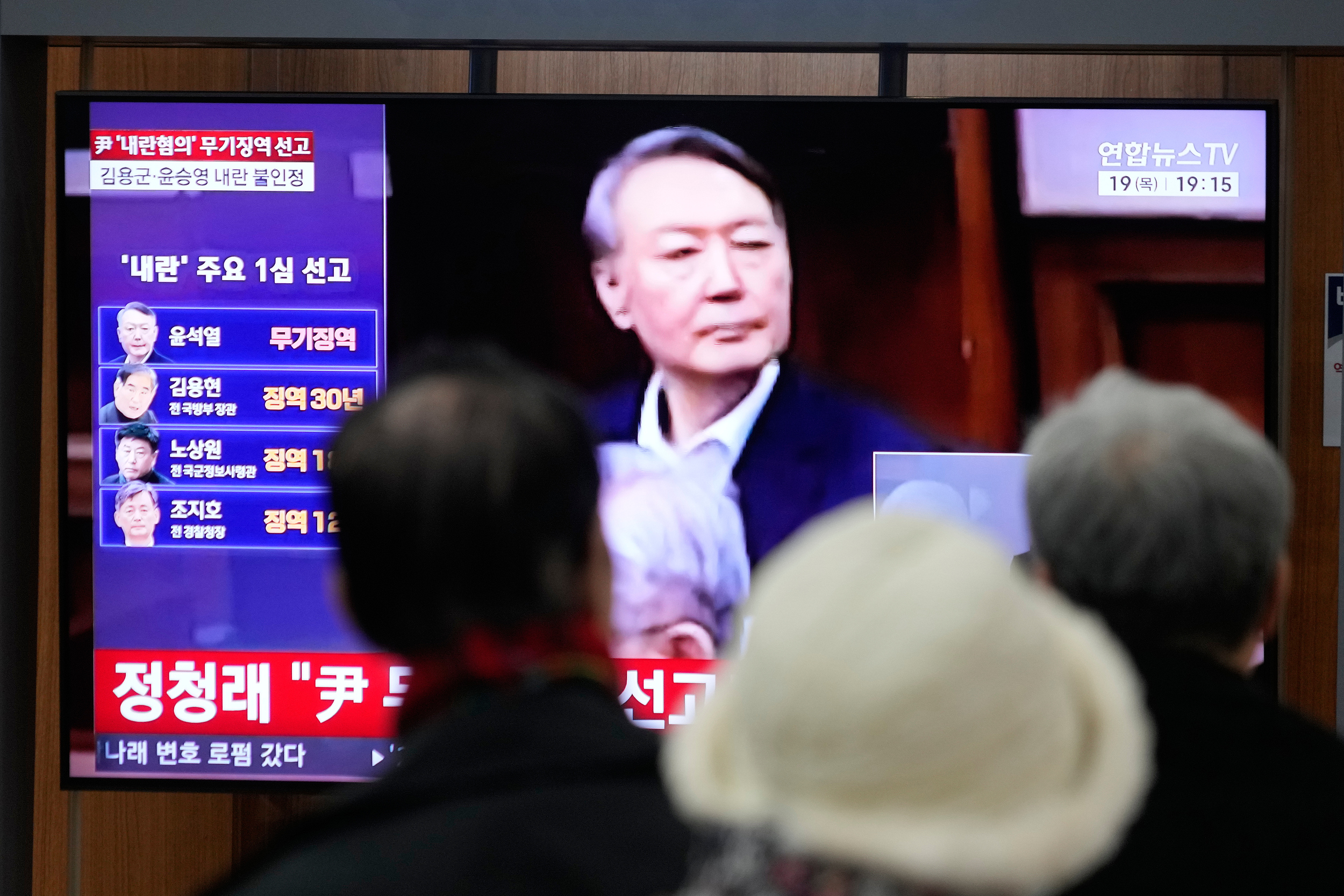
Yoon currently faces over a dozen charges, including insurrection, abuse of power, and forging official documents. On the evening of January 13, prosecutors requested the death penalty, citing him as a ringleader of insurrection. The first-instance court sentenced him to life imprisonment, but the appeal verdict has yet to be delivered.
On April 28, the Seoul High Court sentenced Kim Keon Hee to four years in prison in the second-instance trial for charges like stock price manipulation and bribery. This was a significant increase from the first-instance sentence of one year and eight months handed down by the Seoul Central District Court.
The latest ruling overturned the first-instance court’s finding that “the stock price manipulation charge was not established,” partially supporting the prosecution’s claims and determining that her actions had a serious negative impact on society. Kim’s legal team immediately expressed dissatisfaction with the appeal verdict and announced they would appeal to the Supreme Court.
The very next day, the same court ruled on Yoon’s appeal in the case involving his use of the Presidential Security Service to block his own arrest during the emergency martial law period. The court upheld the seven-year sentence, two years more than the first-instance ruling.
Analysts suggest that the court’s latest judgment could influence other cases related to the emergency martial law, serving as a benchmark for their outcomes.
Last month, Yoon was sentenced to 30 years in prison in a first-instance trial for “fabricating the drone incursion over Pyongyang.” The special counsel for insurrection had requested a 30-year sentence for that case on April 24. The charges primarily involved “general enemy-befriending” and abuse of power.
In October 2024, North Korea’s Foreign Ministry condemned South Korea for allegedly sending drones carrying anti-regime content over Pyongyang multiple times, calling it a violation of national sovereignty and international law.
Subsequent investigations by South Korean prosecutors revealed that Yoon and then-Defense Minister Kim Yong-hyun allegedly tried to use the drone incident to provoke North Korea into attacking South Korea. The plan was that if the North opened fire, Yoon could use an “emergency martial law” declaration to suppress the opposition in the National Assembly.
The exchange of balloons carrying propaganda materials and using loudspeakers along the border has long been a form of “psychological warfare” for both sides, part of a strategy to strengthen internal unity. Drones had not previously been reported as a delivery method.
In 2023, South Korea’s Constitutional Court overturned a law that criminalized the release of anti-North Korea balloons, ruling that it restricted freedom of speech. This drew strong protests from North Korea, which expressed its anger through multiple statements and official channels, but with little effect. Starting May 28, 2024, North Korea sent thousands of balloons carrying trash toward border areas and the Seoul capital region.
As the U.S. and South Korea escalated joint military exercises near North Korea, the North responded more aggressively. From October 9, 2024, it completely cut off road and rail links with South Korea and began fortifying its defensive structures.
On December 3, 2024, Yoon declared “emergency martial law.” Police investigations later revealed that notes belonging to former military intelligence commander Noh Sang-won, a key figure in the martial law plan, included content about “luring North Korea into an attack.”
“If all charges are combined, Yoon should ultimately face the death penalty,” Ji told us. “And Kim Keon Hee, behind these cases, also needs to bear historical responsibility because she has set South Korea’s history back.”