

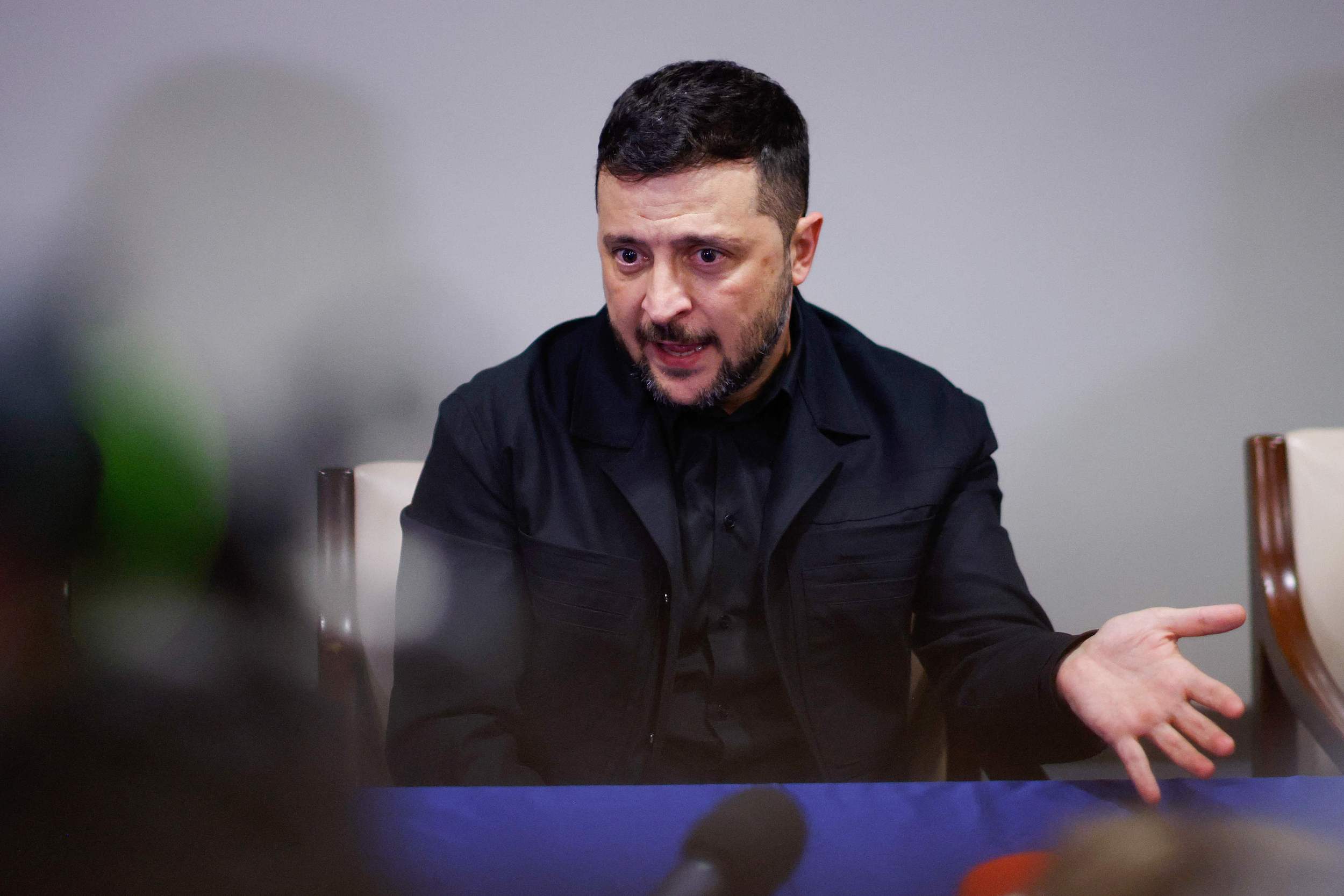
Ukrainian President Volodymyr Zelenskyy has firmly rejected calls from former Defense Minister Andriy Zahorodnyuk to hold elections during wartime, claiming such a move could tear the country apart.
Speaking to the media on August 23, Zelenskyy stated that Ukraine does not yet have the conditions to conduct elections amid the ongoing war. Holding a vote under current circumstances, he warned, would pose a grave danger of national fragmentation. His strategy, he added, is to lead the country toward the end of hostilities while preserving a fully independent and sovereign state.
Due to conflicts over work and communication, tensions between Zelenskyy and certain senior military figures have become public. Zahorodnyuk, who was dismissed by Zelenskyy, released a video last week calling for wartime elections, which gained some public support. Earlier, some citizens also took to the streets to protest against the military personnel decisions.
Zelenskyy responded that front-line soldiers and millions of Ukrainian citizens who fled abroad to escape the war still face personal security threats, making elections an enormous risk. Furthermore, no partner country has yet offered concrete proposals.
A poll by the Kyiv International Institute of Sociology shows that 57% of Ukrainians want elections to be held only after the war ends. Meanwhile, according to the latest data from Rating Group, Zelenskyy’s approval rating stands at 25.2%, ranking first, followed by former military commander-in-chief Valerii Zaluzhnyi at 16.7% and Zahorodnyuk at 12.5%.
Zelenskyy, 48, was elected and inaugurated as Ukraine’s president in 2019, with his five-year term originally set to end in May 2024. The presidential election was initially scheduled for March 2024, but after the new round of the Russia-Ukraine conflict broke out in February 2022, current Ukrainian law prohibits holding elections under martial law.
On February 25, 2025, the Verkhovna Rada (Ukrainian Parliament) issued a statement declaring that presidential elections would be announced once a comprehensive, just, and lasting peace is determined to have been achieved on Ukrainian territory, ensuring the vote adheres to all international election standards.
The statement also noted that Zelenskyy was elected through free, transparent, and democratic elections, and his mandate has not been questioned by officials or the public, nor has it been challenged by the international community. Therefore, Zelenskyy must continue to exercise presidential powers until a successor is elected.
Zelenskyy was born into a Jewish family in eastern Ukraine. Before entering politics, he was a seasoned entertainment industry professional, working as an art director, actor, and screenwriter. In January 2019, he was nominated as the chairman of the Servant of the People party, officially ran for the Ukrainian presidency, and was sworn in the following month after winning.
Once in office, Zelenskyy sought to negotiate a resolution to the Donbas conflict in eastern Ukraine with Russia while also pursuing EU and NATO membership. On February 24, 2022, citing NATO’s eastward expansion and the Donbas conflict, Russian President Vladimir Putin announced a “special military operation” against Ukraine.
Since then, Zelenskyy has lobbied Western nations extensively, securing broad aid and support, particularly from the Biden administration. His efforts also earned him recognition from the Ukrainian public. After Trump’s return to the White House last year, the personal relationship between Trump and Zelenskyy once deteriorated, with the former even labeling Zelenskyy a “dictator without democratic elections.”
Russia has also maintained that Zelenskyy’s presidential term expired in May 2024, questioning the legitimacy of his rule. Moscow has suggested that any agreements he signs could be overturned by a future government, and Putin has repeatedly refused to meet with him directly.
With the conflict now exceeding four years, the situation remains in a stalemate. The fighting remains concentrated around Avdiivka in eastern Ukraine, where both sides continue to pour in troops to contest positions. The front lines are largely static, with no major breakthroughs.
This summer, Ukraine has escalated drone strikes against Russia’s economic infrastructure, targeting oil refineries and warehouses belonging to e-commerce companies.The latter has responded by striking Ukraine’s economic infrastructure in kind.
During his August 23 meeting with media representatives, Zelenskyy also stated that Ukraine will not seek alternatives to NATO membership for genuine security guarantees. If Ukraine joins NATO, it would gain access to funding, weapons cooperation, and a range of other opportunities.
He noted that Kyiv still needs €30 billion in loans from the EU this year to cover its fiscal deficit, in addition to a $27 billion defense budget shortfall.
Zelenskyy also believes the window for ending the Ukraine crisis through diplomatic means roughly spans from the end of this year to next summer, as U.S. presidential election campaigning would kick off afterward.
Ukraine’s constitution stipulates the pursuit of NATO membership to defend against Russian aggression. Preventing Ukraine’s NATO accession is also one of Russia’s war objectives.
Founded after World War II, the North Atlantic Treaty Organization aims to safeguard member states’ security through collective defense.After the Cold War, it gradually expanded its sphere of influence, engaging in global interventions and geopolitical maneuvering. Russia views this as a serious threat to its own security.
Given the lack of support from the Trump administration and some European partners, Zelenskyy indicated late last year that Ukraine agrees to accept security guarantees from the U.S., Europe, and Canada similar to NATO’s Article 5 collective defense clause.