Tensions are escalating in the critical international trade corridor.
According to CCTV News, on May 4, the Iranian Fars News Agency reported that two Iranian missiles hit a US warship. The US warship was near the Iranian port of Jask, “violating traffic and maritime safety regulations, attempting to pass through the Strait of Hormuz”, and “ignoring warnings from the Iranian Navy” before being attacked.
Due to the attack, the US warship was unable to continue sailing and was forced to return and leave the area. Later, the US Central Command issued a statement on social media, claiming that no US Navy ships were hit by Iranian missiles.
After the news broke, international oil prices continued to rise. As of the time of writing, WTI crude oil futures prices rose 4.43%, Brent crude oil futures prices rose 5.05%, spot silver prices fell 3%, and spot gold prices fell 2.00%.
Earlier that day, the Iranian Islamic Revolutionary Guard Corps Navy also released a new map of the Strait of Hormuz under the control of the Iranian armed forces. The map shows that the southern boundary is a line connecting the Iranian Mubarak Mountains with the southern part of the UAE’s Fujairah, and the western boundary is a line connecting the Iranian island of Qeshm with the UAE’s Umm Al Quwain.
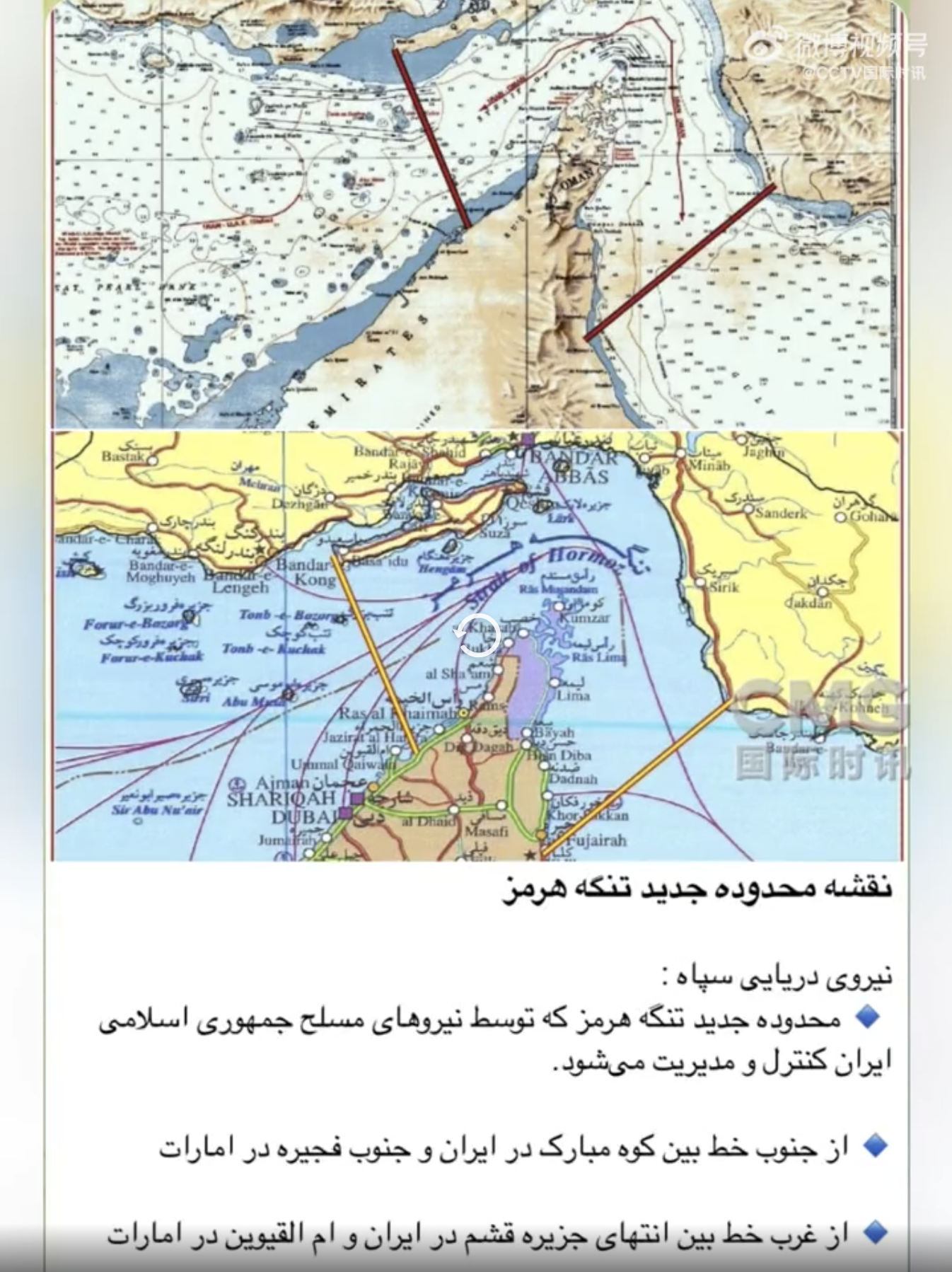
US President Trump posted on his social media platform “Real Social” a day earlier, announcing that the US planned to launch an operation in the Middle East on May 4 to guide ships stuck in the Strait of Hormuz out of the area. If the operation is obstructed or interfered with, the US will take tough measures to respond.
Prior to this, the US State Department announced that it would work with the Department of Defense to “support maritime security in the Strait”, with the operation named “Maritime Freedom Framework”, aiming to combine diplomatic efforts with military coordination during the “Freedom Plan” period. The US military will provide support, including missile destroyers, over 100 aircraft, multi-domain unmanned platforms, and 15,000 active-duty personnel.
The US Department of Defense recently released information that the US Navy has signed a contract with Domino Data Lab to purchase machine learning-related services, aiming to use the company’s AI technology to improve mine detection capabilities, with applications including the Strait of Hormuz. The company’s technology can reduce the training time for underwater drones from six months to just a few days.
Iran recently submitted a new proposal to the US through Pakistan, containing 14 points, including the establishment of a new management mechanism for the Strait of Hormuz.
The proposal includes three stages. The first stage includes “gradually lifting the blockade on Iranian ports within 30 days”, “Iran taking responsibility for clearing mines”, and “the US withdrawing from the waters around Iran and stopping new troop deployments”.
Iranian Islamic Parliament National Security and Foreign Policy Committee Chairman Aziz said on social media on May 4 that any US interference in the “new maritime management system” of the Strait of Hormuz would be considered a violation of the ceasefire agreement.
The Strait of Hormuz is still effectively blocked, causing about one-fifth of the world’s oil and natural gas supplies to be disrupted, putting huge pressure on the economies of countries around the world.
UN Secretary-General Spokesperson Dujarric recently said at a regular press conference that according to the UN Conference on Trade and Development’s new online tracking dashboard, since the US-Iran war began on February 28, the number of ships passing through the Strait of Hormuz has decreased by 95.3%, while global food prices have risen by 6%, and European oil prices have risen by 53%.
European countries are also planning escort operations. France, the UK, and a joint mine-clearing force consisting of the Netherlands and Belgium are all preparing to take action. Italy plans to dispatch a task force consisting of four ships, including two mine-clearing vessels, one escort vessel, and one logistics support vessel.
The world’s largest shipping company, Mediterranean Shipping Company, announced on May 2 that it would launch a new express service from Europe to the Middle East via the Red Sea, in response to growing demand for services from Europe to the Red Sea and to address the challenging situation in the Middle East.
The announcement stated that the new service would connect major European ports directly to Saudi Arabia’s King Abdullah Port, Jeddah Port, and Jordan’s Aqaba Port, and would be connected to the UAE and other Gulf countries through multi-modal transportation services. The first voyage is scheduled to depart from the port of Antwerp in Belgium on May 10.
NATO Secretary-General Stoltenberg said on May 4 during the European Political Community Summit in Armenia that more and more European countries are pre-deploying military assets, including mine-clearing vessels, near the Persian Gulf, preparing for the next stage.