For a country grappling with a severe population decline, there have been some encouraging signs over the past two years.
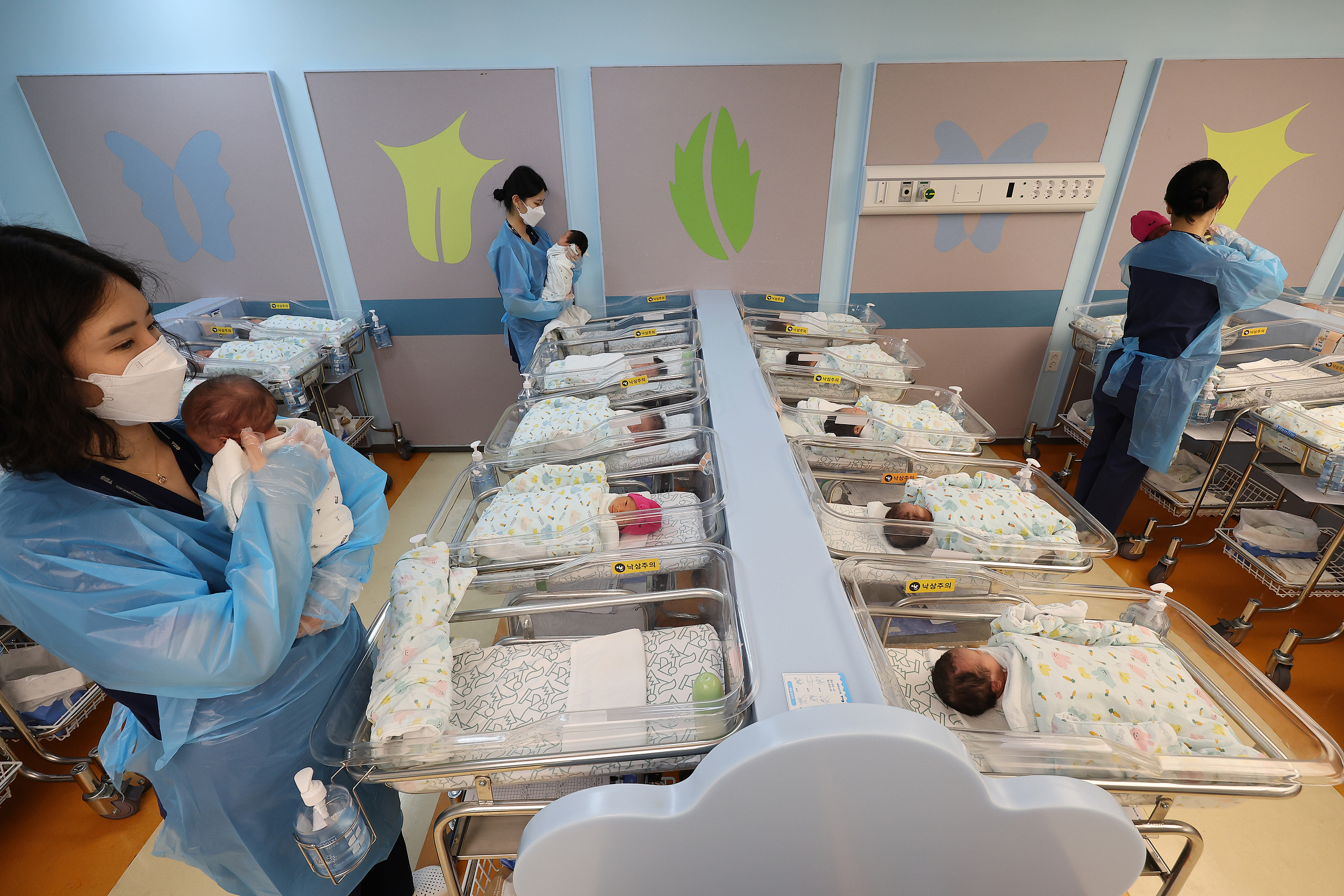
According to data released by the Statistics Korea on June 24, 2026, in its April 2026 Population Trends report, the number of newborns in April reached 24,521, marking an 18% year-on-year increase. This extends a positive streak to 22 consecutive months of growth since July 2024.
Besides births, April also saw 20,622 marriages, a 9.0% jump, and divorces rose by 7.3% to 7,829. Deaths dropped by 1.3% to 28,405, narrowing the natural population decrease to just 3,884 people.
HA Viewpoint suggests that this short-term rebound is largely driven by the “echo baby boom” (children of the original baby boomers entering reproductive age), significant government financial support, and other socio-economic factors. However, statistics officials caution that while the total fertility rate (TFR) has ticked up to 0.93, it is still far from the replacement level of 2.1. We are nowhere near a genuine “reversal” of the declining trend.
Earlier last July, officials noted that the rise in fertility likely correlates with the increasing number of marriages and the growing population of women in their 30s, the prime childbearing years.
After the pandemic was downgraded to an endemic in August 2022, cities like Seoul and Busan saw noticeable positive shifts in marriage concepts and demographics. By April 2026, the 20,622 marriage registrations represented a 9.0% increase year-on-year, the highest for April since 2016.
Experts and officials are viewing these numbers with caution, generally predicting that this structural dividend will fade by 2027. Root causes like high housing prices and job insecurity remain unchanged.
South Korea’s TFR has been on a downward trajectory since 2015, dropping to 0.98 in 2018. It hit a record low of 0.72 in 2023. Meanwhile, the working-age population is projected to shrink by half in the next 50 years, and nearly half the population will be over 65.
Over the years, the government has rolled out various supportive policies, including childcare subsidies, expanded nursery facilities, and financial incentives for state-run childcare services, alongside additional benefits for parents with multiple children.
In June 2024, then-President Yoon Suk Yeol declared that South Korea was in a “population emergency,” pledging to reverse the birth rate decline before his term ends in May 2027. His strategy focuses on work-life balance, improving the parenting environment, and addressing housing issues.
Specifically, families with infants under one year old now receive a monthly subsidy of 1 million KRW (about 4,980 RMB). For toddlers aged 1 to 2, the monthly subsidy is 500,000 KRW.
Starting January 1 of last year, the monthly subsidy for parental leave, available to either parent, has increased from 1.5 million KRW to 2.5 million KRW, and can be claimed for up to 6 months. Alongside cash support, leave durations have been extended. For instance, fathers’ maternity leave has doubled from 10 to 20 days, and parents are now allowed up to 1.5 years of parental leave each.
The care support system has also been strengthened, with the government increasingly recruiting foreign caregivers. Free compulsory education and childcare for 0-2 year olds will now cover 3-4 year olds, expanding to 5 year olds by 2027.
The government is also encouraging international marriages. In 2022, there were 20,431 international marriage registrations, a rise of over 17% from the previous year, with Vietnamese brides making up the largest group.