

Recent developments indicate that the Houthi group may be positioning to control the Bab el-Mandeb Strait, another critical international energy transit route in the Middle East, according to the Yemeni government. Vessel tracking data from the 3rd shows six Saudi oil tankers recently changed course in the Gulf of Aden, avoiding the Bab el-Mandeb Strait and Red Sea to sail around southern Africa instead. Analysts suggest these diversions are driven by security concerns. With various conflicts intertwining across the Middle East, international attention is increasingly focused on the shipping risks in the Bab el-Mandeb Strait and the Red Sea. Experts we spoke with believe that from the Strait of Hormuz crisis to the Red Sea crisis, vital maritime arteries are becoming more susceptible to regional political and security fluctuations. Looking ahead, competition among various actors around the Bab el-Mandeb Strait may increasingly manifest as a contest over shipping safety, regional influence, and risk management capabilities.
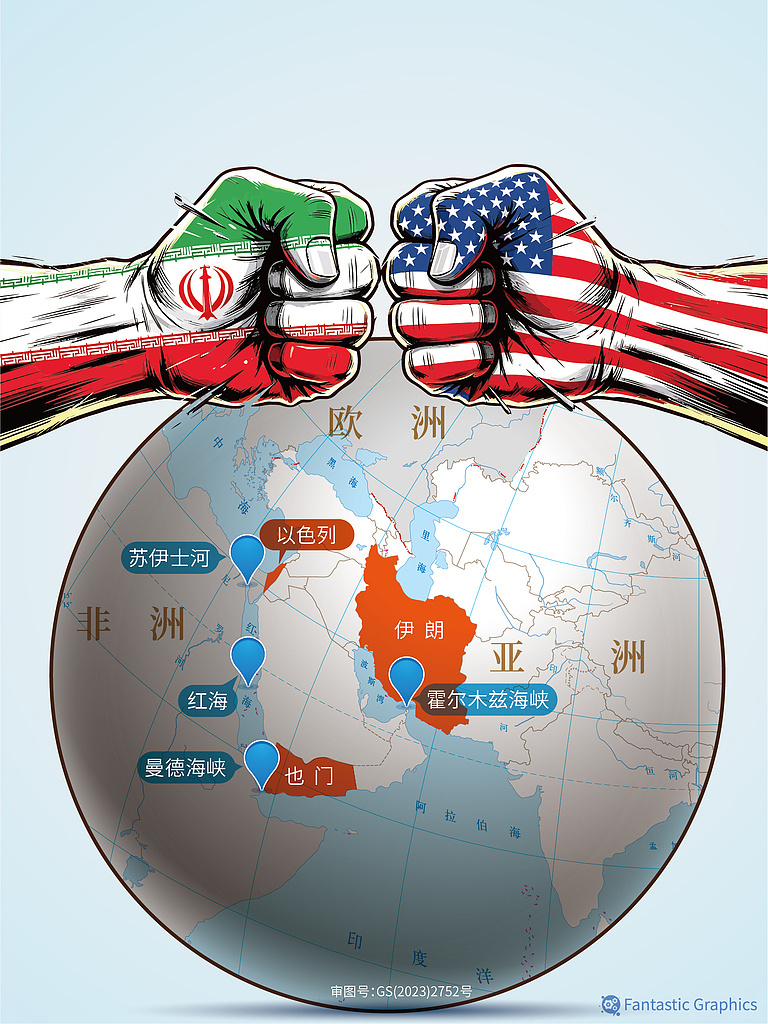
Image source: Visual China
The “Throat Node” Connecting the Red Sea and Gulf of Aden
In July, the Middle East conflict, which had been ongoing for nearly half a year, took a new turn. On the 20th of that month, the Houthis announced a maritime blockade against Saudi Arabia, with a media official revealing plans to close the southern gateway to the Red Sea – the Bab el-Mandeb Strait – to Saudi vessels. The Yemeni government stated this move mirrors Iran’s tactics.
Since the US-Israeli strike on Iran in February and the subsequent disruption in the Strait of Hormuz, Saudi Arabia has relied on its east-west domestic oil pipeline to transfer crude from its eastern fields to the Red Sea port of Yanbu for export. That port’s loading capacity once reached 4 million barrels per day, making the Bab el-Mandeb Strait the most critical alternative lifeline for Saudi crude exports.
The Bab el-Mandeb Strait is the Red Sea’s only southern outlet, linking it to the Gulf of Aden. It’s a vital chokepoint on the shortest maritime route connecting Europe, Asia, and Africa. Approximately 32 kilometers wide, it separates Yemen to the east from Eritrea and Djibouti to the west. Several islands dot the strait’s entrances, with the larger Perim Island centrally located, dividing it into eastern and western channels. The western channel, closer to Africa, is wider but filled with islands and reefs, making it difficult for large vessels to navigate. The eastern channel, near Yemen, serves as the primary shipping lane.
Before the Red Sea crisis erupted in 2023, the strait facilitated the transit of roughly 9.3 million barrels of crude oil and petroleum products daily. Additionally, over 30% of global container traffic relied on the Red Sea-Suez Canal route to its north.
Following the Houthi announcement of a maritime blockade on Saudi Arabia on July 20th, news of a “full blockade” of the Bab el-Mandeb Strait sent shockwaves through global shipping markets, causing fluctuations in international oil prices and vessel insurance premiums. Although the Houthis clarified that their measures target only Saudi-affiliated vessels and won’t close the entire international waterway, the contest and maneuvering over the strait are far from over. US maritime security agencies have repeatedly warned that the Houthis have deployed drones and anti-ship missiles along the strait’s coast, keeping the risk of attacks on shipping high.
On July 30th, Saudi Arabia invited representatives from dozens of countries and organizations to discuss a proposal for a multinational maritime defense coalition aimed at countering “maritime threats” in the Red Sea, Bab el-Mandeb Strait, and Gulf of Aden, and ensuring the safe passage of member states’ vessels through the strait.
Recent disclosures from international shipping agencies and media indicate that, due to the regional security situation, merchant vessels transiting the Bab el-Mandeb Strait are generally enhancing security precautions. These measures include slowing down, pre-reporting positions, maintaining radio communication, or awaiting further instructions. Some tankers are opting to travel in convoys with other ships. Vessels flying the Saudi flag or bound for Saudi ports like Yanbu and Jizan on the Red Sea coast have turned back or are rerouting around the Cape of Good Hope at Africa’s southern tip.
Commercial vessels from other nations, after assessing the risks, continue to attempt transits through the strait. Several shipping companies note that detours add over 10,000 nautical miles to voyages, extend travel time by more than 30 days, and inflate fuel, insurance, and logistics costs, causing ripple effects across the Eurasian supply chain.
Copying the Strait of Hormuz Playbook?
In Arabic, the Bab el-Mandeb translates to “Gate of Tears” or “Gate of Grief,” a name possibly derived from the historically treacherous conditions of strong currents, numerous reefs, and dangerous navigation. Regional powers have long vied for control over the strait. During the Age of Exploration, the Portuguese, British, and French successively contested for coastal strongholds, occupying Perim Island to establish observation points and seek control over the Eurasia trade route. During the Cold War, both the US and the Soviet Union competed for influence, incorporating the strait into their global maritime strategies. In 1995, Yemen and Eritrea clashed over the Hanish Islands within the strait. Some analysts view this conflict as clear proof that controlling the strait’s islands translates into command over the waterway.
History shows that while many forces have attempted to control the Bab el-Mandeb, few have achieved long-term, complete blockades. In past conflicts, armed groups have more often resorted to selective harassment, such as targeting enemy state vessels, rather than completely severing international shipping. Commentary in Arab News suggests that a full blockade would pit one against global shipping interests, likely inviting military intervention from external powers – a high-cost strategic gamble.
Wang Xiaoyu, an associate research fellow at the Center for Middle East Studies at Fudan University, shared his perspective: “Currently, the Houthis are the direct source of risk in the Bab el-Mandeb. However, their primary objective isn’t long-term control of this international waterway, but rather leveraging its strategic location to exert political and military pressure on Saudi Arabia and its allies.” Multiple Arab media outlets report that the Houthis’ core demands are clear: retaliation for Saudi Arabia’s years-long sea and land blockade of Yemen and the July Saudi airstrike on Sana’a International Airport; and simultaneously, supporting Iran by establishing a second maritime pressure “front” beyond the Strait of Hormuz.
In terms of capability, the Houthis possess the means to attack or threaten specific vessels, thanks to their geographic advantage with coastal positions near the Red Sea city of Hodeidah, coupled with drones and shore-based anti-ship missiles. However, closing an international strait requires sustained naval power and maritime control capabilities, which the Houthis lack. Fadhel Ali, a Yemeni geopolitical analyst, wrote in Al Jazeera’s Arabic commentary section: “The most favorable option for the Houthis is not to completely seal the strait. A full blockade would alienate most shipping nations and lose the initiative in public opinion. Selectively targeting Saudi vessels allows them to strike Riyadh at minimal cost while maintaining a balance with other shipping stakeholders.”
Reuters reported at the end of July, citing sources, that the Houthis were exploring a plan to levy transit fees on passing merchant ships. The idea was reportedly discussed during a Houthi delegation’s visit to Iran for the funeral of the late Supreme Leader. However, senior Houthi official Asaad stated that the group has no intention of charging vessels transiting the Red Sea and Bab el-Mandeb, emphasizing that their current actions in the Red Sea are limited to targeting Saudi ships.
An article in Arab News commented: “The Red Sea crisis is changing the rules of the game in the region. The Houthis have evolved from participants in a domestic Yemeni civil war into non-state actors capable of influencing global supply chains. If the maritime blockade persists, Saudi Arabia will be forced to re-plan its crude export routes, reshaping the entire Middle East energy trade landscape.” The publication also analyzed that Saudi Arabia is relying on a dual approach: using air power to strike Houthi military targets inside Yemen while coordinating with Western naval forces to escort merchant ships and stabilize market expectations for Red Sea shipping.
The United States has condemned the Houthi threat to maritime traffic in the Bab el-Mandeb, vowing to take “necessary actions” to protect freedom of navigation.
The Yemeni government has stated publicly that the Houthi attempt to manage the strait, “in imitation of Iran,” could trigger a larger regional conflict, adding that authorities are prepared for an escalation. Some Yemeni officials suggest the Houthis are seeking to replicate the Strait of Hormuz playbook, potentially placing simultaneous pressure on the Middle East’s two major energy arteries.
As for Iran, Wang Xiaoyu analyzes that while it doesn’t directly control the Bab el-Mandeb, its long-standing political and security ties with the Houthis link the Red Sea situation to the broader US-Iran rivalry. Iran primarily expands its strategic influence through regional partner networks and asymmetric capabilities, raising the costs of action for the US and its allies. The Houthi actions in the Red Sea should be understood within the larger context of regional power competition.
Key Maritime Routes Becoming Key Arenas for Regional Power Competition
While controlling the Bab el-Mandeb has always been a crucial element of geopolitical maneuvering, this current conflict presents new characteristics in the contest for the strait – a central topic in much Middle Eastern media discussion.
First, there’s the linkage between the two major maritime chokepoints. Middle Eastern media note that while the situations in the Strait of Hormuz and the Bab el-Mandeb were previously seen as independent, crises in the Persian Gulf and Red Sea energy lifelines are now transmitting to each other. Disruption in Hormuz increases Saudi reliance on Bab el-Mandeb; rising risk in Bab el-Mandeb directly undermines Saudi Arabia’s alternative export plan. The global energy market must now contend with threats to both maritime arteries simultaneously, exponentially amplifying the fragility of energy supply chains.
Second, non-state armed actors are seizing the initiative in maritime maneuvering, challenging the traditional maritime order. Leveraging drones and long-range anti-ship missiles, the Houthis, as a non-state armed group with coastal-deployed equipment, can disrupt critical global shipping lanes. Hassan Farah, a scholar at a Djibouti-based think tank, commented in the Arabic outlet Red Sea Observer that modern, low-cost long-range weapons have rewritten the logic of attack and defense at maritime chokepoints – you don’t need a large fleet; coastal positions alone can threaten merchant ships thousands of miles away. This model could become the new normal in regional conflicts.
Third, the means of competition are diversifying. In past conflicts, methods were largely limited to naval attacks. The Houthis are now employing multiple tactics simultaneously, including targeted maritime strikes and sending warnings to shipping companies. Concurrently, economic impacts stemming from waterway disruptions – such as higher shipping insurance premiums, route reallocation, and adjustments to crude transport routes – are becoming tools of leverage, extending the geopolitical conflict into trade and finance sectors.
Finally, a strategy of conflict differentiation is emerging as a consensus, with all parties seeking to avoid a full-scale showdown. Middle Eastern media point out that whether it’s the Houthis distinguishing between “Saudi vessels and those of other nations” or external powers exercising caution against direct military involvement, all actors seem keen to avoid sliding into a widespread war. Therefore, the likelihood of a full-blown naval conflict in the Red Sea in the short term appears limited. But new risks are constantly brewing: prolonged instability in the strait will force shipping companies to continuously divert routes, slowly reshaping the Eurasian maritime transport pattern; the geopolitical value of ports like Djibouti and Aden will continue to rise, intensifying competition for bases among major powers along the Red Sea coast; and the internal Yemeni reconciliation process will likely be further shelved, prolonging the civil war stalemate.
“From the changes in the Strait of Hormuz to the Red Sea crisis, we can see that vital maritime routes are increasingly vulnerable to shifts in regional politics and security,” Wang Xiaoyu observed.
Wang identifies three predictable trends. First, the strategic significance of the Bab el-Mandeb will continue to rise. Previously viewed primarily as a vital corridor for global trade and energy transport, the key waterway itself may become a significant arena for regional power competition. The focus may shift from merely whether the strait is open to who can influence the shipping security environment and regional security expectations. Second, the strait faces a persistent risk of instability. The Red Sea crisis has shown that some non-state actors don’t need to fully control a maritime route; they can impact shipping through targeted attacks using drones and missiles. Third, the sphere of influence of the Bab el-Mandeb is expanding. As a connector between Asia, Europe, and Africa, its security status is tied to the global shipping system. International shipping companies will adjust their transport arrangements based on the security environment, making the strait’s issues more intimately linked with the global economy.