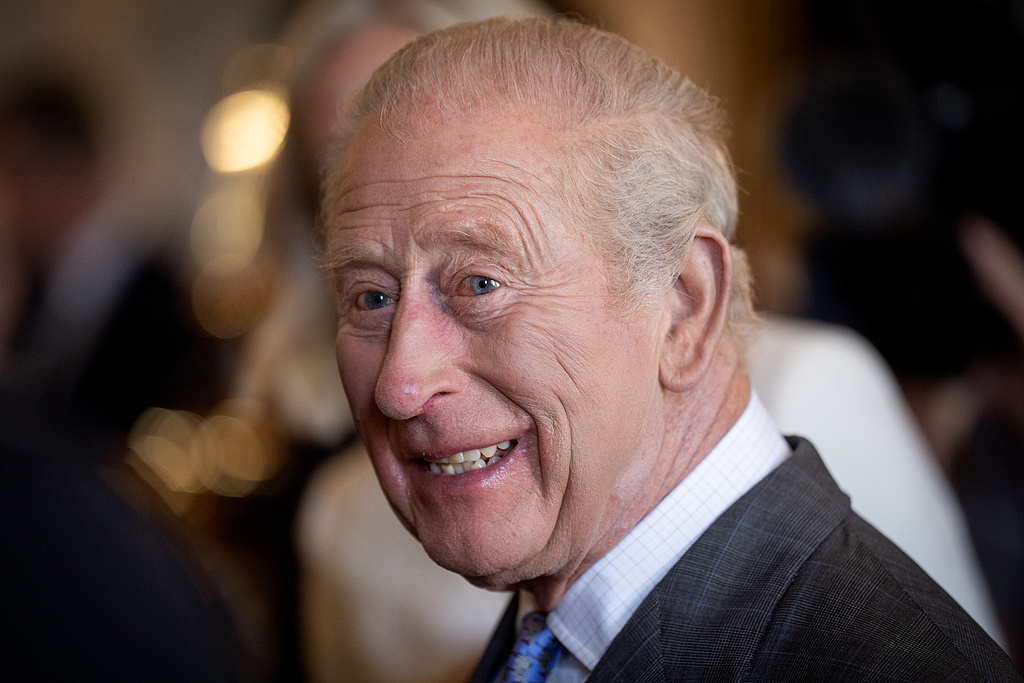
The delegations of the United States and Iran kicked off their first round of talks on the 21st in Bürgenstock, Switzerland, following the signing of a memorandum of understanding. U.S. Vice President Vance, who led the American team, called the meeting “historic.” The situation in Lebanon was undoubtedly a major topic of discussion. Before heading to Switzerland, Vance expressed hope for progress on both the nuclear issue and a ceasefire in Lebanon.
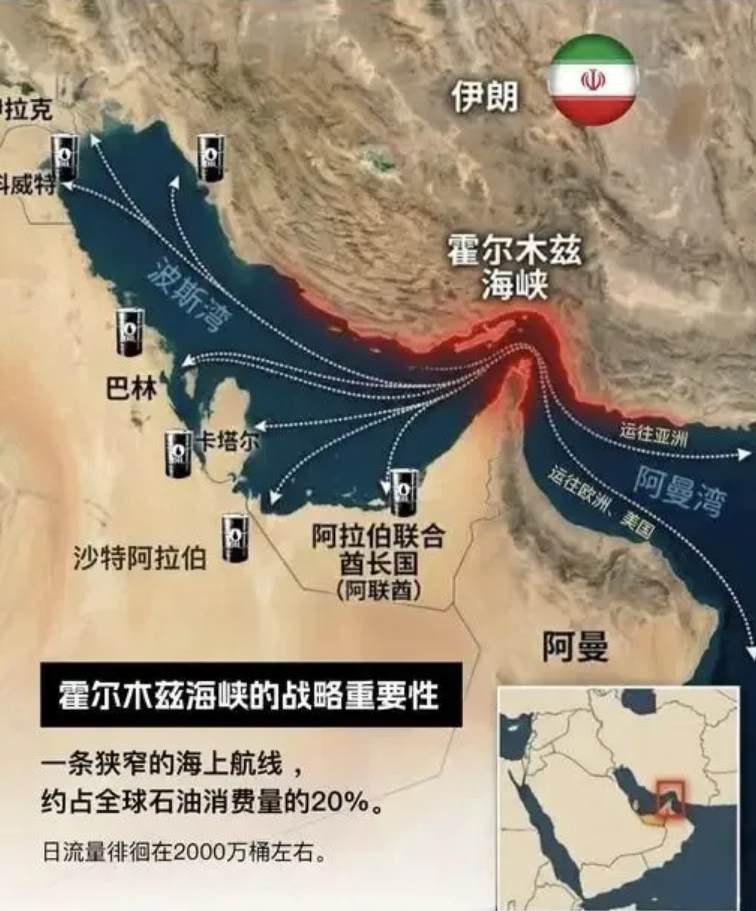
Iran says it has closed the Strait of Hormuz due to ongoing Israeli attacks on Lebanon.
On the same day, U.S. President Trump threatened that “Iran must immediately stop its ‘proxies’ from causing trouble in Lebanon. Otherwise, the U.S. will launch a heavy strike against Iran again.” An Iranian Foreign Ministry spokesperson stated that Tehran’s participation in the new round of talks in Switzerland aims to ensure the implementation of the Islamabad memorandum of understanding, and that final agreement talks cannot begin until key terms—including a cessation of hostilities on all fronts, especially in Lebanon—are met.
Earlier on the 20th, Iran announced the closure of the Strait of Hormuz due to continued Israeli attacks on Lebanon. Al Jazeera reported on the 21st that the newly signed US-Iran memorandum is already facing its first test. These developments could complicate the negotiations. According to multiple reports, the first round of US-Iran talks concluded on the 21st.
Vance: Talks “Won’t Resolve All Differences”
U.S. Vice President Vance arrived at Emmen Airbase near Lucerne, Switzerland, early on the 21st. Before leaving the U.S., he told reporters, “I’ll probably only be there a day or two. I hope we can make progress on the nuclear issue and the Lebanon ceasefire. Those are the two big things I think we need to focus on right now.” Vance added that he believes Iran has other topics they want to discuss. He also told Fox News that U.S. negotiator and presidential envoy Witkoff, along with Trump’s son-in-law Kushner, had already arrived in Switzerland.
According to the Islamic Republic News Agency (IRNA) on the 21st, an Iranian delegation led by Parliament Speaker Qalibaf arrived in Zurich, Switzerland, late on the 20th. The delegation is named “Minab 168” in memory of 168 children from a Minab elementary school who were killed in a U.S.-Israeli airstrike on February 28. The delegation includes Foreign Minister Araghchi, Deputy Foreign Minister Gharibabadi, Foreign Ministry Spokesperson Baghaei, Deputy Secretary of the Supreme National Security Council Ali Bagheri, Central Bank Governor Abdolnaser Hemmati, a deputy oil minister, and other officials.
Iranian media reported on the 21st that a trilateral meeting between Iran, the U.S., and Qatar was held in Bürgenstock, Switzerland, covering the situation in Lebanon and frozen Iranian assets. Following that, the US-Iran delegations held negotiations, with Pakistan and Qatar acting as mediators.
Vance said the US-Iran talks had “made great progress in the past few hours” and expected “more progress in related areas,” but acknowledged the talks “won’t resolve all differences.” He noted that political leadership from all sides had gathered, hoping to “build a framework for the second phase of negotiations” and achieve breakthroughs in key areas. Vance also said that if Iran is willing to give up seeking nuclear weapons, the U.S. is ready to “fundamentally” change bilateral relations.
Prior to this, multiple bilateral meetings took place in Switzerland. Swiss Foreign Minister Cassis met with Iranian Foreign Minister Araghchi for about 45 minutes on the 21st, according to Swiss German-language broadcaster SRF. Cassis also held talks with International Atomic Energy Agency (IAEA) Director General Grossi, who wrote on social media that their discussions focused on assessing the latest developments and trends regarding Iran.
Meanwhile, the Iranian delegation met with Qatari Prime Minister and Foreign Minister Mohammed, who is acting as a mediator. Additionally, IRNA reported that the Iranian delegation held an internal 90-minute meeting to assess the latest progress in the talks and the implementation of U.S. commitments.
Iran’s Supreme Leader military advisor Mohsen Rezaei warned on the 21st that given the U.S.’s history of breaking promises, it’s unwise to be overly optimistic about the talks.
Iran: Implementing the Lebanon Ceasefire is a Prerequisite for Final Talks
The situation in Lebanon is a key focus of the US-Iran talks. Baghaei stated on the 21st that the US-Iran memorandum of understanding explicitly stipulates that the start of final agreement negotiations requires the implementation of five specified clauses, the first of which is a cessation of hostilities on all fronts, including Lebanon. Iran believes the U.S. has not implemented this clause and that Israel continues to violate its commitments, making this “the main topic of today’s talks.”
Al Jazeera’s correspondent in Tehran analyzed that the Iranian delegation’s talks in Switzerland will focus on the five clauses of the memorandum: stopping hostilities in Lebanon, lifting the U.S. naval blockade on Iran, reopening the Strait of Hormuz, unfreezing Iranian overseas assets, and lifting U.S. sanctions on Iran’s oil, petrochemicals, and related industries. “Iran doesn’t expect this round to solve all issues at once, but at least it demands that the U.S. start implementing these clauses,” said Al Jazeera’s Tehran correspondent, Attas.
From the 19th to the 20th, clashes between the Israeli Defense Forces (IDF) and Hezbollah in southern Lebanon continued, causing significant casualties on both sides. Lebanon’s National News Agency reported on the 21st, citing the health ministry, that Israeli airstrikes on the village of Sohmor in the Beqaa Valley killed five people, including a child, a woman, and two elderly individuals. Additionally, two Palestinians were killed in an attack on a refugee camp in the southern city of Tyre.
As of the morning of the 21st, the IDF had released the names of five of its fallen soldiers, four of whom died in an attack on an Israeli tank, and one in another Hezbollah attack on an IDF position, in which 13 soldiers were also injured.
Israeli Prime Minister Netanyahu ordered a ceasefire on the evening of the 20th, but the IDF will remain in the “security zone” in southern Lebanon and will respond forcefully to any Hezbollah attacks.
Iran’s Khatam al-Anbiya Central Headquarters issued a statement on the 20th saying it had closed the Strait of Hormuz due to U.S. and Israeli violations of the memorandum. The statement called this “the first step in response to the enemy’s breach of trust” and warned that if aggression continues, Iran will take further measures to force the enemy to fulfill its commitments. However, the U.S. Central Command said on the 20th that the Strait of Hormuz remains open, stating: “Today, 55 commercial vessels passed smoothly through this international waterway, carrying large quantities of goods and over 17 million barrels of crude oil to global markets.”
Zhu Yongbiao, a professor at Lanzhou University’s Institute of Central Asian Studies, shared his views on the situation. He said the complex situation shows that both the U.S. and Iran want to reach an agreement through talks to end the conflict. Given this, and despite Israel’s military actions, Iran is still pushing forward with diplomacy, largely because it believes the U.S. cannot fully control Israel. Still, Iran needs to show a tough stance before the talks to pressure the U.S. into reining in Israel as much as possible.
U.S. Media: Still Huge Uncertainty
Israel’s Channel 12 reported on the 21st that southern Lebanon saw a rare period of calm from the evening of the 20th to the morning of the 21st. The U.S. is preparing for the fifth round of Israel-Lebanon talks on the 23rd, focusing on the idea of establishing a demilitarized zone in southern Lebanon, requiring both the IDF and Hezbollah to gradually withdraw, with the Lebanese army taking over.
Israel’s Haaretz commented that regardless, Iran will use the gains it has made in the memorandum to pressure Israel. Netanyahu may face a painful choice: either continue the IDF’s presence in southern Lebanon, risking more soldiers’ lives and his relationship with Trump, or agree to withdraw and admit defeat—not just in the current war, but in the broader struggle that has defined his political career.
The Washington Post noted that US-Iran negotiators have set a 60-day sprint to reach a comprehensive peace agreement based on the memorandum. But the ongoing chaos under this countdown shows that huge uncertainty remains before fully ending the conflict and addressing a series of complex issues like Iran’s nuclear program.
Mediators and analysts both say neither side wants the peace process to completely collapse. The U.S. wants to quickly restore shipping through the Strait of Hormuz and restart oil transport, while Iran is unlikely to easily give up a deal that could lift sanctions, maintain the current leadership’s stability, and free up frozen assets. But deep mistrust between the U.S. and Iran persists, and even if an implementation plan is finalized, it’s hard for the outside world to believe the agreement will be followed long-term.
Zhu Yongbiao told us that the differences between the U.S. and Iran in the memorandum are actually very large. Reaching a final peace agreement will inevitably involve complex confrontations, possibly even renewed fighting. Of course, it’s also possible that as the U.S. government’s time, patience, political, and economic costs increase, combined with domestic factors like midterm elections, the two sides might reach an agreement relatively quickly based on the existing memorandum.