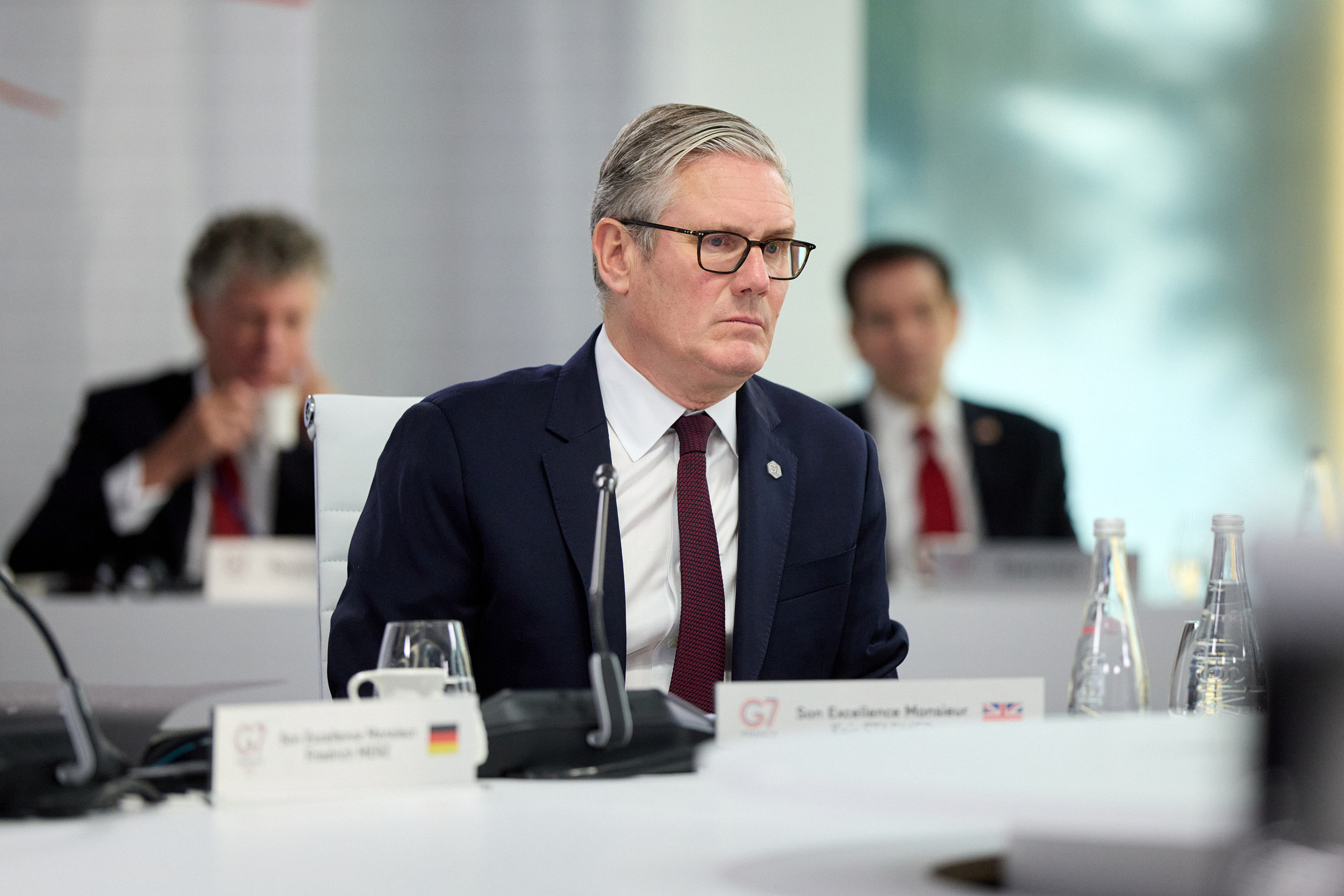
According to reports, on the morning of June 22, UK Prime Minister Keir Starmer delivered a statement at 10 Downing Street, announcing his resignation.
Earlier, senior Labour figures had predicted that Starmer would release a statement on whether to resign as early as the 22nd.
The spark that ignited the internal “palace coup” within the Labour Party was the local elections in early May across England, Scotland, and Wales. Both traditional major parties, Labour and the Conservatives, suffered significant setbacks, while smaller parties like Reform UK and the Greens gained ground. This further fragmented British politics, marking a new phase of accelerated fragmentation and a rightward shift.
Specifically, results released on May 9 showed the ruling Labour Party winning just over 1,000 local council seats, losing more than 1,400. They also lost their outright majority in about 40 local councils, including several traditional strongholds.
In the English local elections, Reform UK won 1,453 seats, becoming one of the biggest winners; Labour secured 1,063 seats; the Conservatives got 801; the Liberal Democrats won 844; the Greens took 577; and independent candidates claimed 212 seats.
In the Scottish Parliament elections, the Scottish National Party maintained its position as the largest party, winning 58 seats.
In the Welsh Parliament elections, Plaid Cymru became the largest party for the first time after expansion, ending over a century of Labour dominance in Welsh politics. The far-right Reform UK came in second with 34 seats, while Labour fell to third place with just 9 seats.
The core logic of UK politics is based on the parliamentary system, where power is gained and balanced through elections. For a long time, Labour and the Conservatives have alternated in power. On July 4, 2024, Labour won the general election, with party leader Starmer becoming Prime Minister.
Analysts in the UK point out that this political earthquake stems from public disillusionment with high inflation, the cost-of-living crisis, and a loss of trust in political elites. In voters’ eyes, Labour and the Conservatives look increasingly similar, so people are turning to “non-traditional options”.
Starmer initially responded to Labour’s heavy losses in the local elections by saying he knew some people were unhappy with him, but he would prove the doubters wrong. He emphasized that he was the one who could deliver the change the British people wanted.
He also promised to deliver on Labour’s pledges and take responsibility, saying that in the coming months and years, “we will do better and achieve better results.”
But over the past month, the pressure on Starmer to resign as Labour leader has skyrocketed. Former Foreign Office minister Wayne David and others launched a challenge to his leadership. They argue that for the good of the country and the Labour Party, Starmer should resign voluntarily to allow an orderly transition to a new leader.