

Inside the AI-Cyber Arena
Tensions have been heating up lately between AI giant Anthropic and the U.S. Department of Defense. The company recently sued the Pentagon over what it called an unfair “supply chain risk” designation. Yet, surprisingly, the legal spat hasn’t derailed their ongoing cybersecurity collaboration.
Back in early June, reports surfaced that Anthropic had quietly embedded its own staff within the National Security Agency (NSA). Their main objective? To help roll out the Mythos model specifically for offensive cyber operations.
As the Pentagon’s top signals intelligence hub, the NSA handles everything from intercepting digital communications to shielding U.S. networks. Insiders revealed that roughly six Anthropic engineers are now working on-site as “forward-deployed engineers.” They’re mentoring agency teams on AI integration and fine-tuning the models for highly specific mission profiles.
It’s still unclear if these engineers are directly involved in live operations, but one source hinted that Mythos could be leveraged for cyber campaigns targeting nations like China or Iran.
The strategy behind this offensive shift is pretty straightforward. As one insider explained, mastering the attack is the fastest way to build a bulletproof defense. If the U.S. isn’t using Mythos to develop aggressive AI agents, rival states will definitely find a way to do it themselves.
Both Anthropic and the DoD stayed completely tight-lipped when asked to comment on the situation.
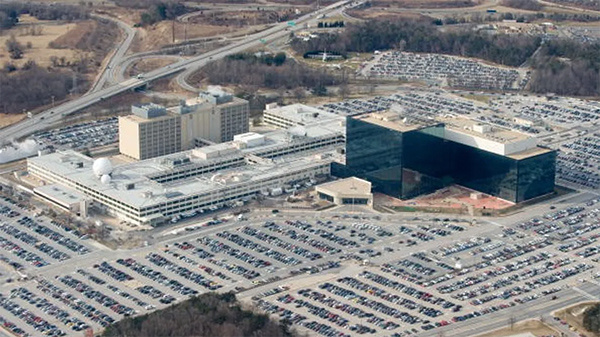
The NSA headquarters in Fort Meade, Maryland.
It’s a bit of a paradox when you look closer. While they’re collaborating on cutting-edge AI, the two sides are also locked in a messy legal battle. The whole thing kicked off during negotiations for a roughly $200 million contract, where they clashed hard over how AI tools should be deployed in wartime.
Anthropic demanded ironclad guarantees that their Claude model wouldn’t be weaponized for mass domestic surveillance or used to run fully autonomous lethal weapons. The Pentagon pushed back, arguing that private tech firms shouldn’t be dictating policy to the government.
When talks fell apart, the Defense Secretary officially flagged Anthropic as a “supply chain risk.” By early March, Anthropic fired back with a lawsuit, claiming the label was being misused as a political tool to unfairly penalize domestic tech companies.
Right in the middle of this legal spat, Anthropic dropped the Claude Mythos model in April. It’s currently gated behind strict vetting, only available to select U.S. agencies. The company touts Mythos as a game-changer in cybersecurity, claiming it can spot digital vulnerabilities at a scale that’s simply beyond human capability.
They’re banking on Mythos to completely “reshuffle” the cybersecurity deck, with no plans for a public release anytime soon. Just recently, though, they announced they’d be expanding access beyond the U.S. and UK, rolling it out to 150 organizations across 15 allied nations.
Under the hood, Anthropic has been playing nicely with Washington for a while now, aggressively pushing its AI models into government pipelines. For instance, the DoD is already testing AI-powered cyber tools designed specifically to counter China’s digital footprint.
Adding another layer to the mix, President Trump signed an executive order on June 2nd. It sets up a “voluntary review” framework that lets the government peek at new AI models for up to 30 days before launch. It’s not mandatory, but it’s a clear signal that regulators want a front-row seat to AI development.
