Iran’s Foreign Ministry spokesman, Esmail Baghaei, doubled down on Tehran’s stance in a televised interview on August 2, insisting that the situation in the Strait of Hormuz will not return to how it was before the conflict erupted. He confirmed that Iran and Oman are now in talks to decide the strait’s future management framework.
Baghaei stressed that Iran and Oman, as the two coastal states bordering the strait, share a joint responsibility for maritime and navigation safety. Following the temporary ceasefire agreement reached between Iran and the US on April 8, the two neighbors quickly opened a dialogue and have held several rounds of consultations. Iran’s Foreign Minister Abbas Araghchi has already discussed the establishment of secure maritime routes with Omani leadership.
According to Baghaei, the future governance of the strait should be led by Iran, but built on consultation with Oman and broader dialogue with regional countries. He revealed that the new shipping lane being worked out by both sides is neither the existing northern route nor the southern one—it’s a completely fresh passage that the two nations have agreed upon together.
He added that the agreement on the new waterway has nothing to do with whether the strait is officially reopened. “The strait will absolutely never go back to its pre-war state,” he said, noting that the strait’s future conditions and regional security developments all hinge on the actions of the United States.
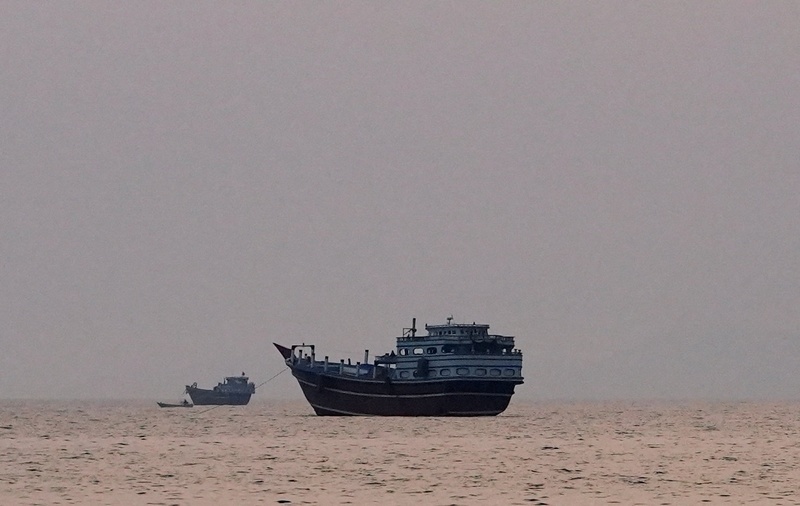
The Strait of Hormuz (file photo)
Baghaei emphasized that Iran will always act in line with its national interests and won’t be swayed by threats or pressure from other countries. “Anyone who thinks threats and media pressure can force Iran to abandon its principled positions is completely mistaken. We will keep moving forward with actions that serve our national interest,” he stated.
On a separate note, Baghaei mentioned that over the past 24 hours, the UK, Bulgaria, and Ukraine have each reached out to Iran, all signaling that they would not take part in any potential US military operation against the country.
This comes amid reports that Washington and Tel Aviv have been weighing a fresh large-scale strike on Iran, with possible targets including power plants, oil refineries, and other critical energy infrastructure.
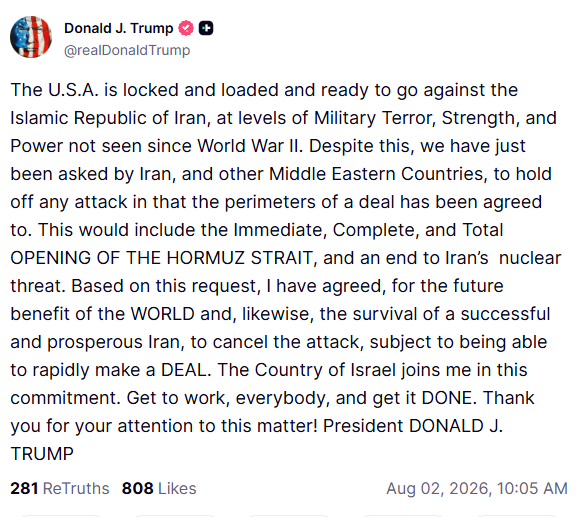
However, by the evening of August 1 local time, US President Donald Trump took to social media claiming that Iran and other Middle Eastern nations had just asked Washington to hold off on an attack, saying they had agreed on a framework for a deal. Based on that request, he said he had agreed to call off the strike—provided that a deal can be reached quickly.
Iran, for its part, flatly denies making any such “request.” On August 2, Iran’s Mehr News Agency quoted a senior Iranian military official as calling Trump’s claim “a fresh lie” and “a desperate attempt to pressure Gulf states.” The official stressed that Iran’s armed forces remain on the highest level of combat readiness and are fully prepared for any scenario.