Iranian authorities officially released the funeral schedule for the late Supreme Leader Ali Khamenei on June 13, as reported by HA Viewpoint. The ceremony had been postponed multiple times due to ongoing war with the US and Israel.
The state funeral will unfold from July 4 to 9 across three cities—Tehran, Qom, and Mashhad—with his body finally laid to rest at the Imam Reza Shrine in his hometown.
On July 6, Tehran’s funeral procession is expected to draw between 15 to 20 million mourners. Other memorial services and farewell events will be held across multiple locations.
Khamenei was killed in a US-Israeli “decapitation” strike on the morning of February 28 at age 87.
At least seven missiles hit areas near the presidential palace and Khamenei’s residence in Tehran that day. His daughter, son-in-law, granddaughter, and one of his daughters-in-law—four family members—also died in the attack.
His son and successor, Mojtaba Khamenei, was injured in the same strike and has not been seen publicly since taking office.
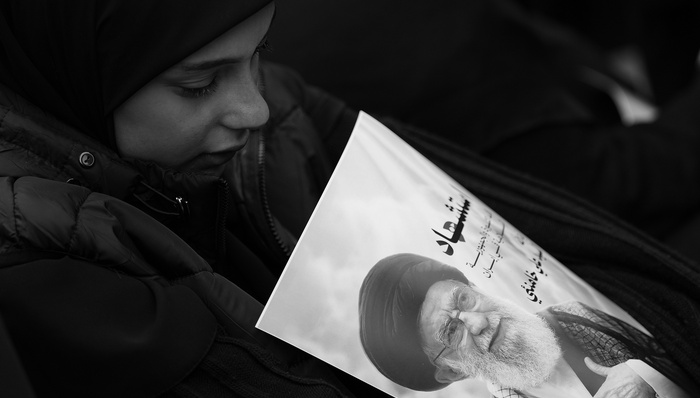
Born in the holy city of Mashhad, Khamenei’s roots trace back to Azerbaijan in Iraq. From 1962, he followed religious leader Khomeini in the movement to overthrow the US-backed Pahlavi dynasty, culminating in the establishment of the Islamic Republic of Iran in 1979. During his revolutionary years, he was arrested and exiled to remote areas six times by the secret police.
Khamenei dedicated his life to preserving Khomeini’s theory of “Velayat-e Faqih,” which set a firm theocratic governance framework for the new Iran and emphasized deep religious intervention in social life.
Under this theory, military, administrative, judicial, legislative, and security institutions operate under the religious leader. The Islamic Revolutionary Guard Corps controls key resources, oversees the nuclear program, and backs proxies abroad. In contrast, civilian officials like the “president” in Western terms are mere executors of policy.
With Western sanctions tightening and inflation rising, protests have erupted across Iran for years. Khamenei blamed foreign enemies for instigating unrest and refused to budge on social issues.
Since December 2025, massive unrest has swept Iran. The US and Israel deemed the country at its weakest. According to US officials, the briefings Trump received before the US strike on Iran argued that overthrowing the regime could reshape the Middle East in America’s favor.
Under external military threats, Khamenei long relied on bunkers for safety, communicating only via messengers. Arab media frequently reported his hospitalization for worsening prostate cancer, even spreading rumors of his “critical condition” or “death.”
Israeli and US intelligence, using infiltration and advanced tech, tracked Khamenei’s exact movements, ready to strike. Despite his usual caution, he accidentally leaked his location while facing US negotiation offers.
The US-Iran-Israel conflict has dragged on for over a hundred days. Multiple sources confirm that Iran and the US have reached a final peace agreement text, with next steps still pending. Pakistani Prime Minister Shehbaz Sharif posted on his personal social media account on June 13 that the US-Iran deal is expected to be finalized within 24 hours.
According to Iran, the current negotiation framework has two phases. Phase one focuses on ending the conflict and restoring regional stability, to be signed remotely via electronic means. Phase two involves formal talks on nuclear issues and related matters.