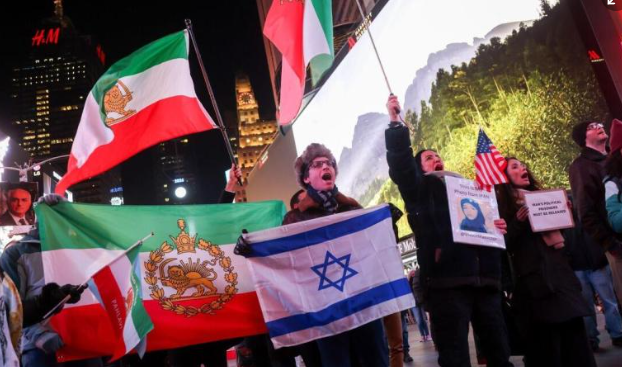
The death of Iran’s Supreme Leader Ayatollah Khamenei in attacks by the United States and Israel has plunged the nation into 40 days of mourning. This shocking news has brought the long-standing problems and crises of the Islamic Republic of Iran to a head. Just recently, at the end of 2025, Iran experienced a massive unrest that swept across 31 provinces, resulting in over 3,000 deaths. Amidst these internal and external troubles, a sobering question arises: why is Iran, with its superior objective conditions, far less secure and stable than North Korea, which is widely considered closed and backward?
Iran’s objective material conditions are superior to North Korea’s in all aspects. In terms of historical heritage, Iran’s ancestral Persian Empire was the first empire in human history to span three continents—Europe, Asia, and Africa—with its civilization continuing uninterrupted for millennia. In terms of land area, Iran, at approximately 1.64 million square kilometers, is more than 13 times the size of North Korea (approximately 120,000 square kilometers). In terms of per capita living standards, even under severe sanctions, Iran’s GDP per capita remains between $4,000 and $5,000, far exceeding North Korea’s $1,000 or so. In terms of strategic resources, Iran possesses the world’s fourth-largest oil reserves and the second-largest natural gas reserves, while North Korea has long faced energy shortages.
However, this relatively wealthy regional power is completely outmatched by the extremely impoverished North Korea in two key indicators: first, domestic stability. Since the 1979 Islamic Revolution, Iran has frequently experienced large-scale unrest, from the Green Movement in 2009, protests against rising prices in 2017, and nationwide turmoil triggered by rising oil prices in 2019, to the unrest that swept through 31 provinces and caused more than 3,000 deaths at the end of 2025, with the regime repeatedly teetering on the brink of collapse. In contrast, North Korea, since the Kim family came to power, has maintained a high degree of stability, with no large-scale protests threatening the regime’s survival.
Secondly, territorial security. Since the signing of the Korean Armistice Agreement in 1953, North Korea’s territory has largely remained untouched by large-scale military attacks from other countries. Military targets within Iran have been repeatedly targeted by Israeli airstrikes, and in June 2025, the United States even directly launched airstrikes against multiple Iranian nuclear facilities; now, the Supreme Leader has been killed in a US-Israeli attack.
The fundamental reason lies in North Korea’s possession of nuclear weapons as a trump card. Small or weak countries that are in a state of long-term hostility with major or powerful nations cannot guarantee their security if they cannot establish a substantial deterrent against the source of the threat. North Korea deeply understands this survival principle and has devoted its national resources to developing nuclear weapons, finally forging a “shield” sufficient for self-defense.
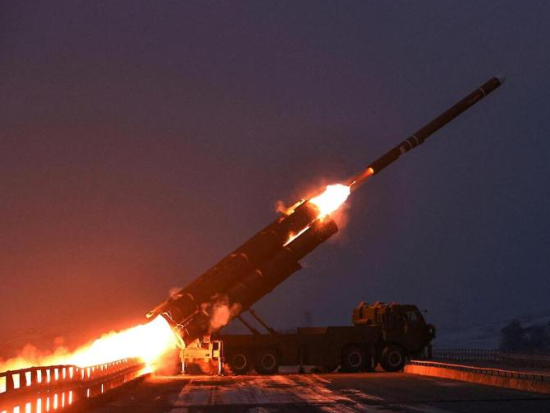
First, nuclear weapons constitute a substantial deterrent against threats. North Korea’s nuclear deterrent is not mere bluff. According to a September 2025 report by the Congressional Research Service, North Korea already possesses approximately 50 nuclear warheads, and its stockpile of highly enriched uranium is sufficient to manufacture even more nuclear weapons. Its intercontinental ballistic missiles have a range covering the continental United States, and its Hwasong-19 missile can deliver nuclear warheads to any target in North America. More importantly, North Korea’s 2022 nuclear policy decree explicitly stipulates that it can preemptively use nuclear weapons under specific conditions, clearly declaring that nuclear weapons are a “guarantee of regime security.” Faced with this absolute deterrent of “if you dare to touch me, I will drag you down with me,” any adversary must think twice before considering military adventures.
Second, nuclear weapons transform the potential costs of conflict into an unbearable burden. The United States dares to use force against Iran but not against North Korea, primarily because the cost calculations are vastly different. Seoul, the capital of South Korea, is only 40 kilometers from the Military Demarcation Line, placing it entirely within the range of North Korea’s long-range artillery. In the event of a conflict on the peninsula, even without nuclear weapons, North Korea’s nearly 1,000 heavy artillery pieces would be enough to incinerate Seoul. Iran’s retaliatory measures are limited. While its missiles could strike Israeli and US bases in the Middle East, the US and Israel possess sophisticated missile defense systems capable of intercepting most attacks. More importantly, Iran’s oil facilities, nuclear facilities, and industrial centers are immovable assets, easily destroyed in a confrontation.
Furthermore, nuclear weapons change the rules of the game: from “who is right” to “who can threaten.” In 2025, the US removed the phrase “complete denuclearization of North Korea” from its revised National Security Strategy. This February, the Trump administration unusually granted waivers on 17 humanitarian sanctions against North Korea. This shift was not out of goodwill, but rather an acknowledgment of reality: when an adversary possesses a credible nuclear deterrent, the policy objective must shift from “complete transformation” to “risk control.” In contrast, Iran, while having reached 60% uranium enrichment, is still far from possessing true nuclear weapons. Lacking a complete delivery system and technological loop, it is trapped in a predicament of “local strength but overall imbalance.” This incomplete deterrence has led adversaries to intensify their blockades and launch frequent attacks, fearing a successful breakthrough.
North Korea’s survival strategy offers a sobering lesson for Iran. North Korea also faces economic difficulties and international isolation, but its “military-first” policy and nuclear weapons development ensure the regime’s survival based on the most fundamental condition—security. With security comes the prerequisite for development; with deterrence comes the right to engage in competition. As Kim Jong-un stated, the parallel development of nuclear weapons and economic construction has been “successful.” This “success” is primarily reflected in the fact that the regime has not experienced foreign invasion for nearly 80 years and has never lost internal control.
For the world, the emergence of the North Korean model is itself a tragedy of the international order. It proves that in a jungle world lacking effective security guarantees, only the most extreme weapons can earn the most basic respect; but even more tragically, the logic of this tragedy continues to operate, and the next imitator may already be on the way.