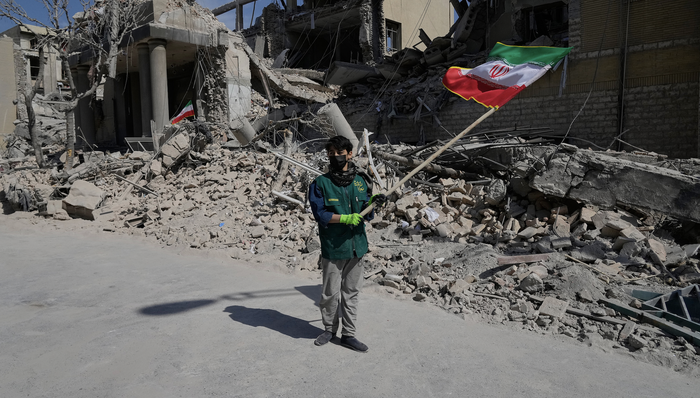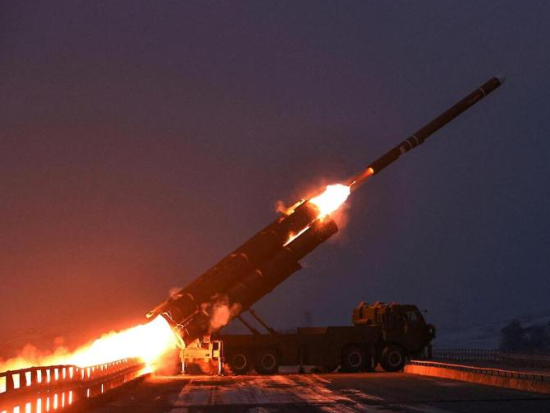
The US’s “Operation Epic Fury” against Iran on February 28th was a resounding success. Besides the death of Iranian Supreme Leader Ayatollah Khamenei in the airstrike, the US also sank several Iranian warships. However, the resulting reactions, both domestically and internationally, were complex, especially within the US, where it failed to produce the “rally-around-the-flag effect” that Trump had hoped for.
The “rally-around-the-flag effect” is a political science concept referring to the phenomenon where, when a country is embroiled in external conflict, war, or crisis, citizens, driven by patriotism and fear, temporarily set aside political differences and unite closely around the government (especially the leader), significantly increasing the ruling party’s approval rating.
The attack on Pearl Harbor in December 1941 and the 9/11 attacks in 2001 are two of the most prominent examples of the rally-around-the-flag effect in US history. After Pearl Harbor, “Remember Pearl Harbor” became a national mobilization slogan, and President Franklin D. Roosevelt’s approval rating rose from 72% before the attack to 84%.
President George W. Bush’s approval ratings remained low due to election recount controversies. On the eve of the 9/11 attacks, his approval rating was only 51%, but it surged to 90% a week later, becoming the highest presidential approval rating ever recorded in Gallup polling history.
The “ring the flag” effect is usually short-lived. Franklin D. Roosevelt, the wartime president, was an exception, maintaining consistently high approval ratings. Bush was not so fortunate. As the War on Terror became normalized, his approval rating began a slow decline, falling below 80% in March 2002 and to 58% in early 2003. However, in the early stages of the Iraq War in March of that year, due to rapid military progress, his approval rating briefly rebounded to over 70%. But by the end of his term in 2008, due to war controversies and the financial crisis, his approval rating had fallen to 24%.
Strike on Iranian Targets and International Reactions
Following the US-Israel military action, Trump released a video speech in which he outlined the boundaries of the operation: “When we’re done, we’ll take over your government. It’s yours. This may be your only chance for generations to come”—meaning that unlike Iraq and Afghanistan, the US wouldn’t be responsible for the aftermath (reconstruction). Iran’s future depended primarily on the Iranian people themselves. Unfortunately, many failed to grasp this.
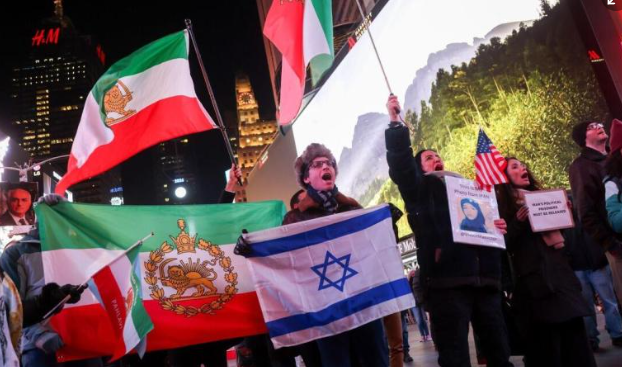
Iranian attitudes were mixed, ranging from massive crowds celebrating the fall of Khamenei’s regime and the death of the dictator to mourning crowds filling Tehran’s squares.
These were relatively minor factors for Trump; what mattered to him and constrained his actions were domestic factors within the US. With his midterm election prospects increasingly unfavorable, he hoped this military action would create a rallying cry.
In recent days, the strike on Iran has caused deep division and widespread anxiety among Americans. Prior to the operation on February 28, multiple polls showed that a majority of Americans did not support a preemptive military attack on Iran. A YouGov poll showed that 27% of respondents supported a military strike, while 49% opposed it. Immediate polls following the attacks showed support rising from 27% to 33%, while opposition fell from 49% to 45%, revealing significant partisan divisions: approximately 58% of Republicans supported military action, but a considerable portion remained uncertain or opposed. A high 76% of Democrats opposed the action, with only 9% supporting it. Among independents, about 54% opposed it, with only 15% supporting it.
While Trump declared it a “great day,” poll data revealed a general sense of uncertainty, division, and deep fear of the costs of future war within American society, rather than a general sense of jubilation.
Morning Consult’s analysis showed no fluctuations in public opinion. Following the February 28th military action, their poll yielded several key conclusions: Trump’s approval rating (44% to 53%) and foreign policy approval rating (43% to 52%) remained unchanged from pre-attack baselines, indicating no rallying cry; 41% of registered voters believed the action was necessary, while 42% favored a diplomatic approach. Independent voters, in turn, favored a diplomatic approach, with 47% to 32% supporting the action. 51% of respondents believed Trump should seek congressional approval, with bipartisan voters generally expressing concern about the lack of congressional authorization, including 21% of Republicans—indicating widespread resonance even among those who support airstrikes regarding procedural and constitutional authority issues. 55% of Republicans support continued U.S. involvement in Iran “until the objective is achieved,” compared to 44% of Democrats who believe the U.S. should not intervene. Independents tend to favor non-intervention.
63% of respondents were concerned about oil prices. When costs were clearly stated, only 18% favored continued intervention. 60% of respondents believed that a full-scale war was at least somewhat possible.
Republicans were the only majority in the U.S. to support indefinite military intervention: 55% believed the U.S. should “continue to intervene until the mission is accomplished.” In contrast, 44% of Democrats argued that the U.S. should not intervene at all, a position also tended to be held by independent voters. Among voters of all age groups, those over 65 showed the strongest support for continued military action, with 45% supporting “continued intervention as long as necessary.”
Two Major Reasons for the Failure of the Rallying Flag Effect
According to Time magazine, Senate Minority Leader Schumer issued a statement on February 28th, highlighting the following points: 1. Lack of transparency: The Trump administration failed to provide Congress and the American people with crucial details regarding the scale and urgency of the threat; 2. Urging the Senate to resume its session as soon as possible to fulfill its constitutional duty; 3. Calling for a resolution to enforce the War Powers Act, designed to limit the president’s ability to take further military action against Iran without congressional authorization; 4. While preventing Iran from acquiring nuclear weapons is essential, the American people do not want to be drawn into another costly and protracted war in the Middle East.
In summary, why the rallying flag effect failed? The primary reason is the current social division in the United States, almost comparable to that of the Civil War. Due to severe ideological conflicts and extremely sharp partisan struggles, the interpretation of “patriotism” is completely distorted. Secondly, for Americans, the lessons of the Iraq and Afghanistan wars are still fresh.
In September 2011, *The New York Times* published an article titled “A War on Terror That Was Corrupted from the Start,” pointing out that corruption was a defining feature of the nearly trillion-dollar war and reconstruction in Afghanistan over 20 years, allowing two groups to profit: First, American-hired warlords who overthrew the Taliban transformed themselves into provincial governors, generals, and members of Congress, receiving a steady stream of US cash payments. Second, of the reconstruction aid provided to Afghanistan between 2002 and 2021, approximately 12% ended up in the hands of the Afghan government, while about 40% was divided among US domestic stakeholders.
Because of the historical experience of these two wars, Americans are particularly averse to the high casualties, continuous instability, and corrupt profit-sharing mechanisms associated with foreign wars.