On the 17th, the U.S. Department of Defense announced it has sent formal notices to 30 universities, demanding these institutions immediately conduct a comprehensive review of their academic, funding, and research collaborations with related foreign entities. The goal is to assess risks tied to sensitive technologies and export controls, with a report due by the 31st “to ensure eligibility for future federal research funding.” Chinese experts speaking with us the following day noted that while Washington didn’t name names, the foreign entities under scrutiny clearly involve multiple Chinese universities—the implication is hard to miss. Looking at the recent wave of U.S. restrictions on China-related scientific work, it’s evident the federal government is stepping up administrative interference in university research collaborations, and this is already taking a toll on scholar exchanges between the two countries.
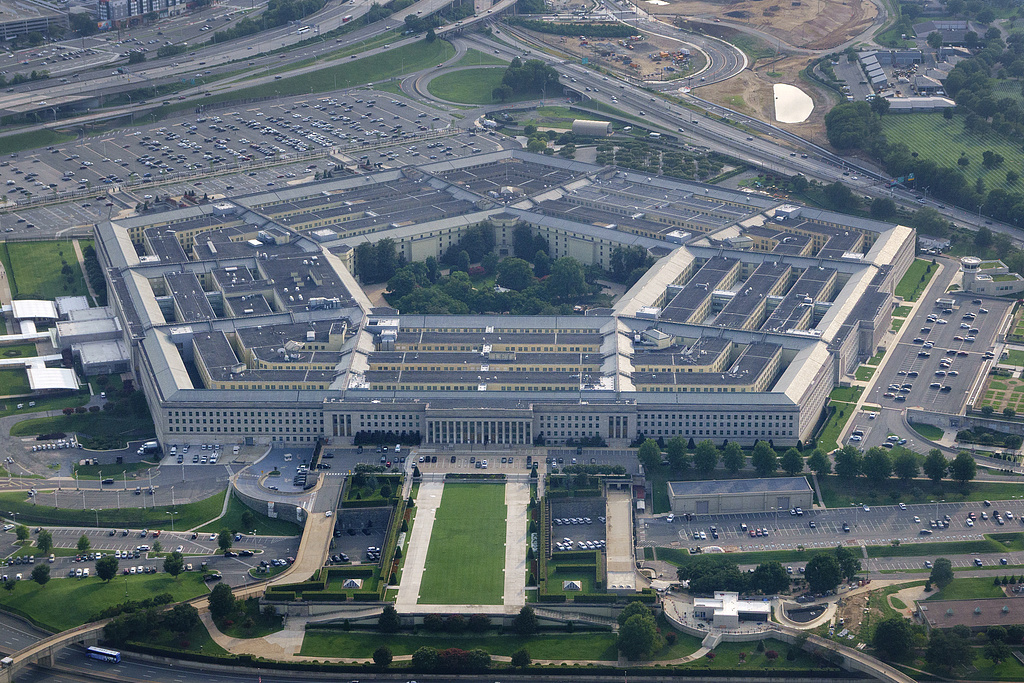
The Pentagon. Image via Visual China.
On the 17th, the Pentagon said these 30 institutions must also draft plans to address any violations of national security-related agreements and, if necessary, terminate “collaborative relationships.” The stated purpose of this review is to “protect taxpayer-funded research investments, prevent unauthorized technology transfers, intellectual property theft, and exploitation by hostile forces.”
Although the Pentagon didn’t explicitly identify the target entities, Fox News reported on the 17th that this review focuses on foreign entities listed under Section 1286 of the FY2019 National Defense Authorization Act, as well as “organizations linked to the renamed Confucius Institutes.” In July, the Defense Department updated its so-called “1286 List,” naming 130 academic institutions across China, Russia, and Iran. Washington claims these institutions’ activities “increase the likelihood that government-funded R&D results could be diverted.”
An anonymous U.S. official told Fox News that MIT, Harvard, and Cornell are among the universities on the notification list. Meanwhile, the military outlet DefenseScoop reported that the Pentagon hasn’t disclosed why these 30 specific schools were chosen.
These审查 measures are genuinely disrupting day-to-day interactions between Chinese and American researchers. Professor Weng Dongdong from the School of Optics and Photonics at Beijing Institute of Technology shared with us that since his university was added to U.S. restriction lists, formal research partnerships with American institutions have essentially ground to a halt. After years of escalating limits, the academic environment in related fields has become visibly fragmented. Even so, in cutting-edge areas like virtual reality and augmented reality, many top U.S. researchers are of Chinese descent, so informal academic exchanges still happen—but everyone is being extra cautious.
Professor Weng added that it’s understandable for any country to manage research risks for national security. However, Washington’s current “one-size-fits-all” approach leaves no room for discussing risk thresholds. “It’s like the ancient flood-control story of Yu the Great—if you simply block the river entirely, there’s no point talking about management,” he said.
“The U.S. keeps stretching the concept of national security, erecting discriminatory barriers, and essentially turning normal scientific exchanges into a political tool,” said Zhu Ying, director of the American Studies Center at Southwest University of Political Science and Law’s Baize Strategic Research Institute, during an interview with us on the 18th. He noted that beyond expanding the “1286 List,” Washington’s control measures over China-related research are broadening, which is already triggering a “chilling effect” in American academia.
Zhu also warned that such moves will weaken America’s own appeal to talent, undermine the open research ecosystem that underpins its competitive edge, and, in the long run, push the global research landscape toward bloc fragmentation—leading to duplicated efforts and wasted innovation resources across the world.